
 Posts
Posts


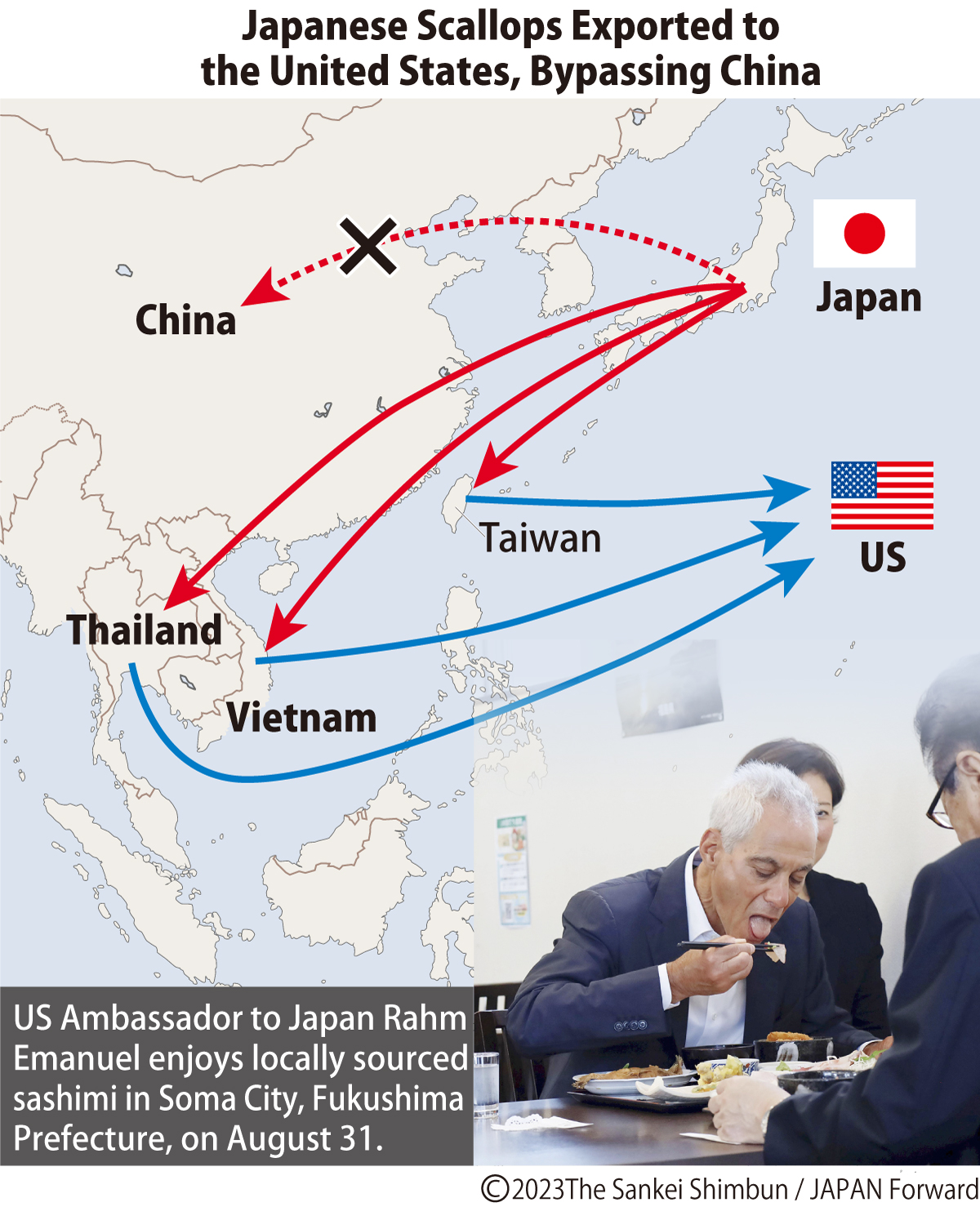
Japan’s Marine Product Exports in 2024: Finding New Markets Amid Chinese Ban
China has maintained a total ban on imports of Japanese seafood products since August 24, 2023, when the first treated water from Fukushima Daiichi Nuclear Power Station was discharged into the ocean. Since then, the Japanese government has offered repeated explanations on the safety of the water and proper management of the releases, calling for the lifting of the import ban. On May 30 of this year, it was announced that the Japanese and Chinese governments have agreed to begin procedures aimed at the resumption of seafood exports to China.
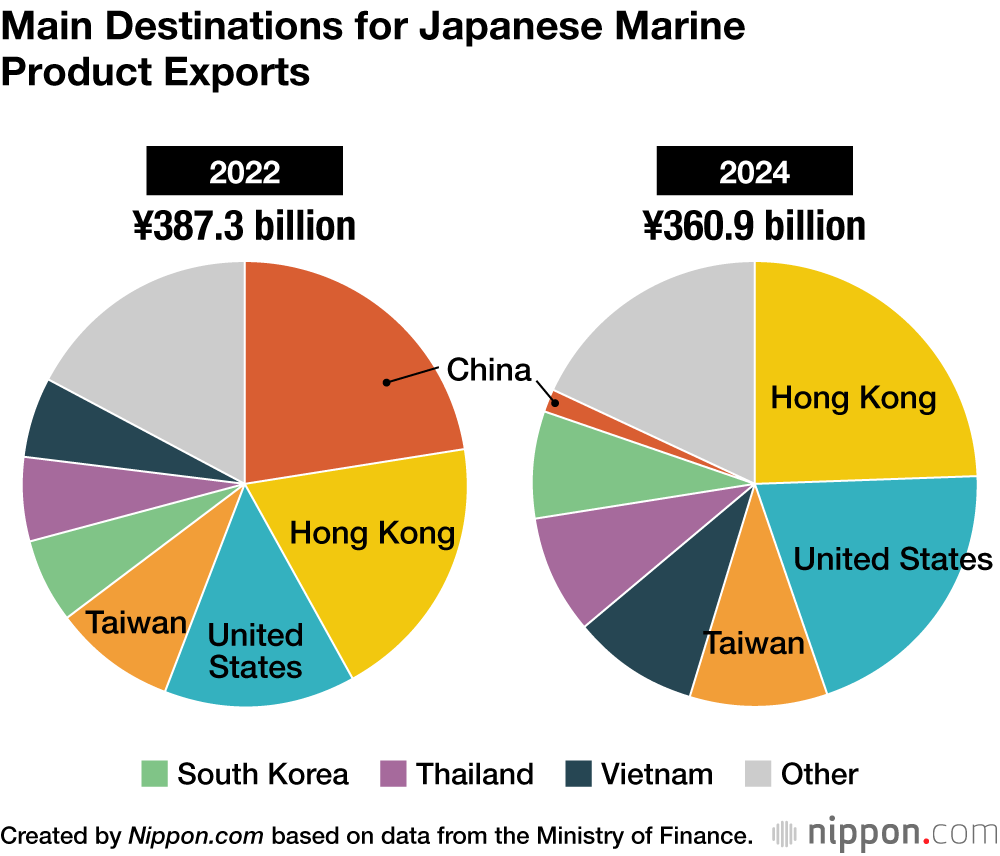
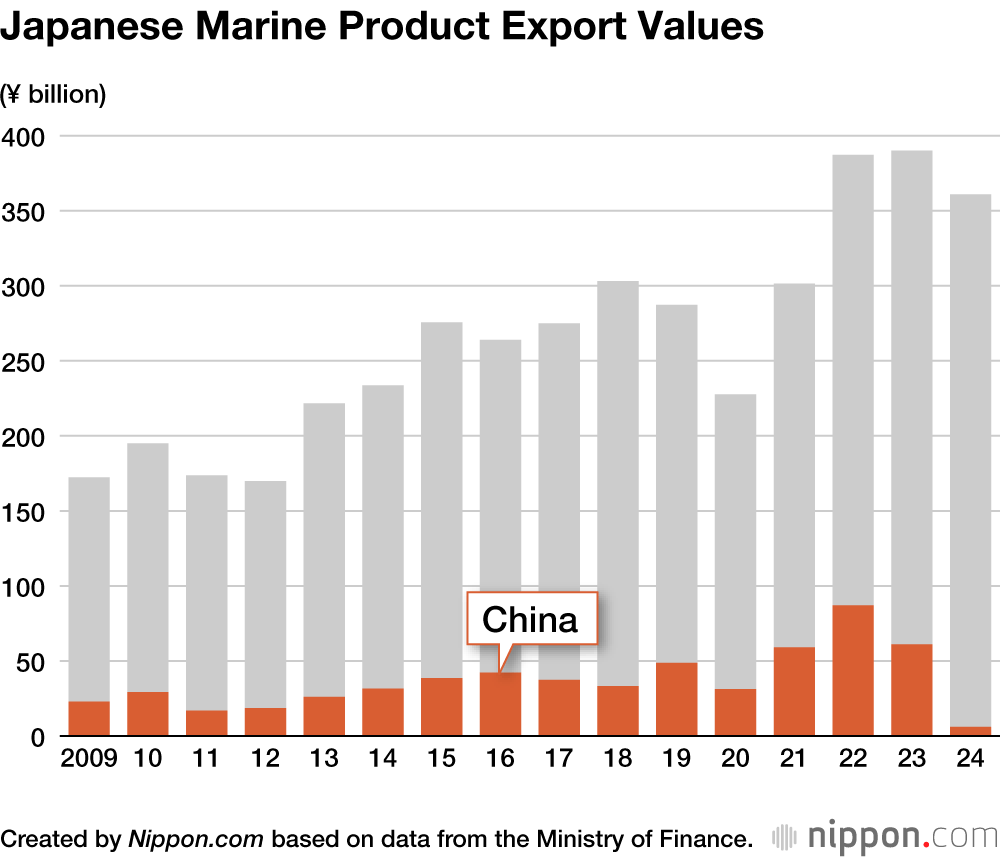
In 2022, prior to the discharge of treated water, Japan’s exports of marine products totaled ¥387.3 billion, with China accounting for ¥87.1 billion or 22.5%, making it the largest export destination. In 2024, when the ban was in effect for the entire year, exports to China plummeted to just ¥6.1 billion, consisting only of non-food marine products such as pearls and koi carp. Despite efforts to cultivate new markets in places including Hong Kong and the United States, total seafood exports for that year were ¥26.4 billion lower than in 2022.
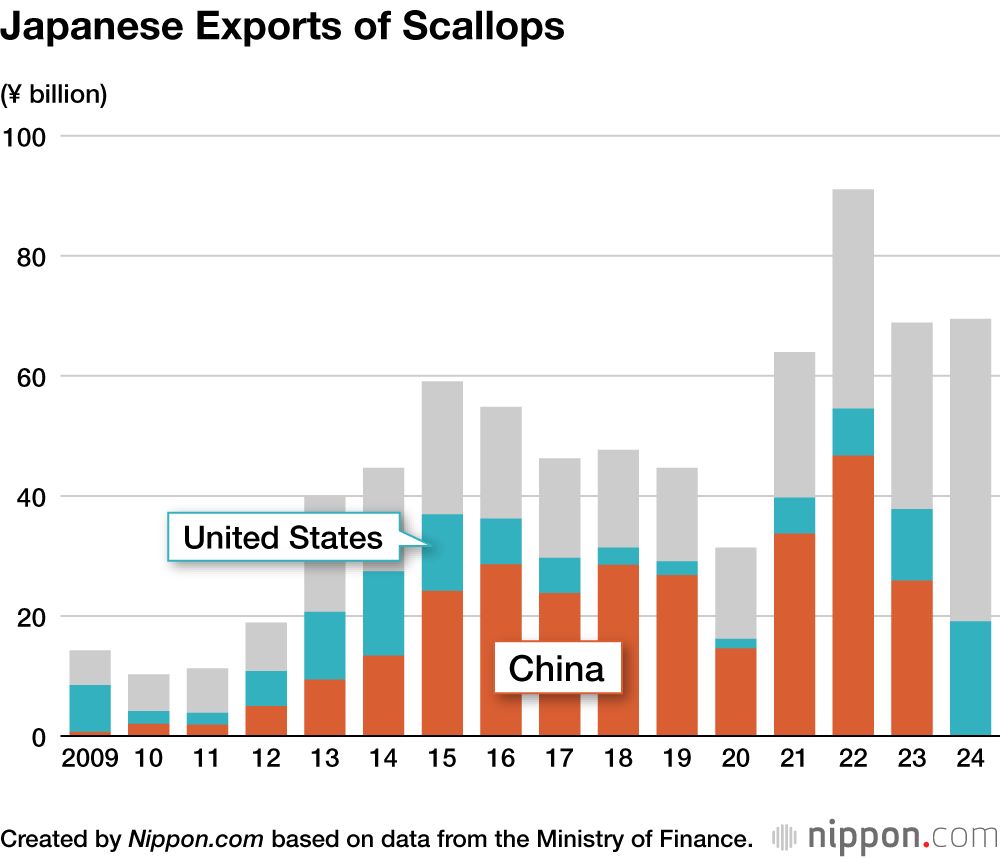
Japan’s main export marine product is scallops (including fresh, frozen, chilled, and dried). In 2022, exports of scallops reached a record high of ¥91 billion, a 40% increase over the previous year, with exports to China accounting for ¥46.7 billion or 51.3%.
Exports of scallops to China only totaled ¥700 million in 2009, but from the following year sales steadily increased. With the boom in Japanese cuisine, fresh scallops in the shell began to be transported by plane to Beijing, Shanghai, and other cities. Chinese businesses also began to import shelled scallops from Japan, shuck them domestically, and then re-export them to the United States, which is the largest consumer of scallops. Scallop exports declined in 2023, clearly reflecting the four months of the ban following the discharge of treated water. The following year, efforts were made to compensate for exports to China dropping to zero by redirecting exports of scallops to the United States.
Exports of seafood to the United States also face risk, however, due to the proposed tariffs of President Donald Trump. It is hoped that the resumption of exports to China could help to avoid a further decline in Japanese seafood exports.


No comments:
Post a Comment
Note: Only a member of this blog may post a comment.