
 Posts
Posts


Japan's election matters for the world - China would prefer a weakened Takaichi
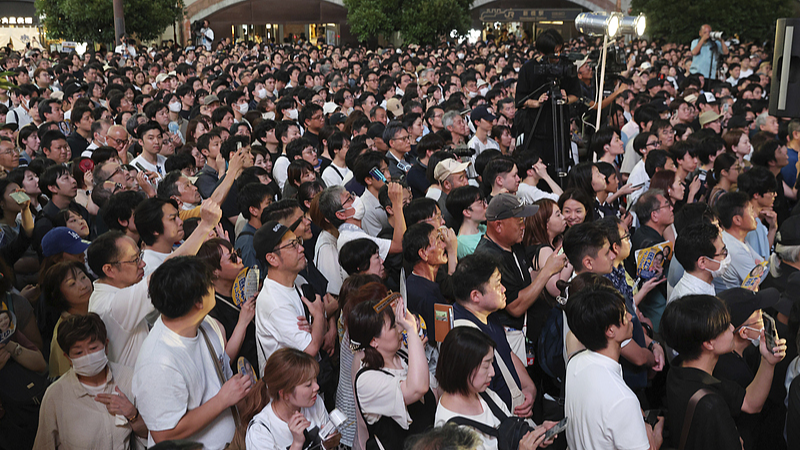
Voters in Japan are braving frigid temperatures -- and snow in swathes of the country -- on Sunday to decide whether to give Prime Minister Sanae Takaichi a fresh mandate in the nation's lower house election. Polls point to a sizable win for Takaichi's ruling Liberal Democratic Party, although the weather may be a factor.
So while, of course, the vote is important for Japan, it also matters for the rest of the world.
David Tingxuan Zhang at Trivium China writes that China would prefer a weakened Takaichi -- "Should the ruling Liberal Democratic Party (LDP) secure a lower house majority, Beijing will brace for a prolonged period of frozen ties. Given the escalating Chinese accusations regarding Tokyo's alleged 'militarization,' further tensions -- including in the security domain -- cannot be ruled out."
The U.S., conversely, appears to be backing the Japanese prime minister -- President Donald Trump has even openly endorsed her. "Takaichi has expressed an interest in building a stronger, more self-dependent Japan that can take a greater leadership role across the Indo-Pacific region. And this isn't too far off from the Trump administration's interests of having America's allies take greater agency in the security of their regions," argues Riley Walters at the Hudson Institute.
Joseph Yi, an associate professor of political science at Hanyang University in Seoul, makes the case for Japan and South Korea to continue deepening their relationship -- "My hope is that Japan's upcoming election will strengthen voices that see cooperation with South Korea not as a concession to the past, but as an investment in a democratic future -- one in which regional leadership is defined not only by power, but also by the consistent defense of human dignity and individual freedoms."
And Brahma Chellaney at New Delhi-based Centre for Policy Research writes that the vote "will help determine whether Japan emerges as a more autonomous strategic actor or remains vulnerable to external pressure in an era of weaponized interdependence."
In other op-eds on Sunday's election, Joshua Walker argues that it is a must-watch for a disrupted world, Paul Nadeau writes that Takaichi's China options could be limited if her election gamble pays off, and Rintaro Nishimura says Takaichi's "Japan First" is a recalibration of late Prime Minister Shinzo Abe's vision of openness.


No comments:
Post a Comment
Note: Only a member of this blog may post a comment.