
 Posts
Posts


The Meaning of Russia’s Drone Incursion Into Poland
Sometimes, the language of power is gestures of action.
Antonia Colibasanu and Andrew Davidson
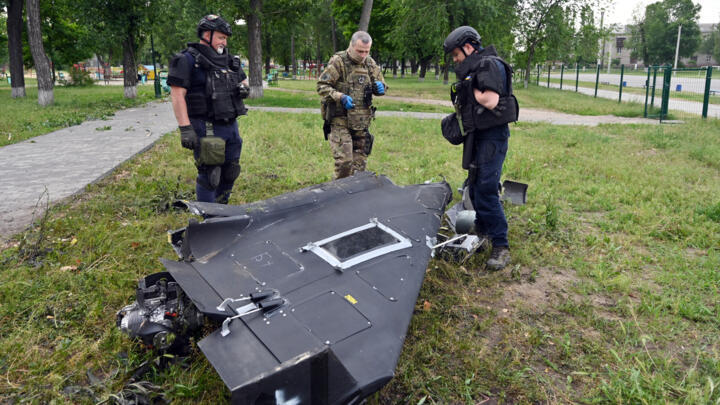
On Sept. 9, Russian drones crossed into Polish airspace during a wider strike on Ukraine, forcing Warsaw to close airports, scramble defenses and shoot down multiple intruding aircraft. NATO assisted in the defense. Polish authorities reportedly clocked nearly 20 drones, some of which allegedly entered from Belarus. Though debris from the intercepted drones caused some property damage, no major casualties were reported.
This is not the first time Russian drones have brushed up against the territory of a NATO member state. On several occasions, drones were used against Ukrainian cities near the mouth of the Danube River and thus close to the Romanian border. (In response, the government in Bucharest enacted a law in early 2025 that permits its military to shoot down drones in Romanian airspace.) But this is the first time a NATO member has engaged Russian drones directly within its own borders.
Poland later invoked Article 4 of the NATO treaty, which calls for urgent consultations with the North Atlantic Council if a member believes its territorial integrity, political independence or security is threatened. It doesn’t trigger collective defense (that’s Article 5), but it essentially serves as an alarm bell for potential action by mobilizing coordinated political and military responses, up to and including deployments and posture changes. Poland’s invocation of Article 4 matters because it shows how thin the difference is between marginal spillover and alliance-wide escalation, and it demands debate not just about defending Ukraine but also about protecting the integrity of NATO itself.
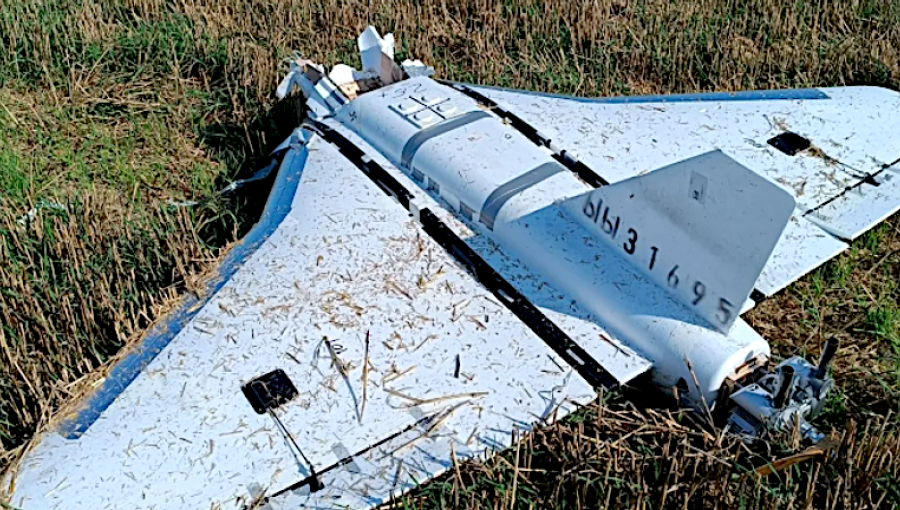
The first matter of debate is whether it was an intentional attack. Moscow insists that it did not target Poland deliberately, but the breadth and depth of the incursions suggest Russia could have avoided the border if it wanted to. Indeed, the number of drones tracked and the fact that debris was scattered across several disparate locations make it unlikely they all simply drifted off course due to electronic interference or navigational drift. Moreover, many of the drones are thought to have been decoys – cheaper airframes without explosive payloads that are designed to draw the attention of air defenses and exploit gaps in Ukraine’s coverage. Polish reports even circulated images of Chinese-made “Gerbera” drones among the wreckage. Still, the fact that these are unmanned vehicles gives plausible deniability.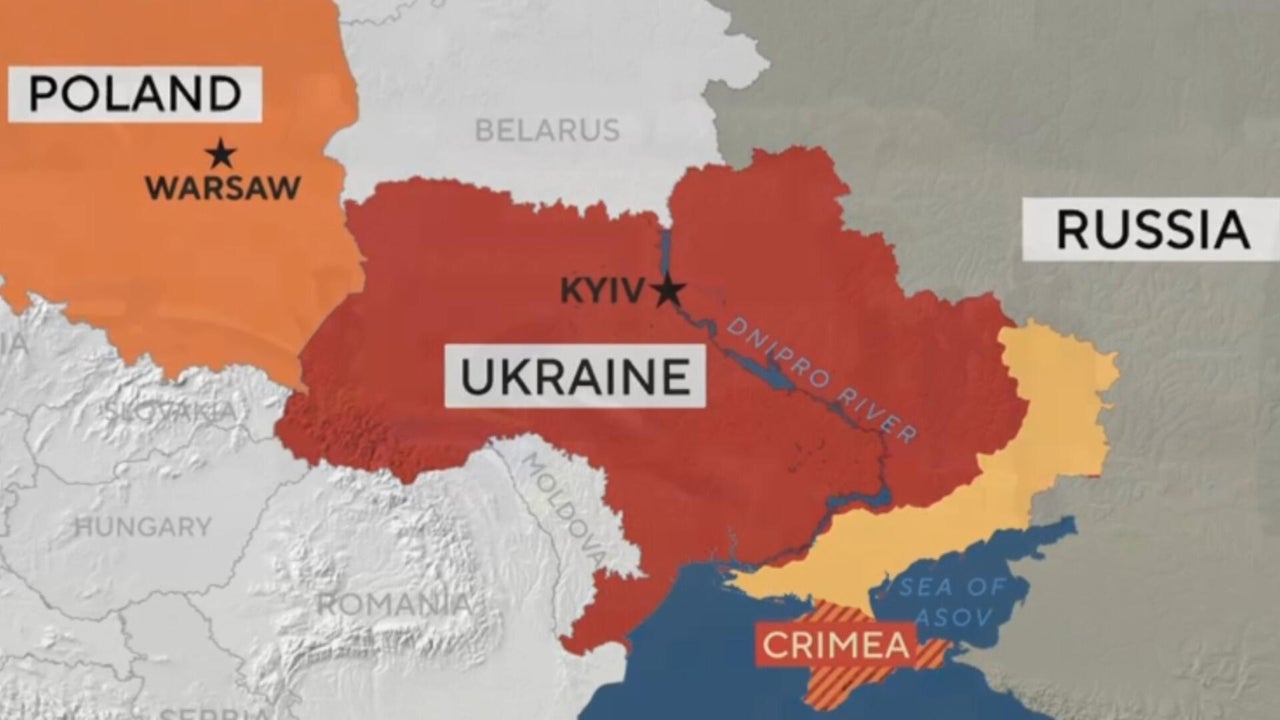
The second objective is to ascertain Russia’s intentions. Was this a test of NATO’s responses and political will? After all, this is something we’ve expected for some time now, and an assessment toward that end is already underway. Regardless of the determination, it’s significant that allied aircraft (with Dutch F-35s, Italian AWACS and NATO tankers) helped Poland secure its skies, while several NATO capitals have explicitly treated the episode as a Russian incursion. Leaders of France, the United Kingdom, Germany and Canada condemned it in those terms, and Slovenia, Denmark and Greece joined France and the United Kingdom in encouraging the U.N. Security Council to meet over what they believe are Russian violations. According to media reports, the Netherlands and the Czech Republic said they would send defenses to Poland, while Lithuania would receive a German brigade and more warning of Russian attacks on Ukraine that could cross over. British Defense Secretary John Healey also said London would consider options to reinforce NATO’s air defense over Poland.
The incident comes at a volatile time for Europe. U.S. President Donald Trump has pressed Continental allies into shouldering more security responsibility within NATO, best exemplified by a Hague summit in late June, when officials endorsed a path forward for defense outlays of up to 5 percent of gross domestic product. Some want a legitimate European pillar of defense that would expand not just budgets but magazines, air defenses, industrial capacity and readiness. The EU’s new SAFE program (150 billion euros, or $176 billion, in defense loans) and the EU-U.K. Security and Defense Partnership are concrete moves in that direction. Meanwhile, according to the Financial Times, Washington plans to phase out some U.S. security funds for European countries bordering Russia, including by winding down section 333 training-and-equipment lines and new money beyond already-approved funds that run until September 2026. Put simply, this is a partial drawdown of U.S. security assistance on NATO’s eastern flank and a clear signal that Europe must fend more for itself. In that sense, the incident in Poland was a real-world test of Europe’s ability to respond.
However, days after the FT report on Washington’s plans to phase out security funds, and well after NATO’s Hague summit set the spending path to 2035, Polish President Karol Nawrocki was welcomed at the White House, where President Donald Trump affirmed the U.S. would keep a robust presence in Poland – and even “put more there if they want.” The optics of that reception made Warsaw look like not just a strategic ally but a favored nation-state along the eastern flank. (In truth, there are many reasons behind America’s affinity for Poland.)
Yet all this unfolded while Ukraine talks were still in play. This highlights a basic tenet of crisis diplomacy: Signals matter more than words. It may be that Russia’s probe was less a test of Europe, whose limits Moscow knows and whose alliance politics are complex, than a test of the United States, which had just promised Poland more help days before the drone incursions.
Throughout the Cold War, the real language of power was often gestures in action rather than communiques: air corridors kept open by the Berlin airlift; naval “shows of presence” and snap exercises in the North Atlantic and Mediterranean; strategic bomber patrols nudging the edges of airspace; missile deployments and alerts calibrated to send messages; and “quarantines,” embargoes, expulsions of diplomats, and even tightly choreographed spy swaps on bridges. These were legible signals – public enough to be noticed, deniable enough to avoid full escalation – that shaped expectations more than formal talks did. Given that logic, it’s reasonable to expect performative, if violent, gestures until a concrete deal or at least firm negotiations on Ukraine fixes the boundaries of risk and responsibility.
Thursday, September 18, 2025
Russia’s Drone Incursion Into Poland - the language of power is gestures of action

Subscribe to:
Post Comments (Atom)


No comments:
Post a Comment
Note: Only a member of this blog may post a comment.