
 Posts
Posts


The Silent Siege: China’s Port Takeover Strategy and What It Means for U.S. Influence in the Americas
China is attempting to control as many ports as possible internationally, especially in Latin and South American countries.
Dr.Nadia Helmy
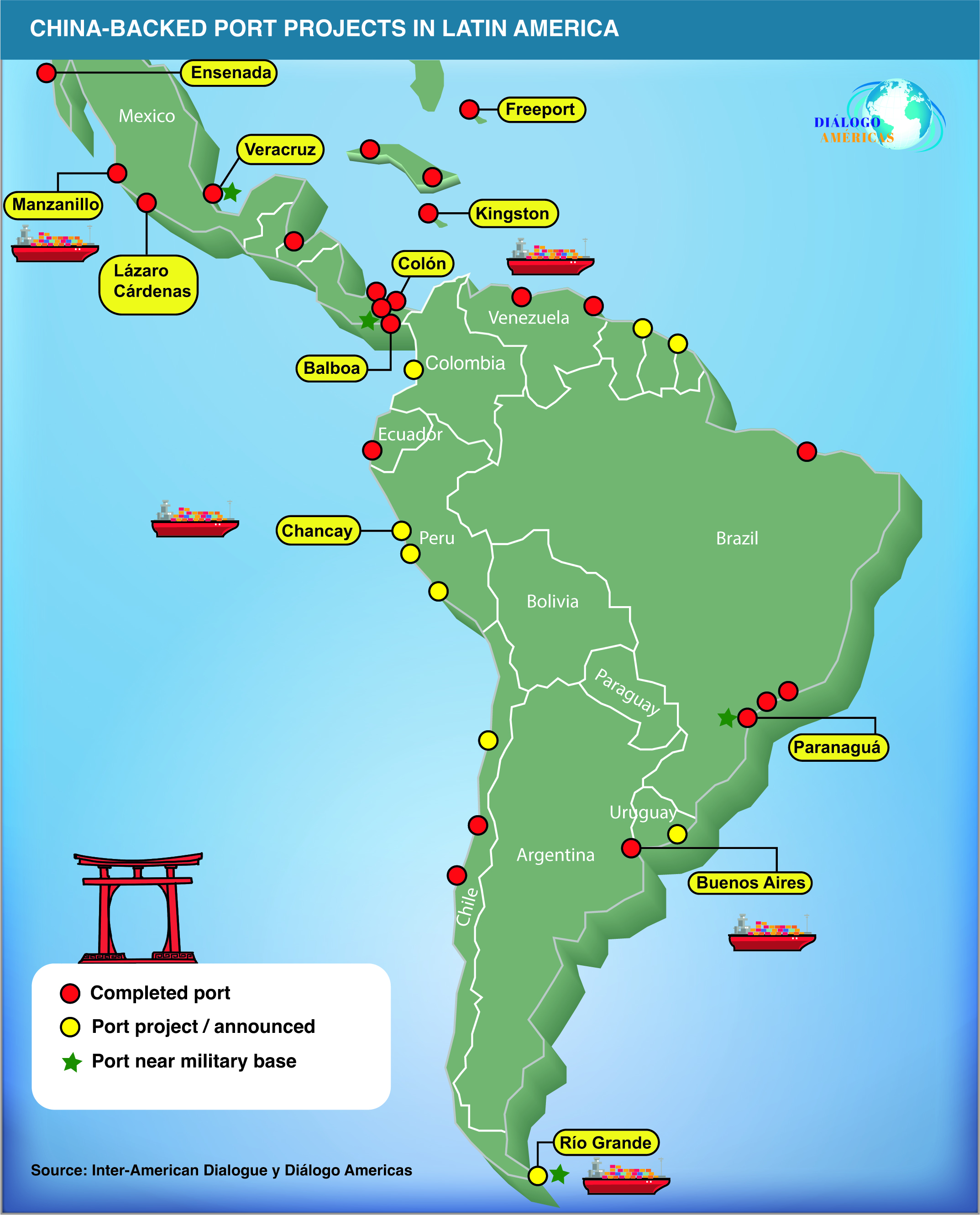
China is attempting to control as many ports as possible internationally, especially in Latin and South American countries. By ensuring Chinese control over many ports and their associated logistics chains, China can set new standards for shipping fees, port access, and customs policies that could harm American companies. With this economic influence, China can pressure smaller countries to comply with its policies or risk trade disruptions. If tensions escalate, China could disrupt access to shipping services, slow down logistics services, or collect intelligence on US military movements anywhere. 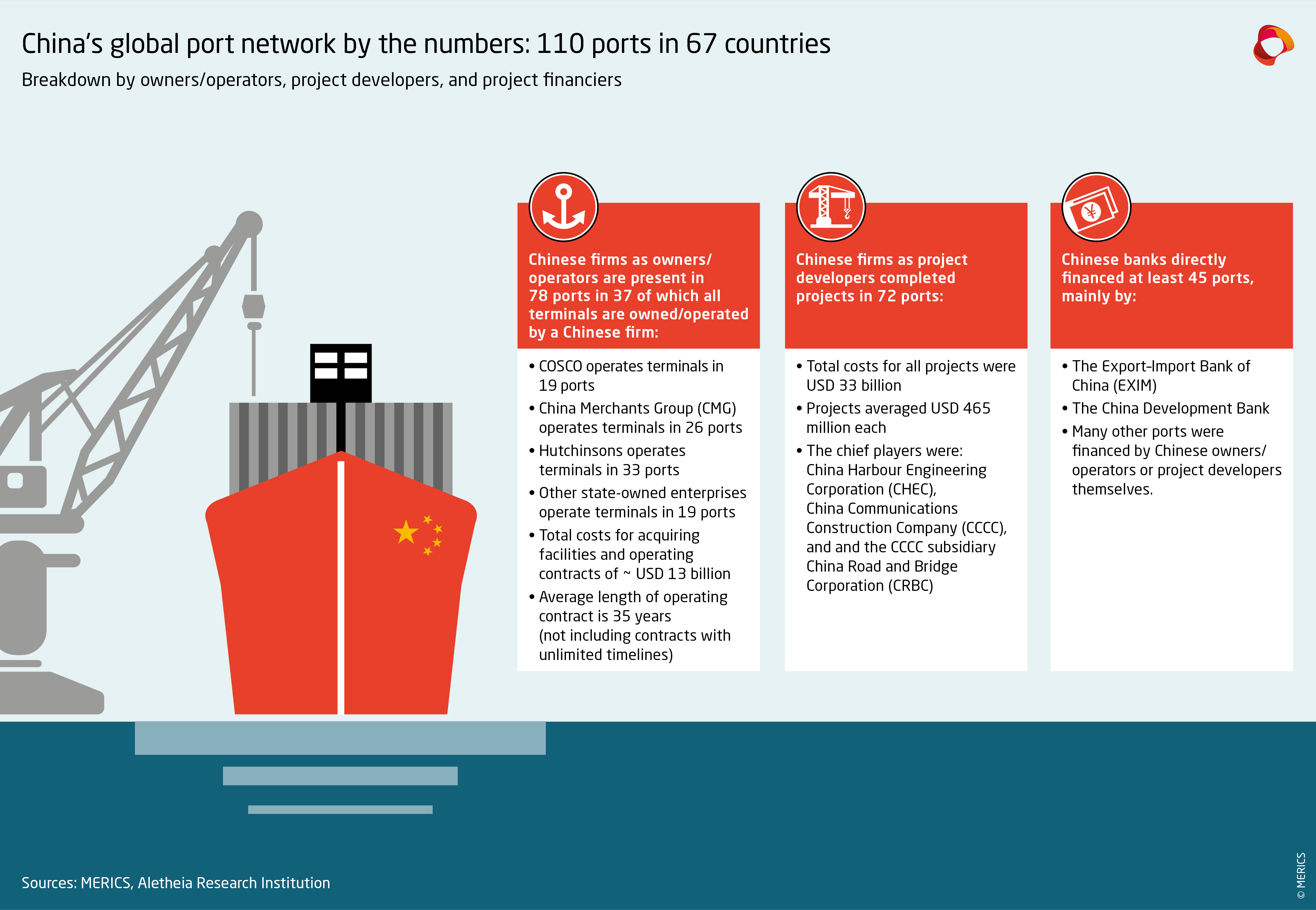 China’s growing influence in the ports of South and Latin America, known as “Washington’s backyard,” is China’s first and most obvious goal in controlling Latin American ports. This is to create more markets for its products and companies, given that Latin America represents a huge consumer market for China, with a population of more than 700 million. In addition, China seeks to obtain natural resources at the best possible price and with a steady flow of goods from South American ports. China also seeks to expand the scope of its Belt and Road Initiative, launched in 2013, to include Latin American countries that occupy a pivotal position in international shipping traffic. China has succeeded in convincing more than 21 countries in South America to join the Belt and Road Initiative and seize control of the ports of most of these countries, particularly the Panama Canal, which is considered a backyard for American interests in confronting China.
 Former US President “Joe Biden” launched the “Build Back Better World (B3W) initiative” in 2021 with the leaders of the “G7” countries. This initiative aims to meet the financing needs for infrastructure development in low- and middle-income countries, including Latin American countries, as a competitive alternative to China’s Belt and Road Initiative, primarily through South America.
To ensure the United States’ competitiveness in developing countries of the Global South, particularly through South America, China has expanded its influence through the Belt and Road Initiative, its economic development program across all of South America, which has been joined by more than 12 Latin American countries. Accordingly, Chinese companies have undertaken major projects, such as the subway in the Colombian capital, Bogotá, and the recently completed Changkai Port in Peru. China is working to secure alternative routes to bypass traditional shipping channels controlled by the United States and its Western allies, while Beijing is working to increase its influence over global trade. Indeed, China’s control of maritime logistics will have direct military repercussions, not to mention economic ones. In any major conflict, the US military could rely on commercial shipping lines to transport more than 90% of its needs. Therefore, the United States will be forced to rely on ships flying the flags of foreign countries, given that it does not have its own fleet, a weakness that China could easily exploit.
China’s control of South American ports comes within the context of Sino-American competition and Washington’s ongoing efforts to expand its influence in Northeast Asia, which China considers to be within its traditional sphere of influence. Therefore, China is seeking to The other side is to strengthen its presence in Latin America as an alternative to the United States. This is in addition to Beijing’s efforts to gain support for its international positions, including its position on Taiwan, which China considers part of its territory. Only 13 countries in the world officially recognize Taiwan, including seven Latin American countries. Consequently, China is working to expand its influence extensively in the Latin American region.
The United States’ attempt under President Donald Trump to limit Chinese influence by intensifying its trade war with China is also aimed at limiting Chinese influence in Latin America, a region the United States has long considered its sphere of direct influence. This comes at a time when Chinese cooperation and investment are growing with countries in the region, including Brazil, Colombia, Argentina, and Panama, among others. While Mexico and Colombia are both major allies of Washington in South America, making Latin American countries a gateway to maximum competition between Trump and China.
Regarding maritime trade, China owns more than 5,500 ocean-going merchant vessels, while the United States owns only 80. The massive capacity of China’s shipbuilding sector also dwarfs America in this sector, with the Chinese sector’s capacity equal to 232 times the shipbuilding capacity of the United States. While China has invested in more than 100 ports around the world, the United States owns only a handful of strategic ports worldwide. Even within the United States itself, foreign entities control the vast majority of American ports. The United States relies heavily on a complex network of foreign allies and operators, some friendly and some not, to maintain the order of its supply chains, something China is attempting to exploit to its advantage.
China’s growing acquisition of numerous overseas ports is raising unprecedented concerns in the United States. Beijing has invested in more than 129 ports around the world, most of which are located in the Global South, including South American countries. China holds majority ownership of 17 of these ports in Latin America. The decision by the US Department of Defense to place the Chinese shipping company COSCO on the US National Security List reflects growing concern about China’s growing ability to control maritime logistics globally and in South American countries.
China’s control of ports enables Beijing to establish economic zones in other countries, particularly in South America (Washington’s backyard). China, through its giant companies, is playing to acquire global ports and those in South America and obtaining significant facilities for doing so, such that the Chinese owners and operators of these ports are granted privileged access to goods and products. The West fears that this will allow China to disrupt the supply of certain goods or even exert influence over other policies or economies. Another key driver of this Chinese strategy is the minerals needed to fuel China’s rise as a technology superpower. Beijing has focused its port investments in regions where these vital resources are located. For example, China is the world’s largest importer of copper ore, particularly from Chile, Peru, and Mexico. It is also one of the world’s largest importers of lithium carbonate, particularly from Chile and Argentina in South America. China’s port deals in Africa provide access to rare earths. Furthermore, leveraging Latin American ports helps China navigate trade tensions with Europe and the United States, particularly the crippling US tariffs imposed by Trump on Chinese goods.
On April 17, 2024, based on a petition filed by 5 US national labor unions, the Office of the US Trade Representative launched a broad investigation into China’s actions, policies, and practices aimed at dominating the global maritime, logistics, and shipbuilding sectors. In a subsequent report and decision, the Office of the “USTR” concluded that China’s actions, policies, and practices were liable under Section 301 of the US Trade Act because they were unreasonable and imposed a burden or restriction on US commerce.
China’s control of strategic ports in South America is part of a comprehensive strategy to enhance its influence in the “Great Food War,” with implications for traditional Western dominance in this area. The most prominent aspect of China’s control over South American ports is the Panama Canal, dubbed the “gateway to South America” due to its key geographical role in terms of communication and trade. It is a vital artery for global trade and a pivotal point in international geopolitics. Chinese companies have therefore established a strong presence in the infrastructure of the Panama Canal and all its neighboring ports. The most prominent Chinese company permanently present in the Panama Canal is Hutchison Ports, a subsidiary of Hong Kong-based CK Hutchison Holdings. This company maintains a permanent presence and investments across two vital terminals on the Pacific and Atlantic sides of the Panama Canal, ensuring China’s control over South American ports from all sides. The Chinese state-owned shipping giant COSCO bought a 60% stake in Peru’s massive deep-sea port of Chancay for more than $4 billion. The deal was announced during Chinese President Xi Jinping’s visit to Rio de Janeiro, Brazil, in November 2024, where he met with Peruvian President “Dina Boluarte” to inaugurate the port. For China, the Chancay Port Project in Peru is part of its overall Maritime Silk Road vision, which will better connect China’s manufacturing hubs with its trading partners around the world.
The Panama Canal plays a pivotal role in global supply chains, saving container ships weeks of travel around South America, making it a key target for the Chinese. The Panama Canal represents a major economic and military asset that the United States has long sought to secure in the face of its strategic adversary, China. If control of the Panama Canal falls into the hands of its Chinese adversary, it could cause significant damage to the American economy, as Washington fears that Beijing will use the Panama Canal to disrupt international trade and hinder American military efforts by restricting the passage of American military vessels through the canal.
During US Secretary of Defense Pete Hegseth’s visit to Panama in early April 2025, he stated that the United States “will not allow communist China, or any other country, to threaten the operation or safety of the canal.” In response to these statements, the Chinese embassy in Panama attacked the US government in an official statement, asserting that the United States has used blackmail to serve its own interests and that who Panama trades with is “a sovereign decision of Panama, and the United States has no right to interfere.”
The United States announced secondary tariffs on countries that purchase oil from Venezuela, of which China is the largest buyer. A group of investors led by the American firm BlackRock announced that it would purchase a group of ports at both ends of the Panama Canal controlled by the Hong Kong-based Chinese firm CK Hutchison Holdings, while Beijing attempted to delay the sale of the ports in Panama to the US. An escalating geopolitical battle is now taking place over the agreement between the Hong Kong-based Chinese firm CK Hutchison and a US-led coalition headed by the American investment giant BlackRock, which includes key facilities such as the ports of Paloa and Cristóbal, located at the Pacific and Caribbean entrances to the Panama Canal, respectively. These ports have been at the heart of US President Donald Trump’s criticism of Panama, serving as the subject of his inflammatory rhetoric and claims that China has complete control over the Panama Canal in the face of US interests there.
China’s growing security presence is also reflected in the participation of “People’s Liberation Army” (PLA) troops in the UN peacekeeping mission in Haiti, the deployment of its hospital ship to ports in South American countries on several occasions, the regular dispatch of Chinese warships for joint exercises, participation in training courses, and the exchange of visits of military and police officers between South American countries and China. China has also provided military supplies to local law enforcement in several South American countries. For example, it has supplied riot control equipment and military vehicles to the Bolivian police and has donated transportation equipment and motorcycles to the police forces of Guyana and Trinidad.
Based on the above analysis, we understand that halting China’s economic rise and its control over international ports, particularly in Latin and South America, has been a top political goal in Washington since US President Donald Trump’s first term. However, Trump and his administration have made no significant proposals to address Chinese dominance in shipbuilding, which is supported by massive Chinese government subsidies. Indeed, five US trade unions raised the issue during the Joe Biden administration. To this end, the Office of the US Trade Representative, tasked with investigating this issue, proposed in January 2025 a $1.5 million tariff on every Chinese-made ship docking at a US port. This circle, subordinate to the US president, argues that these tariffs are fair, aiming to counter what it considers unfair advantages China receives from shipbuilding, restricting US trade. To this end, the Trump administration is seeking to make it extremely expensive for Chinese ships to dock at US ports. But if implemented, it will have dire consequences for the American economy itself and global trade, given the punitive tariffs and other protectionist measures Trump has imposed on China and many countries around the world.


No comments:
Post a Comment
Note: Only a member of this blog may post a comment.