
 Posts
Posts


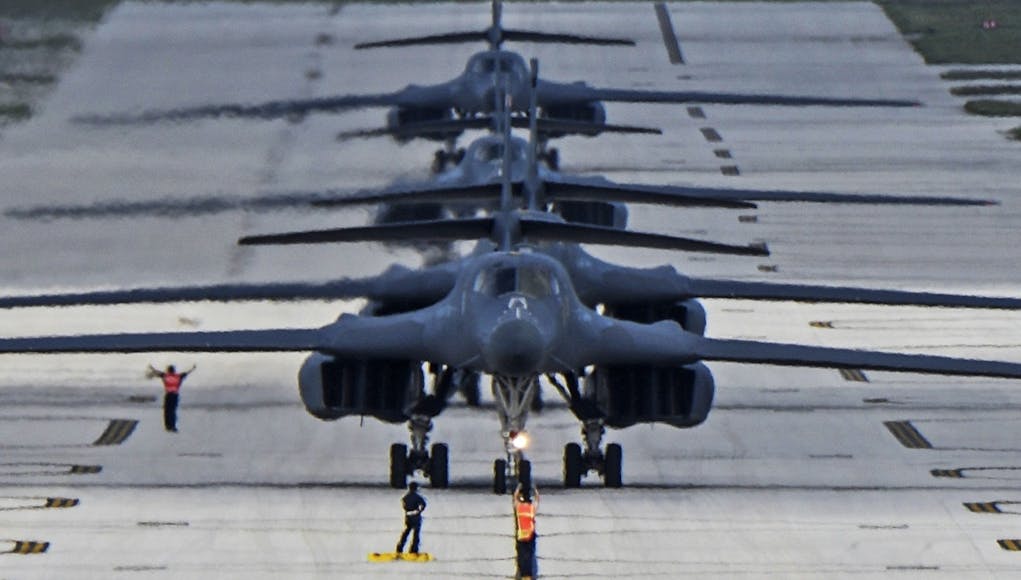
American bombers now in Europe to deter Russian aggression
U.S. Air Force B-1B Lancer aircraft deployed from Dyess Air Force Base, Texas, and arrived at Ørland Air Base, Norway, on 9 August 2025 to begin Ally-led training operations as part of the latest Bomber Task Force Europe.
The deployment empowers U.S. Air Force aircrews to refine tactics, increase flexibility and strengthen coordination with Allies by exercising and operating together, increasing warfighting capabilities and readiness.
While in theatre, the bomber aircrews will conduct a series of Ally-led training missions in complex, high-threat airspace. Crews will train on key elements of the find, fix, track and target process – honing the speed and accuracy with which bombers and fighters can act against threats in real time.
“This deployment allows us to train the way we fight, integrated with our NATO Allies, ready and adaptive,” said Lt. Col. Eric Alvarez, 345th Bomb Squadron deployed commander. “It’s about building experience and trust together, enhancing readiness, and staying sharp in dynamic environments.”
A defence source speaking on condition of anonymity told this outlet the broader purpose of such missions is clear. “It’s about demonstrating that the United States can project heavy bomber capability deep into Europe. The message is deterrence, making sure Moscow understands that NATO can strike hard and fast if necessary.”
This is the fifth Bomber Task Force Europe deployment in 2025 and reflects the U.S. Air Force’s continued commitment to maintaining a ready and capable forward presence across the region.
Carrying the largest conventional payload of both guided and unguided weapons in the Air Force inventory, the B-1B Lancer is a multi-mission aircraft designed to deliver precision and non-precision strikes against targets anywhere in the world. Its blended wing/body configuration, variable-geometry wings and afterburning turbofan engines give it long range, manoeuvrability and high speed, enhancing survivability and allowing it to integrate seamlessly in mixed strike packages.
The aircraft’s advanced radar systems and Global Positioning System-aided Inertial Navigation System allow it to navigate without ground-based aids and strike moving or fixed targets with high precision. Link-16 data links and cockpit upgrades have improved situational awareness and enabled rapid targeting in fast-moving operational environments.
Self-protection is provided by the ALQ-161 electronic countermeasures suite, radar warning receivers, expendable countermeasures and a towed decoy system, all of which complement its low radar cross-section to enhance survivability. Planned radar and electronic upgrades will ensure the platform remains viable in future contested battlespaces.
Bomber Task Force missions, such as the current deployment to Norway, are overseen by Air Force Global Strike Command and are designed to assure Allies, deter adversaries and demonstrate the U.S. ability to deliver safe, secure and lethal conventional strike capabilities in support of NATO and wider U.S. national defence objectives.


No comments:
Post a Comment
Note: Only a member of this blog may post a comment.