
 Posts
Posts


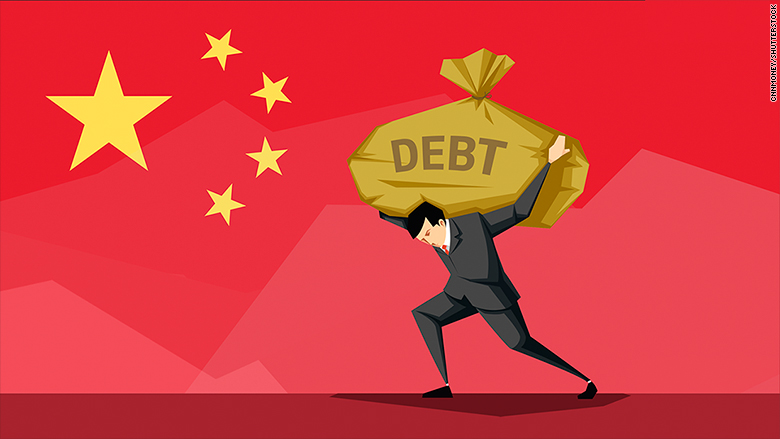
China’s debt ratio hits record high at 3 times GDP
China’s debt as a percentage of its economy hit a fresh high at the end of June, with local authorities borrowing heavily to underpin an economy weighed down by the central government’s zero-Covid policy.
Credit to the nonfinancial sector came to US$51.87 trillion, or 295% of gross domestic product, to mark the highest debt-to-GDP ratio in data going back to 1995, in statistics released Monday by the Bank for International Settlements. The percentage topped the previous peak marked at the end of 2020 even as a weak economy discouraged borrowing by private companies and households.
 The leverage ratio likely has grown even higher since, according to
the Beijing-backed think tank National Institution for Finance and
Development.
The leverage ratio likely has grown even higher since, according to
the Beijing-backed think tank National Institution for Finance and
Development.
While the pandemic and its ripple effects are ultimately a short-term problem, China’s longer-term outlook may not be much better. A falling birthrate and ageing population are expected to increase the fiscal burden of social security programmes, leaving the government with fewer resources to spur growth.
The reasons for the recent rebound lie on both sides of the equation. On the GDP side, lockdowns in Shanghai and other cities aimed at halting the spread of the highly infectious omicron variant hit the economy hard. Real GDP grew only 0.4% on the year in the April-June quarter.
 Mounting government debt is the other main factor. The central
government’s push for infrastructure projects to stimulate the economy
has spurred local authorities to issue more bonds for this purpose. New
debt is expected to reach an all-time high of over 4 trillion yuan
(US$570 billion) this year.
Mounting government debt is the other main factor. The central
government’s push for infrastructure projects to stimulate the economy
has spurred local authorities to issue more bonds for this purpose. New
debt is expected to reach an all-time high of over 4 trillion yuan
(US$570 billion) this year.
The BIS data shows government borrowing as the main culprit, with the debt-to-GDP ratio up nearly 6 percentage points in June from the end of 2020, even as the figures for corporate and household debt fell over the same period.
An index from the People’s Bank of China measuring demand for bank loans slumped to its lowest level in nearly six years in the second quarter of 2022, and recovered only slightly last quarter.
Private businesses have been especially reluctant to spend. Total private investment in fixed assets between January and October grew only about 2% on the year, government data show. That contrasts with an 11% jump for state-owned enterprises, likely due to the government mobilising state-owned banks to lend to these companies in its efforts to kick-start the economy.
Households have also been less than eager to borrow more money, including for mortgages, as a clampdown on the real estate sector and a cooling economy have spurred a protracted slump in the housing market. A third-quarter PBOC depositor survey showed expectations for housing prices falling to their lowest point in comparable data going back to 2009.
The hazy economic outlook making these two groups so cautious could be compounded by longer-term uncertainty about the country’s growth potential.
The latest United Nations population estimates show China’s population falling year over year as of July 1. The decline is expected to be exacerbated over the next quarter century by the impact of previous policies limiting the number of children per family, with a drop of roughly 90 million by 2047. Meanwhile, the average age is expected to climb from 38.5 this year to over 50 in 2047.
The government’s crackdown on companies and markets, particularly the private sector, under President Xi Jinping also has some observers worried about the potential consequences for China’s growth potential.
The US, China’s main geopolitical rival, saw its debt-to-GDP ratio temporarily top China’s in late 2020 and early 2021.
But the ratio has since fallen, coming in more than 30 points below China’s at the end of June, amid an economic recovery as well as interest rate hikes that have hit the brakes on borrowing. America’s future growth prospects also look brighter, thanks partly to immigration expanding its population.


No comments:
Post a Comment
Note: Only a member of this blog may post a comment.