
 Posts
Posts


China’s debt reduction like putting the ‘genie back in the bottle’, but can it succeed to aid the economy?
- While
China’s economy has largely recovered from the impact of the
coronavirus, its debt surged to 280 per cent of gross domestic product
(GDP) in 2020
- China is still building infrastructure projects, but Beijing is now setting the bar higher amid historically high debt levels

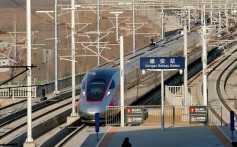
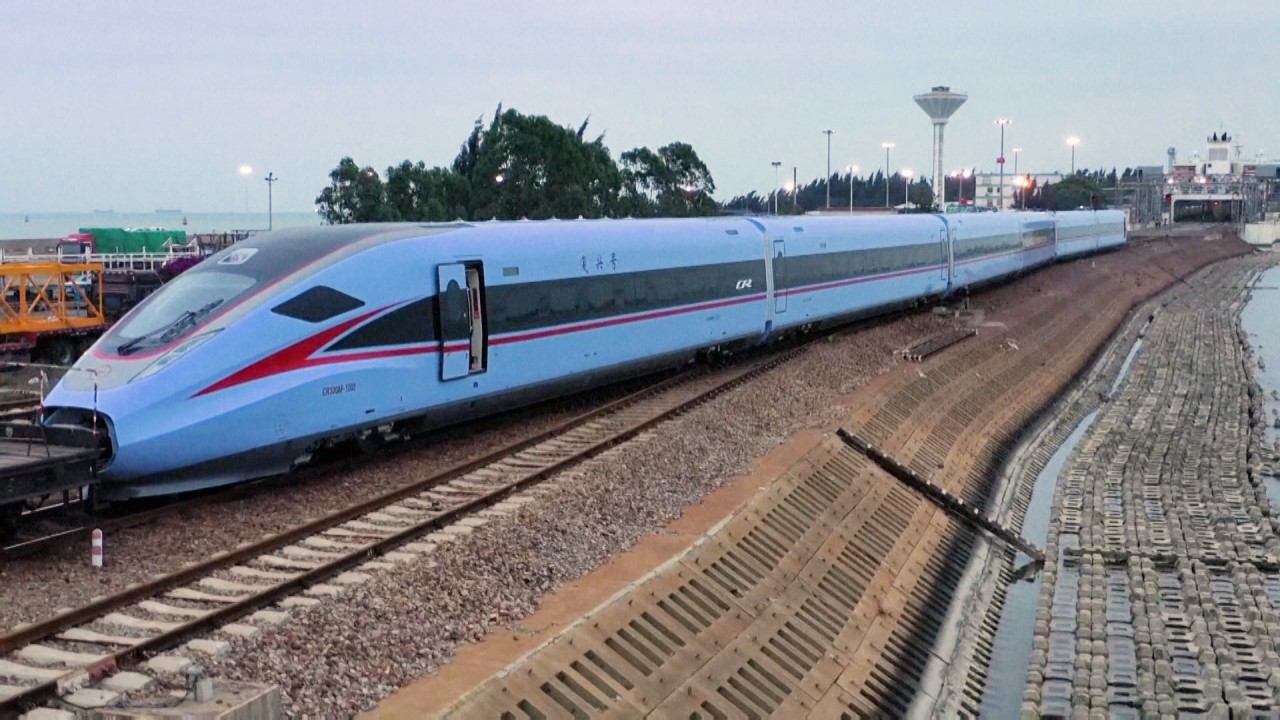
China has long relied on the old playbook of investing in infrastructure projects to boost its economy, particularly its high-speed railway network that is the largest in the world. And Beijing even said at the start of the year that its high-speed rail network could nearly double in size over the next 15 years.
But
if anything highlights Beijing's commitment to reducing its
historically high debt levels that are a result of a decade-long
borrowing spree, it is the postponement, or in some cases failure to
gain approval, of a number of costly high-speed railway and underground projects since the start of the year.
Projects are still being built in major cities – like the second phase of the mass transit network Foshan city in Guangdong province costing 77.21 billion yuan (US$12 billion) – but Beijing is now setting the bar higher.
| Year | Debt-GDP ratio |
|---|---|
| 2020 | 279.4% |
| 2019 | 255.9% |
| 2018 | 249% |
| 2017 | 252% |
| 2016 | 248.6% |
This has been promoted by rising risks of defaults by local governments, which have seen their revenue plunge due to the economic effects of the coronavirus last year.
Beijing is well aware that high levels of debt reduce leeway for the economy to grow and pose a significant risk to China’s financial system and economy.
These efforts to reduce debt are expected to put downward pressure on Chinese growth in coming years, meaning without the option to turn to a one-size-fits-all strategy to cut back debt growth given the disparities in regional economies, the government has to tread carefully with its remedies.
But Michael Pettis, a professor of finance at Peking University, expects China’s debt growth this year will be among the lowest of the past decade.
“Mainly because Beijing seems to be reining in wasteful investment in infrastructure and property,” he said.
“If it were not wasteful, debt would have gone up in the past decade, but gross domestic product (GDP) would have gone up even more, so that the debt-to-GDP ratio would not have deteriorated so dramatically. I still expect the debt-to-GDP ratio, however, to rise a little in 2021.”
While China’s economy has recovered strongly from the impact of the coronavirus, its debt surged to 280 per cent of GDP in 2020, up from 255 per cent of GDP in 2019, according to the People’s Bank of China (PBOC).
And the total size of the debt pile is not yet clear, given moves by local governments to borrow outside their budget, resulting in so-called hidden debt.
“Property loans and hidden local government debt still remain potential threats to our financial stability. We call them grey rhinos,” said Wang Zhaoxing, former vice-chairman of China Banking and Insurance Regulatory Commission last month, referring to a problem that is well known but not adequately addressed.
In June, the local branch of the National Development and Reform Commission, the nation’s economic planner, in Hengyang city in Hunan province said that it would consider an application for a new underground project at “an appropriate” time.
They explained that the central government “is currently strictly controlling the construction of urban rail transit” to “effectively prevent and resolve hidden debts of local governments”.China’s debt level began rising rapidly following a 4 trillion yuan (US$564 billion) government spending spree in 2008 to counter the impact from the global financial crisis, which was around the same time the economy began to slow.
At the same time, off-balance sheet borrowing by local governments became commonplace to fund infrastructure and other spending to boost their economies, leading to the rapid growth of hidden debt, often sold by local government financing vehicles, which became the go-to platform for off-budget local government borrowing.
Beijing went so far as to place a cap on its overall debt at 250 per cent of GDP in 2017, but the pandemic scuppered that plan, and last year the government rolled out a fiscal stimulus package of nearly 3.6 trillion yuan (US$557 billion) to rescue its pandemic-hit economy, sending the ratio above the limit.
The Chinese government is now trying to put the genie back in the bottle, pressuring local governments and indebted companies to clean up their balance sheets and reduce their borrowing
“It is not appropriate to adopt one-size-fits-all control measures for local government debt risks, but it should be based on regional characteristics,” Wang wrote in the Shanghai-based The Paper in July.
While it makes economic sense to distinguish debt in poorer cities compared to richer ones, Pettis believes it is difficult to roll out given Beijing’s objectives in narrowing the nation’s large income gap.
“From an economic point of view it makes sense to be more restrictive with the less efficient poorer provinces than with the more efficient ones. The problem of course is that this conflicts with Beijing’s goal of equalising income across provinces,” Pettis said.


No comments:
Post a Comment
Note: Only a member of this blog may post a comment.