Saturday, July 3, 2021

Australia pulling China's wolves fangs

Texas Equine Dentistry Blog - Texas Equine Dentistry Blog Wolf Teeth In Horses When To Remove - TeethWalls

Australia gives a lesson in how to defang China's wolves

Australia gives a lesson in how to defang China's wolves - Nikkei Asia Natasha Kassam

International public opinion is moving decisively against Beijing

When Xi Jinping addressed a collective study session of the Chinese Communist Party's top decision-making body on Jun. 1, he emphasized how important it was for China to expand its "circle of friends in international public opinion."

"The Party must focus on grasping the tone, being open and confident as well as having modesty and humility, striving to build a credible, lovable and respectable image of China," Xi said.

These comments were interpreted in many ways, but one element was clear: international public opinion has moved decisively away from Beijing.

This is stark in the case of Australia. Until 2018, Australia was an outlier among Western countries in its positivity toward China. Almost all Australians saw China as an economic partner, not a threat. Three years later, Australia still remains an outlier but at the opposite end of the spectrum. The backlash has been dramatic, with a negative view in Australia toward China overtaking most other countries.

According to the Lowy Institute poll, which has tracked Australians' perceptions of China over the last 17 years, the pace and degree to which views of China have soured is unprecedented, revealing a seismic shift in Australian attitudes. Trust and confidence in China have hit rock bottom.

While Beijing has become entangled in disputes with the United States, Canada, India and Japan, among others, no other country has felt China's wrath like Australia.

Following Canberra's call for an independent investigation into the COVID-19 pandemic, various Chinese ministries launched a campaign of economic coercion against thirteen of Australia's export industries. Official dialogue at senior levels was suspended.

China's so-called Wolf Warriors have been in fighting form. Rarely a week passes without a Chinese official or state-owned media outlet criticizing Australia's human rights abuses, problems with racism, alleged war crimes, or subservience to Washington. In some cases, these criticisms are warranted. Others, less so.

The most notable example was Chinese Foreign Affairs spokesperson Zhao Lijian shared blatant agitprop of an Australian soldier cutting the throat of an Afghan child. Australia's Prime Minister Scott Morrison demanded an apology. It was not forthcoming.

With Beijing refusing to take Canberra's calls, the slow-motion deterioration of the Australia-China relationship looks even more ominous when considering that China has been Australia's largest trading partner for the last decade, buying around 40% of Australia's exports.

While entire industries have been shut out of China's market overnight and without warning, the value of two-way trade has somehow grown over this past year of economic dysfunction, largely as a result of record-high iron ore prices.

Yes, the gravitational pull of China's economy has served it well, but in Australia's case, as with others, it has not yielded political results.

Beijing's problems are clear enough, revealed in a now-infamous list of 14 grievances to an Australian reporter last September that included the exclusion of Huawei Technologies from Australia's fifth-generation, or 5G, mobile network, called for the defunding of certain thinktanks and also took aim at Australia's free media.

Instead of conceding, Prime Minister Morrison tabled the 14 grievances at a Group of Seven session on Open Societies in Cornwall last month, making clear to other leaders that China was seeking to undermine Australia's democracy.


The backlash will continue, with the latest Lowy Institute poll showing that only 10% of Australians have confidence in Xi -- 33  points lower than in 2018 -- only just above North Korea's Kim Jong Un.

On every measure, Australians are increasingly concerned by China including the prospect of a conflict over Taiwan, its environmental policies, military activities, its system of government, even China's foreign investment.

In 2018, 82% of Australians saw China as more of an economic partner to Australia. Today, that number is 34%, while 60% see China as a security threat, with only 16% saying they trust Beijing, 30 points lower than in 2018. Even if Australia wanted to halt the free fall, and that is a big if, public opinion is now a constraint offering little incentive for Australian leaders to change course.

Even those Australians that China could once have counted on to defend it are no longer prepared to raise their heads above the parapet. When it comes to Australia's China policy, there is solid agreement between the two major political parties, with debate focusing on how that policy is implemented rather than its substance.

There is an important lesson here for other democratic nations, where politics and public opinion are likely to follow the same course as in Australia.

Not the only target of Beijing's ire, China's aggressive foreign policy, as well its pack of truculent wolf warriors who brook no dissent, will

 as well its pack of truculent wolf warriors who brook no dissent, will increasingly damage other international ties. Xi Jinping's comments to the Politburo last month were not a signal for his cadres to back down, and further disputes with more countries are certain to arise.

The rest of the world has been watching the unraveling of the Australia-China relationship. How do two countries, with such a high level of economic interdependence, and so much goodwill, end up in such a state of acrimony?

While other tough questions are being asked in capitals across the globe, not just in Canberra, there are few sympathetic answers.

Friday, July 2, 2021

日菲首次联合空军演习 抗中升级?

 Japan conducts air exercises with the Philippines under a "great threat"  from China - Digichat

  日菲首次联合空军演习   抗中升级?

日本最近跟美国与菲律宾都有的联合军演,但专家分析,这些军事动作其实是为了可能爆发的区域冲突,像是台海战争,做好准备。

 路透社周五(7月2日)报道,日本将在7月5日到8日与菲律宾举行首次联合空军演习。这种更紧密的国防关系也被解读为是要提高对中国的防御措施。日本驻马尼拉大使馆7月1日发出了这个消息,进一步表明两国国防关系深化。

401st Tactical Airlift Squadron (JASDF) - Wikipedia这场主旨为人道主义和救灾的空对空双边训练将在克拉克空军基地举行,该基地以前是美国在菲律宾北部的一个军事设施,日本大使馆称这是联合防务合作的一个“重要裡程碑”。

Philippinen | Japan | Helikopter  

一架日本C-130H货机及其人员将与菲律宾空军人员一起模拟在偏僻地区运送救援物资。日本航空自卫队的部队指挥官正木水野在声明中说:“日本和菲律宾都是自然灾害多发国家,我们在救灾行动上有很多东西可以分享,来协助拯救生命。”

2013年超级台风 “海燕 ”袭击菲律宾,日本也曾向菲律宾提供援助。这场天然灾害最后在菲律宾造成6千多人死亡,数十万个家庭无家可归。

Philippines, Japan in talks for joint military exercise: Navy officials |  ABS-CBN News而近来,报道内容提到,美国的盟友日本和菲律宾都因为中国的船只和飞机在东海和南海的高度军事化行为而与中国产生矛盾。而现在西方国家,特别是美国正与盟友联合起来对抗中国,采取更多措施来维护印太地区的航行和飞越自由,包括海军巡逻等等。

日本和菲律宾在2015年1月签署了一项建立更紧密防务关系的协议,此后两国已进行了17次联合海军演习。日本还转让了国防和技术设备,可以帮助菲律宾加强在南中国海的巡逻。这一次是首次两国在空军上的合作演练。

不过日菲的合作真的只是为了“救灾’吗?《金融时报》在7月1日报道,美日本近来在中国东海与南海进行了联合演习,但这些合作其实有更大的意义。


Philippines, Japan in talks for joint military exercise: Navy officials |  ABS-CBN News

媒体:美日针对台湾紧张局势兵棋推演

《金融时报》报道提到,由于美日担忧北京的强硬立场,两国除了公开的军事演习,还有秘密的军事合作,为台海可能爆发的冲突做好准备。

6位匿名的人士告诉《金融时报》,美日本军事官员在特朗普政府的最后一年时就开始为台海冲突的可能进行认真的应对计划。在台湾和东海尖阁群岛面临威胁下,时任日本首相的安倍晋三在2019年就决定大幅扩大军事计划。其中三位知情人士称,这项工作在拜登和菅义伟上任后继续进行。

6月15日,28架中国战斗机飞入台湾的防空识别区,架次创下有史以来最高的记录,美日对此感到震惊。此外,中国的海空军和海岸警卫队也在尖阁群岛周围越来越活跃。


到2019年底之前一直担任五角大楼的亚洲事务最高官员施里弗 (Randy Schriver)认为,中国的做法让促使美日加紧合作,“在台湾问题上有了新的思维”。

《金融时报》还说,日本一度要求美国分享其台湾战争计划,但五角大楼不同意,想先把重点放在分阶段加强与东京的协调上。一位前美国官员说,最终的目标是让盟国为台湾制定一个综合战争计划。

施里弗说,美国正在执行一些“可高度替代的训练”,比如说把“救灾场景”中进行两栖登陆的演习“直接适用于”围绕尖阁或台湾海峡的任何冲突。

曾指挥乔治-华盛顿号航母打击群并在2014年至2017年期间担任印太司令部行动主任的退役上将蒙哥马利(Mark Montgomery)则说,五角大楼需要“全面了解”日本在发生冲突时可以提供的支持。

他《金融时报》的报道里说:“随着危机的加剧,日本有可能被卷入其中,美国将需要了解日本如何支持或促成美国的行动。”

新闻也提到,美日外交官正在研究与联合军事行动有关的法律问题,包括进入基地和日本可以向与中国发生冲突的美国部队提供何种后勤支持。如果是台海战争,美国将依靠日本的空军基地,但如果中国试图摧毁这些基地以削弱美国的力量,东京被卷入冲突的几率也大增。

新加坡卫生部:接种科兴疫苗的人不能免除新冠测试 中国科兴疫苗成为舆论关注的焦点


新加坡卫生部:接种科兴疫苗的人不能免除新冠测试

新加坡《海峡时报》6月30日报道称,已接种中国科兴等疫苗的人士在参加大型活动时不能免除新冠测试。

Coronavirus Impfstoff Sinovac Biotech Ltd

据报道,需要自费的科兴疫苗在新加坡非常受欢迎

该国卫生部表示,科兴等疫苗目前尚未列入新加坡国家疫苗接种计划,针对其保护力和有效性,可能缺乏足够的证明,特别是针对目前流行的Delta变种病毒。因此,接种这些疫苗的人士仍然在参加大型活动前仍然需要接受检测。新加坡政府此前表示,完全接种了疫苗的人在参加现场表演、展会、婚庆等大型活动前,可以免除新冠测试。

新加坡当局上月批准了24家私人医疗诊所使用现有的科兴疫苗库存。有报道称,科兴疫苗在新加坡非常受欢迎,德媒《法兰克福汇报》6月29日就发表了相关报道,称"在新加坡,接种辉瑞/BioNTech和 Moderna疫苗是完全免费的。

迄今为止,世界卫生组织共向六款疫苗开了绿灯。其中除了BioNTech/辉瑞、Moderna、强生和阿斯利康生产的疫苗外,也包括中国科兴疫苗和国药疫苗。


尽管这两款中国灭活疫苗得到了世卫核准,但目前没有得到美国食品药品管理局(FDA)和欧洲药品管理局(EMA)批准。北美和欧洲的大多数国家也没有审核通过中国疫苗。不过,很多发展中国家以及一些欧洲国家已经在使用中国疫苗。

欧盟在5月曾表示只承认获得EMA许可的疫苗,但是否愿意让接种其他疫苗的旅行者入境,则由各国决定。这其中不仅涉及中国疫苗,也涉及俄罗斯的Sputnik V疫苗。EMA从5月开始滚动性评估科兴疫苗,但尚且没有进一步消息。


区别对待"会打击救命疫苗的信心"

在7月1日的一份声明中,世卫组织表示,如果一些接种了获得世卫组织批准疫苗的人无法受益于重新开放的旅行政策,那么这会"进一步扩大全球疫苗鸿沟、加剧我们在疫苗分配方面已经看到的不公平现象","而对于那些已遭遇最沉重打击的经济体,这会给其增长又带来负面影响"。

世卫组织还称,这种做法破坏了"对已经被证明安全、有效的救命疫苗的信心"。

在对两款中国疫苗的审核中,世卫组织表示,两种疫苗都能大大降低住院和死亡的风险。

保护力受质疑

在今年4月一场演讲中,中国疾控中心主任高福罕见地指出当前国产疫苗保护率不高,呼吁各界关注mRNA疫苗技术,并提出几种不同技术疫苗交替接种的建议。这迅速受到外界关注。不过,这位中国疾控中心主任随后回应,不应"误读"其说法, "全球疫苗保护率测试数据都有高有低,如何提高疫苗保护率,这是需要全球科学家考虑的问题"。

针对中国疫苗的保护效力,不乏质疑声音。据美联社7月2日报道,塞舌尔、巴林等国使用了数以百万计的中国灭活疫苗,尽管目前接种比例较高,但仍然出现了新冠病例激增的现象。

《纽约时报》6月23日刊文称,一些国家在获得中国疫苗后"新冠病毒并未远去"。这得到中国官媒的反驳,称是在"编造抹黑中国疫苗"。

意大利总理德拉吉也在6月25日对一款中国疫苗表示怀疑。他在当天欧盟峰会后对记者说,"中国疫苗效力不够,你可以从智利应对疫情的经历看出"。智利在很大程度上依赖中国科兴疫苗。


"靠世卫永远找不到真相" - 越来越高呼声要求绕开WHO 进行新冠溯源

 Photo of the Day: China's Xinnie the Pooh and friends | Taiwan News |  2020-03-27 16:38:00

越来越高呼声要求绕开WHO 进行新冠溯源

伴随着世卫组织开始计划下一阶段的新冠溯源工作,越多越多科学家表示,世卫不能胜任溯源的任务,不应该由该组织来进行调查。也有权威科学家表示,美国也应该让自己的科学家接受严格调查。

世卫组织领导的专家团队在2021年1月和2月到武汉及周边地区进行了为期4周的调查

多位科学家表示,鉴于中美之间的政治紧张,世界卫生组织(WHO)的调查不可能找到可信的答案。做出这样表示的科学家中,一些与WHO关系密切。

这些专家们表示,目前需要的是一个更像1986年切尔诺贝利核灾难后那样广泛的、独立的分析。世卫组织自己也曾在5月底表示,其新冠溯源工作正在"被政治毒化"。

Coronavirus - Made In China: UK Study Claims Covid Virus Created In Wuhan  Lab | India Today - YouTube  一段时间以来,世卫组织面对越来越大的压力,被要求对新冠溯源进行更深入的调查。众多政界、科学家人士认为,世卫组织第一阶段的调查结果没有说服力。

世卫组织的第一阶段新冠溯源调查在今年3月得出结论,该病毒可能是由像蝙蝠这样的动物通过中间宿主传给人,从实验室泄漏的可能性"极小"。世卫下一阶段的调查可能尝试更仔细地检查第一批患者,或者确定究竟是哪种动物传给人类。

近期,新冠病毒的"实验室泄漏论"得到了更多重视。美国总统拜登下令在90天内审查相关情报、评估这种可能性。

中国迄今强烈否认相关指责,表示新冠病毒"实验室泄漏论"是美国"彻头彻尾的政治操弄"。中方称,美国也应该接受世卫组织调查,并屡次提及"美国德特里克堡生物基地疑云重重"。

世卫组织专家团在年初结束武汉调查行程之后得出的结论是,实验室泄漏的可能性"微乎其微",新冠病毒很可能是从蝙蝠通过中间宿主传给了人

"靠世卫永远找不到真相"

不久前,世卫组织的最高应急专家瑞安(Michael Ryan)表示,该组织正在制定下一阶段调查的最后细节,由于世卫组织是通过"劝导"的方式工作,其没有权力迫使中国合作。

在一些人看来,这正是世卫组织领导的调查注定要失败的原因。

美国乔治敦大学世卫组织公共卫生法和人权合作中心负责人高斯廷(Lawrence Gostin)对美联社说:"依靠世界卫生组织,我们永远不会找到病毒源头。""一年半以来,他们一直被中国搪塞,显然他们不会弄清真相。"

高斯廷表示,美国和其他国家可以或者尝试整合他们所掌握的情报、修改国际卫生法以赋予世卫组织其所需的权力,或者考虑建立一些新的实体来进行溯源调查。

世卫组织的第一阶段调查当时需要得到中方批准,不仅针对赴华专家,也针对他们的整个行程内容以及其最后得出的调查报告。

不仅仅是一个科学问题

美国罗格斯大学的分子生物学家埃布莱特(Richard Ebright)称这是一场"闹剧"。他表示,确定该病毒是源于动物还是实验室,这不仅仅是一个科学问题,其政治层面不是世卫组织能够驾驭的。

美联社指出,在新冠病毒爆发初期,中国曾大力推动溯源工作,但是伴随着该病毒席卷全球,中国方面的态度有所变化。美联社在去年12月的一项调查中称,中国政府对新冠研究的发表施加了限制,包括强制要求中央政府官员审查。

据《华尔街日报》7月1日报道,由世卫组织牵头的专家组希望调查曾经向武汉华南海鲜批发市场供货的野生动物养殖场,"但眼下的问题是,这些养殖场如今改头换面,那里几乎所有的动物都不见了,这进一步加大了新冠疫情溯源工作的难度"。

数天前,一个名为"巴黎小组"的科学家团体已经发表公开信,呼吁对新冠病毒起源进行全面调查。公开信表示希望中国能够参与合作,但是如果北京政府拒绝配合,各国应寻求"第二条道路",在其它组织和机制的协调之下进行溯源调查。

据美联社报道,担任世卫组织顾问小组成员的梅茨尔(Jamie Metzl)与他的一些同事共同提出建议,由七国集团另外成立一个调查团队。

Nero's last party ?

 NERO'S CRUELTY, BUFFOONERY AND STRANGE SEX LIFE | Facts and Details

THE LIVES OF THE PARTY

Yesterday was the centennial of the Chinese Communist Party. The tone of the ceremony gave the impression that the CCP had actually ruled China for a century, but of course, that was a delusion. It seized power in 1949, as we saw two years ago when there was a massive military parade to celebrate the 70th anniversary of the People's Republic of China.
 
China has had many dynasties governing its land over the course of its history. The Qin dynasty first unified China in 221 B.C., but fell in 206 B.C. Since then, such dynasties as Han (202 B.C.-8 A.D. and 25 A.D.-220 A.D.), Sui (581-618), Tang (618-907), Song (960-1127), Yuan (1271-1368), Ming (1368-1644) and Qing (1616-1912) have ruled China. The PRC has already lasted longer than the Qin and Sui and is approaching that of the Yuan.
 
Among the factors that distinguish the communist dynasty from previous ruling systems in China is that the position and power of its leader are not passed on by succession. Any new leader has to wrestle power for themselves, beating out rivals with political scheming and trickery in Zhongnanhai, the CCP's headquarters.
 

Only the most scheming politician among the country's 1.4 billion people can seize power and become the General Secretary of the CCP.  This fierce competition is a major source of strength of the PRC. If one of the superior functions of democracy over monarchy lies in choosing a better ruler than a hereditary King or Queen, the PRC too has a competitive selection system.
 
During Chinese President Xi Jinping's speech at the ceremony, we tried to pinpoint his best quote, settling on the following as the headline for our main story:
 
"Resolving the Taiwan question and realizing China's complete reunification is a historic mission and an unshakable commitment of the Communist Party of China."
 
This quote came in a close second:
 
"We will never allow any foreign force to bully, oppress or subjugate us. Anyone who would attempt to do so will find themselves on a collision course with a great wall of steel forged by more than 1.4 billion Chinese people."
 
Because, in the Chinese text, this is literally translated as:
 
"Anyone who tries to do so will be crushed to death before the Great Wall of steel built with the flesh and blood of over 1.4 billion Chinese people."
 
After the speech, I realized that the most important part of it lay not in Xi's words -- because what he did not say was actually the most important. For example, Xi did not mention major controversial moments in the CCP's history, such as the Great Leap Forward, the Cultural Revolution, or the Tiananmen Square incident. Nor did former General Secretaries of the party Hu Yaobang or Zhao Ziyang, who expressed sympathy with student protesters in the 1980s, get a mention in Xi's history of the party.
 
How relevant is George Orwell's 1984 today? - DU Beat  Animal Farm by George Orwell And therein lies the essence of communism. Important lessons from history are ignored, manipulated or deleted by the leader in power, as George Orwell observed in his allegories of the ideology, such as "Nineteen Eighty-Four" and "Animal Farm."
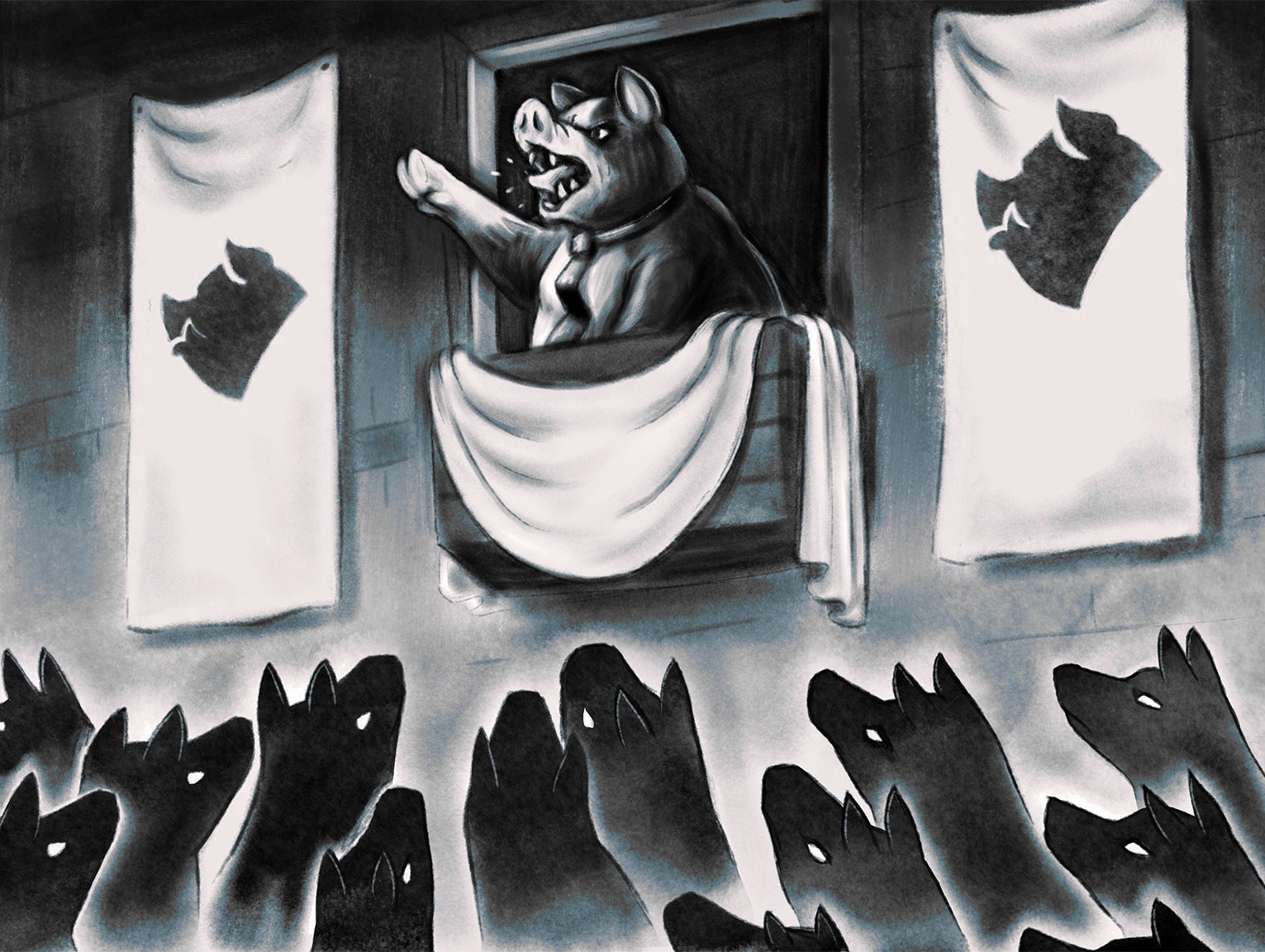
Orwell's Animal Farm' Sticks a Bit Too Close to the Source Material | WIRED

Can Cina goes into a war with America ?

 Why China and the United States Can Avoid the Thucydides' Trap-- Beijing  Review


The Truth About the US-China Thucydides Trap

We remember Thucydides as a historian thanks to his documentation of the Peloponnesian War, but we often forget that he was also a philosopher. And like all great philosophers, he has many things to teach us, even if his teaching is inappropriately applied. Thousands of years after the war was fought between Sparta and Athens, observers argued that it showed that an authoritarian government would defeat a democracy. This was widely said in the early stages of World War II and repeated throughout the Cold War. In truth, what Thucydides said about democracies and oppressive regimes was far more sophisticated and complex than a simplistic slogan invoked by defeatists.

Jacek Bartosiak is never simplistic, but I think he is wrong in some respects. The error is the idea that China is a rising power. He is certainly correct if by rising he means it has surged since Mao Zedong died. But he is implying more: that China is rising to the point that it can even challenge the United States. The argument that the U.S. may overreact is based on this error. The U.S. is choosing to press China hard, but the risk of doing so is low.

The most important thing to understand about China is that its domestic market cannot financially absorb the product of China’s industrial plant. Yes, China has grown, but its growth has made it a hostage to its foreign customers. Nearly 20 percent of China’s gross domestic product is generated from exports, 5 percent of which are bought by its largest customer, the United States. Anything that could reduce China’s economy for the long term by about 20 percent is a desperate vulnerability. COVID-19 has hurt and will continue to hurt many countries. But for China, if international trade collapsed, internal declines in consumption would come on top of the loss of foreign markets.

China faces a non-military threat from the United States, which relies on exports to China for about half of 1 percent of its GDP. If the U.S. simply bought fewer Chinese products, Washington would damage China without firing a shot. If China is a rising power, it is rising on a very slippery slope without recourse to warfare.

But the United States has even more devastating options. China must have access to global markets, which depends overwhelmingly on the ports of its east coast. The South China Sea is therefore a frontier of particular interest for Beijing. The military problem is simple. To access the ocean, China must control the sea lanes through at least one (and preferably more) outlet. The United States does not need to control these lanes; it just needs to deny them to China. The difference is massive. The Chinese have to force the U.S. into deep retreat to secure access. The United States needs only to remain in position to fire cruise missiles or lay mines.

What are the US' allies in WW3? - Quora

The U.S. Navy controls the Pacific from the Aleutians to Japan, Korea, Taiwan, the Philippines, Indonesia and Australia, giving Washington an old and sophisticated alliance system that China cannot match. And though allies can drag a nation into conflicts it doesn’t want to be part of, having no allies deprives a nation of strategic options. If only one of China’s littoral nations allied with it, China’s strategic problem might be solved. The failure to recruit allies is an indicator of the regional fear of Chinese power and trustworthiness. Adding to China’s strategic problems is that it borders some countries such as Vietnam and India that are hostile to its interests.

Hypothetically, China could forge an alliance with Russia, a nearby power with which it shares some common competitors. The problem is that Russia’s focus must be on its west and on the Caucasus. It has no ground force it could lend to China, nor does it have a naval force that would be decisive in its Pacific operations. A simultaneous strike westward by Russia and eastward by China is superficially interesting, but it would not divide U.S. and allied forces enough to take the pressure off of China.

It’s true that China is a rising power, but as I said, it’s rising from the Maoist era. It has a significant military, but that military’s hands are tied until China eliminates its existential vulnerability: dependence on exports. Under these circumstances, the idea of initiating a war is farfetched. More than perhaps any country in the world, China cannot risk a breakdown in the global trading system. Doing so might hurt the U.S. but not existentially.

The United States has no interest in a war in the Western Pacific. Its current situation is satisfactory, and nothing is to be gained from initiating a conflict. The United States is not giving up the Pacific – it fought wars in Korea and Vietnam as well as World War II to keep it. The U.S. can’t invade mainland China or conquer it. It cannot expose its forces to massive Chinese ground forces. In this sense China is secure. China’s fear is maritime – isolation from world markets. And that possibility is there.

There is of course evidence of advanced Chinese systems being prepared and claims that the U.S. is losing its relative share of power. But this is one of the great defects of military analysis: counting the hardware. In the U.S. military, I have noted people rolling their eyes when they hear about the superweapons being produced. The closer you are to weapons development, the more you are aware of its shortcomings. Wars are won by experienced staff, brave and motivated forces, and factories that don’t screw up. Engineering is part of war but not its essence. The question for any military is not what equipment it has but how long it takes to jury-rig the breakdown. Technology matters, of course, but it is only decisive in the hands of those with deep experience of the battle to be fought. China lacks that. For all its hardware and technology, it has not fought a naval battle since 1895 (which it lost). China has no tradition of naval warfare to compare to its experience on land. And tradition and lessons passed down from generation to generation of admirals are extremely valuable. The United States has been in combat frequently, launching aircraft against land targets, conducting active anti-submarine searches and coordinating air defense systems for large fleets in combat conditions.

It’s on this point that I disagree with Jacek. He submits that China is rising, with a particular focus on a technological prowess with which the U.S. is not keeping pace. Maybe that’s true. But the U.S. is still the superior power. It has an economic superiority, a geographic superiority, a political superiority in alliances, and a superiority of experience not only at sea but in air and space. Technology can only offset those deficiencies so much.

So I think the Thucydides concept, while valid, doesn’t apply to this case. China is not pressing the United States in any dimension, and for this reason, American rhetoric is not matched by the frenzied production the U.S. puts in motion when it is concerned.