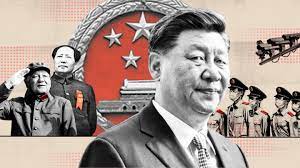
David Ownby on China’s ‘Resolution on History,’ Ideology, and Intellectuals
Reflections on CCP ideology — including the latest Resolution on History — and how it is received by Chinese intellectuals.
The Chinese Communist Party’s “Third Resolution on History,”
released in full on November 16, presents the party as a major force
for good in Chinese and world history from its founding in 1921 up to
the present day.
In this interview with The Diplomat’s Jesse
Turland, Professor David Ownby discusses the CCP resolution, its
approaches to communication with the public, and the value of the
listening to intellectuals for understanding China.
Ownby is a
professor of history at the University of Montreal, specializing in
religion, social movements, and intellectuals in China. At the website “Reading the China Dream,” he publishes translations of the writings of contemporary Chinese intellectuals unavailable elsewhere in English.
What are your impressions of the Third Resolution on History?
The
resolution didn’t seem especially drastic to me in comparison to many
alarming headlines leading up to its release. I expected Xi Jinping to
put himself front and center, and he did.
I
would say that I’m not shocked that the CCP would rewrite history.
People rewrite history all the time. The American Supreme Court rewrites
history, political parties rewrite history. Given that it is the 100th
anniversary of the founding of the party, it would have been more
surprising if there hadn’t been a resolution on history in
China this year. In the party’s Marxist system, there is a long
tradition of historical exegesis, of rethinking where and how the
dialectic of history has brought China to this particular point.
One
thing that struck me was that they didn’t claim victory in the fight
against corruption. They said that it is still ongoing. This may be
true, or it may be said because it’s useful to the regime, or a bit of
both. It’s very useful to say, “We’re corrupt, and I’m fixing it.” It
gives you a lever against anybody you don’t like. They have been quick
to claim victory on poverty alleviation and declare they are moving on
from that. But they didn’t do that with corruption. They said,
“Corruption is still a problem, and if we don’t fix it, we’re in bad
shape.” This was interesting.
As to the impact of the resolution, even
within the party, I wonder really how many people will pick over the
finer details of the 30,000-character text. They may care about Xi
Jinping naming himself to a third term, and that’s a big deal. But a
theoretical document may not be of that much interest to most party
members. This is just speculation on my part.
What do you
think Chinese intellectuals and the educated public make of the party’s
style of communication? This resolution was clearly written in the
style sometimes called “official speak” (官话 guanhua), full of party terminology and references to the “thought” of leaders from Mao to Xi.
Even people on the side of the regime do not really repeat that kind of guanhua language. The authors I translate don’t repeat guanhua
at all. I think that’s because Chinese intellectuals have globalized in
the last 40 or 50 years. They have the same intellectual resources that
you or I have, and they have the same methodology. They speak much the
same language even when they are speaking Chinese.
For Chinese
intellectuals, even if they support the regime, they wish that the
regime would stop being something from the last century. They don’t want
a “great leader” with “great thought.” China is awake to the world in a
lot of ways, whereas the party is still stuck in 19th or 20th century
Marxist rhetoric. For the establishment intellectual men and women I
translate, I think the feeling is pretty widespread: “We’re richer than
we were, we’ve pulled off an economic miracle, but stop making us think
these silly things. Let us think something else… I’m an intellectual, I
know how this works, let me help you, let me take over your messaging.”
That’s what they would like to do.
One of the key figures
who has shaped China’s ideological messaging is Wang Huning. You have
translated some of Wang’s essays. What are your thoughts about Wang’s
role and legacy?
All of Wang’s writing in his own name
was done in an earlier time before he entered the government. That makes
it difficult to conclusively say anything about him now. I don’t have a
strong opinion about this idea that Wang is somehow the essence of
where China has wound up.
As for Wang’s 1986 essay “Reflections on the Cultural Revolution and the Reform of China’s Political System,”
when I read it, I thought he was quite liberal. It’s very interesting
that he rewrote it five times over the course of the succeeding decades.
The last time I think was 2012, right before or as Xi came to power.
The fact that Wang reworked and refined this piece so many times
reflects the import of the Cultural Revolution for Chinese intellectuals
and for China as a whole.
The whole point of this essay seemed to
be to say that China messed up terribly and needed to liberalize. If I
read this essay in the context of the other figures I read now, what
stands out is how liberal Wang was early on.
How would you describe your “Reading the China Dream” project?
“Reading
the China Dream” is about reading, translating, and curating a wide
range of Chinese establishment intellectual opinion. It started a few
years ago by accident, when I was on an airplane and happened to read a
really gripping Chinese book, one of Xu Jilin’s books about the Chinese
Enlightenment. It was about the May Fourth Movement, written in plain,
understandable language with no party intervention, with no preconceived
conclusions. It was backed up by excellent research. I had been reading
Chinese texts for 30 years, but until that point had never read
something that made me think, “This is just a good book!” And I said to
myself, “Why didn’t I know this was out there?” And I realized that if I
didn’t know this material was out there, other people may not know
either.
It became a sort of obsession to translate. The project
and the website aim to translate Chinese establishment intellectuals,
who are people writing in Chinese in China, and who play by the rules of
the party state without being propagandists. The idea is to show that
there is real debate, real intellectual difference in China. Certain red
zones are off limits, of course. They can’t talk about Xinjiang, or
Tibet, or Falun Gong, or Taiwan. But there’s still a huge range of stuff
that they can talk about: what reforms mean, what democracy means
within China, gender (to a certain extent), the environment.
These
writers have a vast frame of reference. A lot of them know the Chinese
classical tradition. They have also embraced the West in many ways and
draw from Western thought. And they try to provide insights into what
China’s doing or what the West is doing in a way that I think is very
worthwhile to look at.
What ideological trends or issues
in China will you be following with interest in the next year? Do you
anticipate anything different for the public sphere under a third Xi
term, or more of the same?
Some issues will simply not go
away, like China’s rise and the Sino-American rivalry. I think there is
a lot of concern that China’s period of extremely rapid growth is
coming to an end, and even the party admits as much on occasion. This
will be a significant challenge to the regime’s management capacity,
which can readily become a challenge to the regime’s ideological
legitimacy.
I think populism in China might become a real problem
as well. At present, China’s “little pinks” have a lot of fun defending
China’s reputation around the world against whomever dares to offend
China, but the same forces could conceivably turn inward.
I think
that many Chinese establishment intellectuals will watch such events
carefully, trying in their patient, roundabout way to hold the
party-state accountable and perhaps move it in a different direction.

 Posts
Posts


 里根研究所调查说:大多数美国人认为中国是最大威胁
 据福克斯新闻报道称,一项民调显示,大多数美国人认为中国是最大的威胁并担心爆发战争。这项民调是为今年的里根国防调查进行的,该研究所将调查结果与美国人在2018年对各种问题的看法进行了比较。
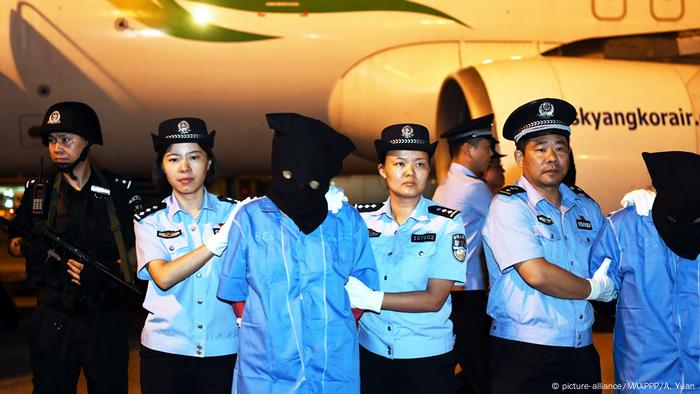
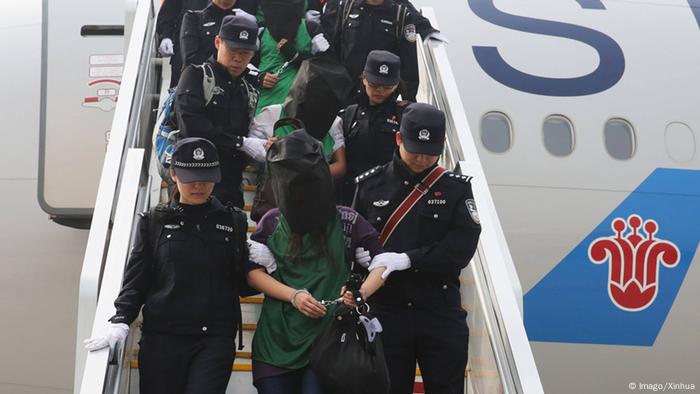
 路透
路透


 58岁的摩尔说,英国情报人员在不稳定的世界中面临四大安全问题:中国、俄罗斯、伊朗和国际恐怖主义。在这个世界中,国家和非法组织都在竞相利用快速变化的信息技术。
