Monday, February 16, 2026

《快报》:张又侠之后,军中再无人能阻止武力攻台

中共軍委兩巨頭落馬重創攻台實力綠分析:習近平當下最關心「誰會背叛」 - 臺北市- 自由時報電子報


《快报》:张又侠之后,军中再无人能阻止武力攻台

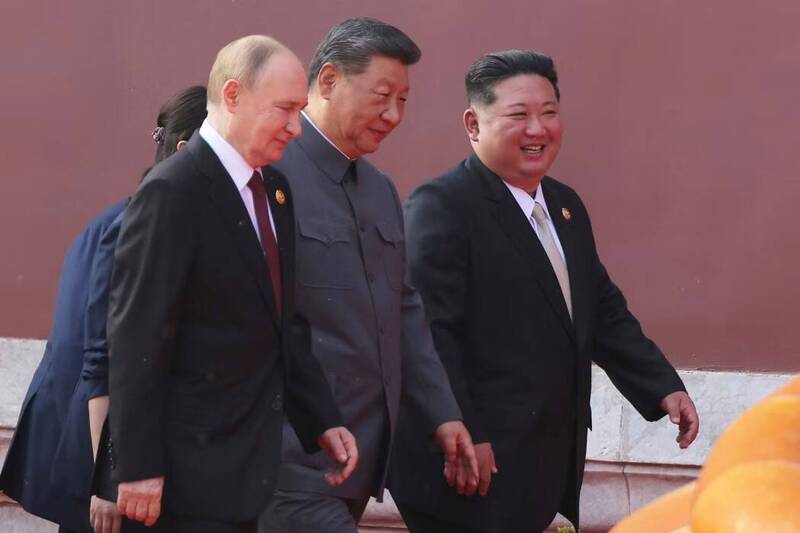
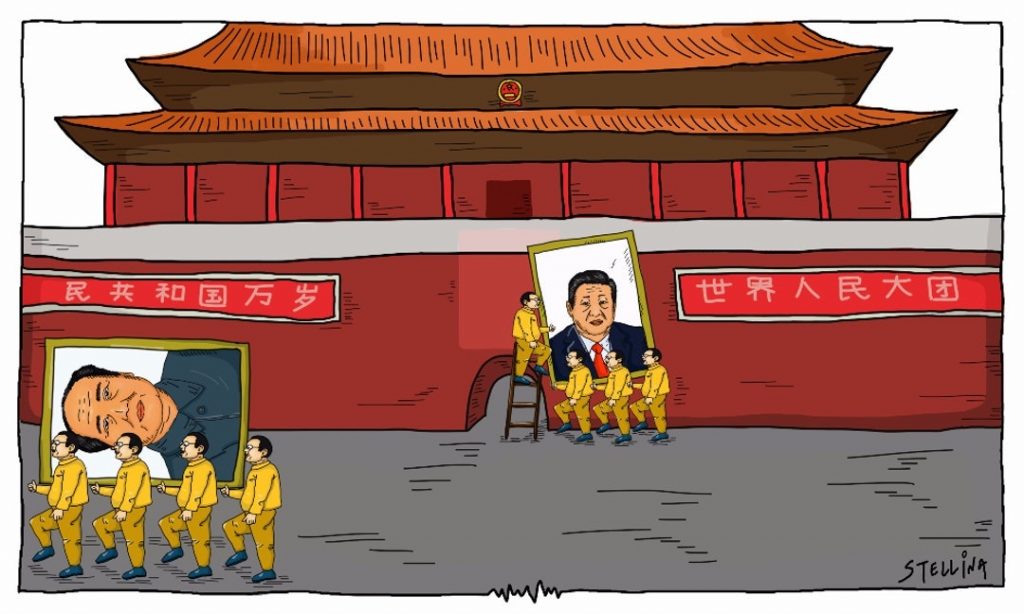
关于中共中央军委张又侠倒台,《快报》周刊的文章认为,在一波又一波对军队的清洗背后,是习近平决心控制台湾的执念。文章形容习近平治下的清洗行动的政治暴力甚至超越毛泽东。对军队高层的斩首行动与毛时代相比,有过之而无不及。结果是他如今几乎是独自一人执掌着一支两百万人的军队。在短期内,张又侠倒台令习近平武力攻台的行动变得困难,但再过几年,就不再会有人能够阻止攻台计划。文章引述法国智库“亚洲中心”资深研究员高敬文指出,这支军队需要两到三年才能在既政治上可靠又有军事能力的军队将领的领导下成为可作战的队伍。美国智库亚洲协会中国政治研究员牛犇(Neil  Thomas)近日在一份报告中指出,习近平好像自信能够依赖掌握现代战争技术而且他信得过的新一代将领让军队重获新生。

How Likely Is China to Start a War?虽然短期内解放军攻台的可能性降低,但文章指出,一些分析担心会发生擦枪走火事件导致局势失控。国立台湾大学中国大陆研究中心副研究员汤广正向《快报》周刊指出,这种情况有可能来自习近平权力过于集中的一项决定,或者是新任命领导人的错误建议。文章引述美國國防部前官員唐安竹(Drew Thompson)指出,张又侠倒台,使得误判的风险升高。

但文章也引述德国马歇尔基金会印太项目主任葛莱仪指出,中国并未放弃以非军事手段达到其政治目的的想法。习近平的目标无疑是以“不战而屈人之兵”战术让台湾就范,因此会在未来几年,继续以战机和舰船侵扰的方式来威吓台湾,但始终保持在一种低于战争临界点的灰色地带。

文章指出,除非发生重大意外,预计习近平将会在2027年蝉联第四个任期,而习近平也会紧盯2028年1月台湾新的总统选举,尽全力阻止赖清德连任。但这篇文章作者认为,即便是国民党候选人当选,绝大部分台湾人也拒绝接受归入中国版图。习近平早已警告,他不会放弃使用武力。文章就此写道,倘若习近平失去耐心,那时可能不再有太多人能够阻止他。

美国37名跨党派议员致函台湾立院关切国防特别预算 韩国瑜:开议后最优先审核国防特别预算

哈哈,真撲街, 難怪別人說它是中共台灣黨支部書記…… 

美国37名跨党派议员致函台湾立院关切国防特别预算   韩国瑜:开议后最优先审核国防特别预算

美国37名跨党派议员致函台湾立院关切国防特别预算,据台媒三立新闻网报道,台湾立法院长韩国瑜、副院长江启臣除夕(2月16日)上午紧急发布声明回应,立法院开议后,国防特别预算相关议案将会是最优先审议的议案。

豁然開朗】國民黨打不贏共產黨的原因:黃國昌、鄭麗文的背骨上選- 放言Fount Media台湾立法院周一16日上午以新闻稿发布,韩国瑜、江启臣共同声明响应美国联邦参众议员联名致函关心我国国防预算,韩国瑜表示,台美友好建立在共享民主价值,以及共同维护印太地区和平稳定的承诺,是双方关系的重要基础,是长期的价值伙伴,立法院珍惜且重视台美紧密的合作关系以及美国国会对台湾的坚定支持。

中共的三只狗奴才🇨🇳💩🐕:藍、粉紅、白。 : r/Taiwanese韩国瑜说,台湾身处在复杂的地缘政治环境,他及江启臣一向关注我国的国防、外交及侨务工作,并高度重视国防、安全与经济合作议题,期盼透过台湾自身的努力以及与伙伴国家的合作,共同维护台海及区域的和平、稳定与繁荣。

Pacific Atrocities Education  韩国瑜指出,他与江启臣作为立法院院长与副院长,所代表的是一个由中国国民党、台湾民众党、民主进步党及无党籍立法委员共同组成的多元国会,民主社会中存在不同意见,并透过理性辩论达成共识,是民主制度的成熟表现。也希望向美国国会友人表达,台湾的立法委员与各位一样,怀抱对国家的热爱与责任感。无论党派立场为何,大家对于守护国家、强化自我防卫能力、确保国家安全、社会安定与经济繁荣的决心,绝对一致且坚定。

韩国瑜表示,中华民国台湾是蓬勃的民主国家,立法院作为国家最高民意机关,会坚持在公开、透明及符合法治的程序下,审议各项议案以及达成跨党派的共识,透过理性思辨与国会参与更将有助于提升国防政策的社会支持。

针对国防特别预算条例,韩国瑜说,会积极协助各党团间的沟通与协调,营造理性对话的环境,立法院一定会在符合国家国防需求以及响应民意期待下,充分讨论并审慎审议相关议案。这样的过程不仅符合民主程序,更有助于凝聚台湾社会对国防预算的共识。 待春节假期结束,立法院开议后,国防特别预算相关议案将会是最优先审议的议案,也相信在各政党的努力下能看到进展。

全力支持民進黨候選人“台湾有自我防卫的决心,也一向致力维护台海与区域的和平与稳定。” 韩国瑜表示,立法院肩负全国2300万民意的托付,会克尽职责,为国家的安全、发展与繁荣努力。 

Sunday, February 15, 2026

The 10 Best U.S. Foreign Policy Decisions Ever

 Marshall Plan - Wikipedia

The 10 Best U.S. Foreign Policy Decisions Ever

From securing America’s sovereignty to expanding its continental reach to creating the post-World War II institutions that ushered in unprecedented peace and prosperity, discover which U.S. foreign policy decisions left the most positive legacies.Marshall Plan: Historical Significance | SchoolWorkHelper

    #10 Best

    Handling of the Cuban Missile Crisis

    A U-2 plane used during the Cuban Missile Crisis. Courtesy of the Dino A. Brugioni Collection at The National Security Archive.

    A U.S. Air Force surveillance flight over Cuba in October 1962 turned up evidence of what U.S. officials had feared: the Soviet Union was installing nuclear-armed missiles on the island. The discovery triggered a thirteen-day crisis that brought the world to the brink of nuclear war. President John F. Kennedy initially favored air strikes to take out the missile sites before they became operational. As a first step, he ordered a naval quarantine, or blockade, of Cuba. But worried about escalation to the unthinkable, he pursued backchannel communications with Soviet leader Nikita Khrushchev that ended the crisis. Alarmed by how close they had come to nuclear Armageddon, Kennedy and Khrushchev subsequently negotiated several agreements that lowered tensions between their two capitals and opened the door to the arms-control era. SHAFR historians ranked JFK’s handling of the Cuban Missile Crisis as the tenth-best U.S. foreign policy decision.


  • #9 Best

    Monroe Doctrine

    A political cartoon touting the Monroe Doctrine. Courtesy of the Library of Congress.

    On December 2, 1823, President James Monroe delivered in writing his seventh annual address to Congress—the equivalent of today’s State of the Union address. In the middle of an otherwise forgettable summary of national issues, Monroe presented what would become a classic statement of U.S. foreign policy—the Monroe Doctrine. Monroe asserted that the Western Hemisphere was off limits to further European colonization and claimed the right for the United States to protect the sovereignty of the independent republics in the Western Hemisphere. Both claims were bold statements that the country had no way of backing up. But these bluffs were based on a shrewd diplomatic analysis that signaled to the world the far-reaching ambitions of the young country. SHAFR historians ranked the Monroe Doctrine as the ninth-best U.S. foreign policy decision.

    #8 Best

    Act Prohibiting the Importation of Slaves

    An enslaved women being auctioned in Richmond, Virginia, 1856. Courtesy of the Library of Congress.

    The question of slavery’s future figured prominently when the Constitutional Convention met in Philadelphia in the summer of 1787. Some delegates from Northern states hoped to banish the practice. They ultimately abandoned their fight in the face of the reality that the Southern states would rather bolt the convention, thereby dooming the effort to create a more effective national government, than agree to abolish slavery. The opponents of slavery, however, won one concession. The Constitution provided that after a twenty-year wait, Congress could ban the importation of enslaved people. In March 1807, at President Thomas Jefferson’s request, Congress did just that. On January 1, 1808, the Act Prohibiting the Importation of Slaves went into effect. It was the first U.S. law that broke with the transatlantic slave system, and it curtailed U.S. participation in the international slave trade. SHAFR historians ranked the Act Prohibiting the Importation of Slaves as the eighth-best U.S. foreign policy decision.

    #7 Best

    Creation of the Bretton Woods System

    Mount Washington hotel in Bretton Woods, New Hampshire. Courtesy of the Library of Congress/Carol M. Highsmith.

    As the United States fought World War II, President Franklin D. Roosevelt was looking to lay the foundation for the world that would follow the fighting. He believed that the war had started in part because countries had pursued wrong-headed trade and monetary policies in the 1930s that intensified the Great Depression and fueled nationalism. FDR also knew that American firms and farmers would want to export to foreign markets once the war ended. Intent on correcting the mistakes of the past and hoping to spur future prosperity, Roosevelt convened a meeting of forty-four countries in July 1944 in Bretton Woods, New Hampshire. For three weeks, the delegates to the conference—known formally as the United Nations Monetary and Financial Conference—hammered out the rules for a new international monetary system. At its heart lay two new multilateral institutions, the International Monetary Fund (IMF) and the International Bank for Reconstruction and Development (most commonly known as the World Bank), which became the pillars of the postwar global economic order. SHAFR historians ranked the creation of the Bretton Woods System as the seventh-best U.S. foreign policy decision.

    #6 Best

    Creation of NATO

    Accession Number 73-3193

    President Harry S. Truman signs the North Atlantic Treaty proclamation. Courtesy of the Harry S. Truman Library & Museum/National Park Service/Abbie Rowe.

    Formed in 1949 with the signing of the Washington Treaty, NATO is a  security alliance of 30 countries from North America and Europe. Read more  about the U.S.-NATO Alliance: https://go.usa.gov/x7HVv. For much of its history, the United States shunned what Thomas Jefferson in his first inaugural address called “entangling alliances” with other countries. This meant, above all, standing apart from the political affairs of Europe. The United States broke with that tradition when it entered World War I, though President Woodrow Wilson insisted that the United States fought beside France and Great Britain as an “associated power” and not an allied one. After the war ended, the United States again turned its back on Europe. That pattern looked set to repeat when Germany surrendered at the end of World War II. However, Soviet efforts to dominate Europe changed U.S. calculations. Rather than returning home, the United States committed itself to the defense of Europe with the creation of the North Atlantic Treaty Organization (NATO). It became the most successful military alliance in history, deterring the Soviet Union and ushering in what has been called the “Long Peace” in Europe. SHAFR historians ranked the creation of NATO as the sixth-best U.S. foreign policy decision.

    #5 Best

    Lend-Lease Act

    Members of the English Auxiliary Territorial Service with boxes of rifles provided by the United States under the Lend-Lease Act. Courtesy of the Franklin D. Roosevelt Presidential Library & Museum.

    In December 1940, British Prime Minister Winston Churchill wrote to President Franklin D. Roosevelt with chilling news: Britain was on the verge of bankruptcy. The war with Germany, which had begun in earnest in the spring of 1940, had drained the British treasury. London would soon be unable to pay for the supplies and weapons it was buying from the United States. That might doom Britain’s effort to hold off the Nazi onslaught. Churchill’s news put FDR in a bind. A month earlier, he had won an unprecedented third term as president after promising Americans worried about the conflict in Europe that their “boys are not going to be sent into any foreign wars.” But FDR also believed that a German victory would be disastrous for the United States. Knowing he had to act, he used the next three months to build congressional and public support for a plan to lend supplies to Britain and other countries fighting the Axis powers. The resulting Lend-Lease Act, which Churchill called “the most unsordid act,” provided more than $50 billion in aid to fifty nations and helped win World War II. SHAFR historians ranked the Lend-Lease Act as the fifth-best U.S. foreign policy decision.

    #4 Best

    Louisiana Purchase

    Constantino Brumidi

    “Cession of Louisiana” by Constantino Brumidi, depicting the signing of the Louisiana Purchase, 1875. Courtesy of the Architect of the Capitol.

    The United States emerged from the Revolutionary War with its independence, but the young nation remained vulnerable to foreign powers. Both France and Spain claimed territory west of the original thirteen states. Much of the trade of what was then the western United States flowed down the Mississippi River. First Spain and then France controlled the port of New Orleans, posing the threat that either could cripple the U.S. economy by cutting off access to the sea. In 1803, President Thomas Jefferson sent envoys to Paris with instructions to pay up to $10 million to acquire New Orleans and as much of the territory east of the city as possible. However, French leader Napoleon Bonaparte made the Americans a surprise offer: he would sell the entire Louisiana Territory for $15 million. Jefferson worried that nothing in the Constitution authorized such an acquisition. However, he swallowed his objections and jumped at the deal. The purchase more than doubled the size of the United States, secured control of the Mississippi River, and put the country on the path to becoming a continental power. SHAFR historians ranked the Louisiana Purchase as the fourth-best U.S. foreign policy decision.

    #3 Best

    Treaty of Alliance With France

    Signing of the Treaty of Alliance between France and America

    Library of Congress, Prints & Photographs Division, Detroit Publishing Company Collection

    When the thirteen colonies declared independence in 1776, they turned to Great Britain’s rival France for aid. At first, France provided only clandestine support. It feared that publicly siding with rebels who were likely to lose would risk a war with Great Britain that had few benefits. But adept U.S. diplomacy and a critical American battlefield victory changed that calculation. On February 6, 1778, France recognized the independence of the thirteen American colonies and pledged to support their war with Great Britain. The agreement, which was codified in two separate treaties, was a turning point in the American Revolutionary War. France subsequently provided the colonies not only with military supplies and financial support, but also with land and naval forces. France’s entry into the war also forced Great Britain to divide its forces to guard against threats to its interests in Europe and the Caribbean as well as in the thirteen colonies. A war that the colonists seemed destined to lose became a war that they won—and that changed the course of history. SHAFR historians ranked the Treaty of Alliance with France as the third-best U.S. foreign policy decision.

    #2 Best

    Creation of the United Nations

    The General Assembly Hall during an event in 2016

    UNGA_picture

    On October 24, 1945, the Charter of the United Nations came into force, establishing the United Nation’s structure, principles, and purpose. The new organization was the culmination of a yearslong effort led by President Franklin D. Roosevelt, who had died six months earlier. The objective had been to address the failures of the League of Nations, which was created after World War I, by developing a new international institution that could formalize common efforts to maintain global peace and security, develop friendly international relations, and tackle economic, social, cultural, humanitarian, and public health problems worldwide. Although the United Nations has fallen short of fulfilling Roosevelt’s lofty goals, its role as a forum of international debate, its many peacekeeping operations, and its wide-ranging humanitarian activities nonetheless mark its founding as a major triumph for the United States. SHAFR historians ranked the creation of the United Nations as the second-best U.S. foreign policy decision.

    #1 Best

    Marshall Plan

    Truman signs the Economic Cooperation Act (the Marshall Plan) into law.

    Library of Congress

    On April 3, 1948, President Harry Truman signed into law the Economic Cooperation Act of 1948, better known as the Marshall Plan. Named after its main proponent, Secretary of State George C. Marshall, the law authorized one of the largest foreign aid programs in history. From 1948 to 1951, the United States provided sixteen countries in Western Europe $13.2 billion in assistance—equivalent to roughly $180 billion today—to buy food and goods and to invest in their infrastructure and industry. The Marshall Plan revitalized postwar Europe, blunted Soviet influence in Western Europe, encouraged intra-European cooperation, and cemented the United States’ leadership of the transatlantic alliance. SHAFR Historians ranked the Marshall Plan as the best U.S. foreign-policy decision.70 Years Ago, US Proposes Marshall Plan to Rebuild Post-WWII Europe


美国司法部起诉哈佛大学歧视白人申请者


哈佛大学因录取制度歧视亚裔遭美司法部调查_手机新浪网 

法新社报导,美国司法部长邦迪在声明中表示:“哈佛大学未能披露我们所需的数据,这些数据对于确保其招生过程不存在歧视至关重要。”

(华盛顿14日讯)美国司法部当地时间周五对哈佛大学提起诉讼,要求其提交学生招生数据。这是美国总统特朗普政府在与这所精英大学长期斗争中发出的最新一轮攻势。

法新社报导,美国司法部长邦迪在声明中表示:“哈佛大学未能披露我们所需的数据,这些数据对于确保其招生过程不存在歧视至关重要。”

在2023年的一项裁决中,美国最高法院已禁止在大学招生中考虑种族因素,而特朗普领导下的司法部目前正在调查是否有美国学校歧视白人申请者。

司法部表示,该诉讼“仅寻求强制哈佛提交与招生中任何种族考量相关的材料,并非指控哈佛存在种族歧视”。

助理司法部长迪伦表示:“如果哈佛已经停止了歧视行为,它应该乐于分享证明这一点所必需的数据。”

特朗普近期还要求哈佛大学支付10亿美元(约39亿令吉)的赔偿金,理由是该校在亲巴勒斯坦抗议活动期间未能充分保护犹太学生。

特朗普在其社交平台Truth Social上写道:“我现在正寻求10亿美元的赔偿,并且今后不想再与哈佛大学有任何瓜葛。”

几天后,五角大厦宣布切断与哈佛的所有学术联系。

特朗普此前曾试图削减哈佛超过26亿美元(约101亿5900万令吉)的联邦资金,并采取行动阻止留学生(占该校学生总数的1/4)入境。这些举措目前大部分已被法院暂时阻止。

美媒:美军抓捕马杜罗 使用AI模型Claude


(华盛顿13日讯)《华尔街日报》周五引述知情人士说法报导,美国军方在执行抓捕委内瑞拉前总统马杜罗的行动中,使用了Anthropic的人工智能(AI)工具Claude,凸显AI模型逐渐在五角大厦获得采用。

中央社引述该报导,上个月,美军在一场大胆的突袭行动中逮捕马杜罗与他的妻子,将他们押到纽约面对贩毒指控,这项任务还包括轰炸加拉加斯多处地点。

《华尔街日报》指出,Claude之所以能在这次行动中部署,是因Anthropic与数据分析承包商帕兰泰尔技术公司(Palantir Technologies)的合作。帕兰泰尔技术公司的平台受到战争部与联邦执法机关广泛应用。

Anthropic是第一个被五角大厦用于机密行动的AI模型开发商。在这次委内瑞拉行动中,也可能使用了其他AI工具处理非机密任务,这些工具的应用范围广泛,从汇整文件到操控自主无人机皆涵盖在内。

马杜罗被美军从加拉加斯抓获后,戴著手铐出现在纽约。(图取自X平台)
马杜罗被美军从加拉加斯抓获后,戴著手铐出现在纽约。
  《华尔街日报》先前报导,Anthropic对于五角大厦可能如何使用Claude感到忧虑,促使政府官员考虑取消一纸于去年夏天授予、价值高达2亿美元(约7亿8100万令吉)的合约。  知情人士透露,Anthropic首席执行员阿莫戴(Dario Amodei)曾公开表示担忧AI在自主致命行动与国内监控中的应用,这也是Anthropic目前与五角大厦合约谈判中的两大症结点。

许多AI公司已在为美军打造客制化工具,但大多仅能在军方行政用途的非机密网络上使用。Anthropic是唯一能透过第3方在机密环境中使用的公司,不过政府仍须遵守Anthropic的使用政策。

" 古巴与尼加拉瓜左翼政权将垮台 "

The Fall of MADURO Will Collapse CUBA: Blackouts, GDP Plunge, and Panic in  the Regime 

" 古巴与尼加拉瓜左翼政权将垮台 "

(慕尼黑15日讯)委内瑞拉反对派领袖、诺贝尔和平奖得主马查多周六预言,一旦委内瑞拉的“犯罪政权”终结,古巴和尼加拉瓜的左翼政府也将随之倒台。

法新社报导,上个月初,美国特种部队掳走了委内瑞拉总统马杜罗,并将他送往美国接受刑事指控审判,副总统罗德里格斯则成为当前的代理总统。

她承诺对政治犯进行广泛大赦,并在美国授意下推动了石油行业改革引入私人资本。美方允许她继续掌权,前提是她必须服从华盛顿的指示。

Phrase Free Nicaragua On Banner Mens Stock-foto 1935052145 | Shutterstock马查多在慕尼黑安全会议上通过视频连线称:“委内瑞拉正在发生的事情影响巨大,已经在该地区产生了连锁反应。”

马查多在会上用英语说:“一旦我们铲除委内瑞拉的这个政权,这个犯罪政权,古巴将是下一个,尼加拉瓜也会紧随其后。我们将首次让美洲摆脱共产主义和独裁统治。”

由国家主席迪亚斯-卡内尔领导的古巴,以及由总统奥尔特加及其担任副总统的夫人穆里略治理的尼加拉瓜,一直是委内瑞拉的传统盟友。


欧洲5国:俄反对派领袖纳瓦尔尼死于“箭毒蛙毒素”

Could Vladimir Putin be prosecuted by a Nuremberg-style tribunal?法新社报导,纳瓦尔尼是俄罗斯总统普京的强硬反对者,于服刑期间的2024年2月16日死于俄罗斯监狱,当时他正被处以19年监禁。

英国、瑞典、法国、德国和荷兰在慕尼黑安全会议上发表联合声明,称纳瓦尔尼死于一种致命毒素的毒杀。

据这些欧洲国家称,对纳瓦尔尼遗体样本的实验室分析显示,其中含有一种存在于南美箭毒蛙皮肤中的毒素,名为依匹巴汀(Epibatidine)。

声明称:“俄罗斯声称纳瓦尔尼死于自然原因。但考虑到依匹巴汀的毒性以及报导的症状,中毒极有可能是他的死因。”

⚡️ Putin is a killer. We are announcing worldwide rallies on August 20, the  anniversary of Alexei @navalny's poisoning. Fear, violence, murder - Putin's  power has been holding on all this for这种毒素在俄罗斯的自然界中并不存在,因此无法解释其为何会出现在纳瓦尔尼体内。故声明认为:“纳瓦尔尼是在被关押期间死亡的,这意味著俄罗斯拥有向其投毒的能力、动机和机会。”

英国外交部另行发表声明称,“只有俄罗斯政府有能力、有动机且有机会使用这种致命毒素。“声明还道:“我们认为俄罗斯应对他的死亡负责。”

Vladimir Putin's goodbye will be a long ...英国首相斯塔默在社交媒体上发文,赞扬纳瓦尔尼“面对暴政的勇气”,并抨击“普京的谋杀意图”。

克里姆林宫尚未对此指控发表评论。俄罗斯外交部发言人扎哈罗娃和俄罗斯驻伦敦大使馆均驳斥了这份西方报告。扎哈罗娃批评这是西方的“宣传骗局”。 

纳瓦尔尼的遗孀尤利娅表示,现在已经有“科学证据”,证明这位克里姆林宫的反对者是被谋杀的。

尤利娅在慕尼黑安全会议间隙说道:“两年前,我曾在这里的舞台上说过,是普京杀害了我的丈夫。”

“我当时当然确定那是谋杀……但那时口说无凭。而今天,这些话已成为科学证实的事实。”

尤利娅去年9月表示,对秘密运出的生物样本进行的实验室分析发现,她的丈夫死于中毒。

俄罗斯监狱管理局(FSIN)和官方调查委员会在2024年2月案发时最初给出的结论是,纳瓦尔尼在北极监狱流放地散步时感到不适并倒地,其死因是的“猝死综合征”。