
 Posts
Posts


 The yen intervention battle is far from over
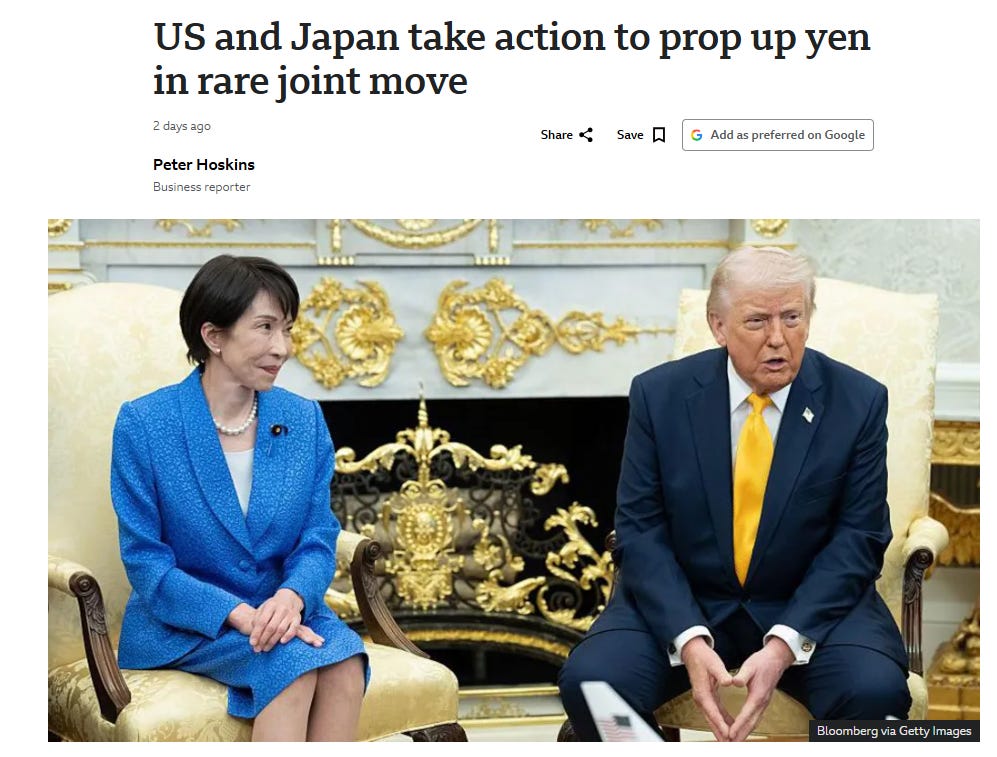
When Washington and Tokyo earlier this month took the unusually high-profile step to steady the tumbling yen, they did more than arrest one currency's slide.
Yen purchases by U.S. authorities sent a signal that governments may no longer tolerate certain market moves, not after a year in which currencies from South Korea to Indonesia weakened even as exports boomed.
Nikkei Asia highlighted five things to know about what the U.S.'s propping up of the yen may mean for the rest of Asia's economies.
- A weak currency isn't confined to Japan
- The yen matters more than other Asian currencies
- The BOJ may be prompted to accelerate rate hikes
- Stronger currencies won't necessarily cool Asia's exports
- All eyes are now on Beijing's policy choice
'A new Plaza Accord?'
Japan's currency authority remains defiant despite the yen surrendering about half the gains it made against the dollar following a round of interventions.
The Federal Reserve's Foreign and International Monetary Authorities Repo Facility, a COVID-era monetary tool, has been repurposed to enable the Bank of Japan to borrow dollars. The arrangement, announced by U.S. Treasury Secretary Scott Bessent on Aug. 3, has been likened by Japanese analysts and policymakers to the Plaza Accord, the landmark 1985 agreement among major economies that coordinated policy measures to stabilize the dollar.
Japan's top currency diplomat went as far as to call the joint intervention "a U.S.-Japan currency union," underscoring how difficult it has become for any country to influence currency markets on its own.


No comments:
Post a Comment
Note: Only a member of this blog may post a comment.