
 Posts


 事件发生在公元1954年7月23日,当时中国《人民日报》先后发表了《一定要解放台湾》、《人民解放军的光荣任务》社论,两岸局势敏感之际,中共解放军误将一台从泰国曼谷飞往英属香港的国泰航空客机,当作是中华民国空军的轰炸机而直接开火,造成10死8伤的惨剧。
 不料解放军将客机击落后“完全没有参与救援工作”,只准许英国驻香港的空军救援,并警告其他国家的军机若进入领空会“直接击落”,不过美国和法国军队并没有理会中共的警告,迅速前往失事地援救。
后续国泰航空和英方共开出了“36.7万英镑”的赔偿,时任中国国务院总理兼外交部长的周恩来针对此事,表示“1954年海南岛驻军辨查失误,击落英国民航机,我们迅速道歉并赔偿”。
也就是上述这数十年前的“中共解放军误击国泰航空班机”事件,有网友认为国泰航空的成员喜欢英语,厌恶普通话是合情合理。
Sunday, May 28, 2023
中共围剿国泰 网揭“中共解放军击落国泰班机”

日圆年底前“恐飙升15%” 受升息压力便宜日币要没了

瑞银全球财富管理及法国兴业银行(Societe Generale SA)日前表示,有迹象显示日本央行将于6月的会议上,调高基准债券殖利率上限,预期日圆可能会在未来几个月飙升,今年底前有机会升值约15%。
根据彭博报导,法国兴业银行策略师柯尔伯(Olivier
Korber)一份文件中指出,日本4月核心通膨率创40年来新高,年增4.1%。尤其,日本是少数采用殖利率曲线控制的国家,去年也突然调高曲线控制区间至0.5%。可见物价上涨给日本央行行长植田和男带来升息压力。
柯尔伯预计,日本央行在下个月16日召开的利率决议上,将日本10年期国债利率曲线控制区间上调50个基点至1%,可能会将美元兑日圆从目前约139附近跌至130,幅度约7%左右。
柯尔伯表示,联准会主席鲍威尔称信贷紧缩代表利率不需要升太高,缓和联准会鹰派发言,也暗示美元可能很快会失去动力。柯尔伯强调,日圆走强的短期风险增加,未来几周可能升至130。值得一提的是,植田和男近日暗示,通膨增速未改变日本央行的观点,并称仓促改变政策的成本非常高。
瑞银全球财富管理也表达同样看法,认为未来几个月日圆兑美元汇率将飙升,有策略分析师在上周五(26日)的一份报告中写道,到年底,日圆兑美元汇率将升至122,比当前水平高约15%。并表示,尽管美元近期可能进一步上涨,但日圆兑美元近期走势将出现逆转,“我们维持对美元最不喜欢的评级和对日圆最喜欢的看法。”
Saturday, May 27, 2023
喊去美元化是假的

全球“美元荒”,许多新兴国家不得不以其他货币结算
美国过去一年激进升息,吸引全球资金流入美国,引爆新兴市场债务危机,各国人人自危,掀起所谓的“去美元化”。但大陆学者表示,美国快速升息及缩表导致全球“美元荒”,许多新兴国家不得不以其他货币结算,让不少人认为美元即将丧失主导地位,但他说“这是一种片面激进但并不准确的看法。” 上海首席经济学家金融发展中心战略研究所所长赵建撰文指出,观察一直强势的美元指数,以及美元在国际贸易结算和外汇储备的占比近两年的攀升就能发现,目前其实是“缺美元”,而非“去美元化”。
根据环球银行金融电信协会(SWIFT)数据显示,美元在2023年1月在国际贸易支付占比40.12%,高于2021年同期的38.26%。赵建表示,“如果美元真是被去化,为何美元指数和国际贸易结算中的美元占比还持续走强?”
 赵建说,自联准会暴力升息以来,又一轮美元荒也开始在世界各地出现,缺美元国家与非美元国家做生意时,当然乐意不用美元结算,因为它根本没有美元,甚至还需要美元去还债。如果无法把一种货币作为储备手段,那两国的贸易比起说去美元化,“以物易物”更加贴切。
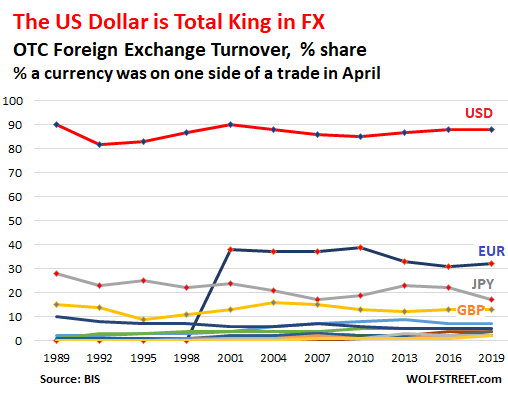 赵建举例,好比巴西出口大豆、铁矿石获得人民币,但又用人民币购买大陆的电动车、日用品等,这代表人民币仍没有进入巴西国库作为储备,离岸人民币也没有增加,这样的交易不过就是“以物易物”。
此外,由于人民币仍不能自由兑换,汇率也不能自由浮动,亦不是国际定价货币,在会计货币价值的计量上,最后还是得换算成美元。
但赵建补充,美元并非没有问题,其实从布雷顿森林体系瓦解以来,去美元化就一直在进行,在国际贸易支付的比重,从最高60%到现在约40%,国际外汇储备比重也从曾经最高约70%降至现在约60%。显而易见这是长期趋势,但目前是“缺美元”,而非“去美元”。
格鲁吉亚反俄示威行动令普京搞不清楚那里发生的事情

格鲁吉亚反俄示威行动令普京搞不清楚那里发生的事情
(莫斯科、第比利斯27日讯)俄罗斯上周恢复与高加索国家格鲁吉亚的航空服务,在这个地跨欧亚两洲的国家,引发了反克里姆林宫的示威行动。俄罗斯总统普京当地时间周五表示对此感到惊讶,称示威者“疯了”。 法新社报导,进入后新冠肺炎时代,当世界航空旅行迅速恢复之际,俄罗斯对乌克兰的入侵已进入第2年。同时,莫斯科与西方的孤立也在加深。
上周,一架俄罗斯客机降落在格鲁吉亚。这是俄罗斯2019年与格鲁吉亚中断航线服务以来,俄罗斯飞机首次降落在这个高加索国家。数十名格鲁吉亚人在格鲁吉亚首都第比利斯一个机场外进行抗议。 普京当地时间周五在与商界人士会面时坦言,他对格鲁吉亚出现反俄示威感到“非常惊讶”。
普京在电视讲话中说:“我以为每个(格鲁吉亚)人都会说,‘嗯,谢谢,那很好’。但没有,他们在这个问题上出现了无法理解的大惊小怪。”
普京说:“在我看来,我觉得他们疯了,我搞不清楚那里发生的事情。”2008年,俄罗斯与格鲁吉亚发生了一场短暂但血腥的战争,反俄情绪在这个亲西方国家根深蒂固。
作为对第比利斯反莫斯科集会的回应,俄罗斯于2019年禁止与格鲁吉亚的航线服务。
然而出乎意料的是,普京本月早前宣布解除与格鲁吉亚的飞行禁令,还为格鲁吉亚公民推出90天免签证制度。
普京当天表示,据他了解,是格鲁吉亚领导人“一再”要求俄罗斯取消飞行禁令和签证制度。同时,他也称莫斯科不会干涉格鲁吉亚反俄示威行动。 他说:“(格鲁吉亚)国内发生的事情与我们(俄罗斯)无关。”格鲁吉亚人民应该自己决定国家的道路。
第比利斯示威者本月19日在机场外进行示威活动时,举著写有“你不受欢迎”和“俄罗斯是一个恐怖主义国家”的标语牌,抗议俄罗斯恢复两国航线。
中共”不要一天到晚自己骗自己“ - 冲突的成本仍然不是他们愿意负担的
中共”不要一天到晚自己骗自己“ - 冲突的成本仍然不是他们愿意负担的
中华民国国防部称在其密切监控之下,中共航母通过台湾海峡。而美国前国防部官员以当今的乌克兰战争作为例子,呼吁中共”不要一天到晚自己骗自己“。而美国国防部印太安全事务助理部长近日清晰表示,”我们相信威慑力是真实存在的“、”对北京来说,冲突的成本仍然不是他们愿意负担的“。
中华民国国防部5月27日13时表示,中共“山东号”航母编队舰船3艘,午间通过台湾海峡,沿中线以西北驶;期间台军运用任务机、舰及岸置系统绵密监控,有效掌握台海周边区域动态,并适切应处。
而美国印太司令部司令约翰·阿奎利诺23日几天前强硬表态。他说,美国总统和国防部长授予他两项任务:“第一,防止这场(入侵台湾)冲突的发生;第二,如果我在第一项任务失败了,那就做好准备进行战斗并取得胜利。”
美国前国防部中国、台湾、蒙古科科长胡振东,近日在《新闻大破解》节目中,就阿奎利诺将军这一声明分析说,”他讲的是很明确的警告。跟中共讲说,你要速战速决,不可能。”
胡振东指出,“因为中共有很多的障碍,第一个障碍是台湾海峡,你要过台湾海峡打台湾是一个非常非常难做的事情。第二个是台湾有很多的朋友。台湾的军队不是那么弱,再加上台湾的盟军,这个兵力可能是共军无法打赢的。第三个障碍是中华民国人民自卫的决心,即使你登陆上了地上,人家还是跟你(反击)动来动去,你要速战速决可能没办法”
“很多人可能说‘哇,中共有世界上最大的海军,有1500个飞弹对着台湾,(等等)这些东西。其实在中东打仗的时候,美国就有一个评估说,如果能够把伊拉克的军队打掉30%,它就完了,它没办法再攻了,没办法再守。对中共来讲,那个比率可能更低,因为如果你把它一些船,可能20%的船打掉,它没办法过来了,然后它就没办法继续攻击,到那个时候你就只是消耗战了,对不对。就像现在乌克兰,俄国没办法赢了,他没办法攻了,只是消耗战了。希望中国大陆的军事专家有比较客观的观点,不要一天到晚自己骗自己。“
而近日,美国国防部印太安全事务助理部长伊利-拉特纳明确表示,在台湾海峡,”在我们的共同努力下,我们相信,我们的威慑力是真实而强大的,这也就是为什么你会经常听到部门领导,国防部,参谋长,阿奎利诺上将,我以及其它人经常说,‘我们不相信台湾海峡的冲突是不可避免或即将发生的。之所以这样说,是因为我们已经采取了所有的行动,因为我们相信威慑力是真实存在的...我们相信对北京来说,冲突的成本仍然不是他们愿意负担的,代价仍然过高,我们的任务就是保持这种状态”。
Assad’s Victory ?
Syrians Pay a Heavy Price for Assad’s Victory
Even his Alawite base is growing disaffected.
In 1970, then-Syrian Defense Minister Hafez Assad staged a military coup and, a few months later, won the presidency in an uncontested vote. He became the Sunni-majority country’s first president from the Alawite sect, which many Sunnis considered a heretical branch of Islam. Assad pursued sectarian politics but avoided talking about sectarianism directly, referring instead to pretentious slogans such as Arab nationalism, national unity, anti-Zionism and resistance to imperialism. He founded his regime on a strong Alawite base of support and clamped down on the opposition, including the Alawite leftist elite, which rejected his tight grip on power, fearing they would pay a heavy price for it later. Their fears were validated when Assad’s son, Bashar, succeeded him in 2000. He violently crushed an uprising in 2011, leading to a more than decadelong civil war. The fighting has now subsided and Bashar Assad remains in power, but his victory has taken a substantial toll on the people of Syria.
Alawite Foot Soldiers
Drawing on the historical mistreatment suffered by the Alawites, the Assads planted seeds of fear that the Sunni majority would overrun the sect in order to secure its loyalty. Hafez Assad granted Alawites privileges they never dreamed of and promoted them to senior positions in the government. The Alawite dynastic republic he established hinged not on the rule of law but on a repressive sectarian system that hijacked the state and ruled by brute force. He and his son refused to open up to other elements of Syrian society, demanding that Alawites control every component of the state, including the security services, the army and the judiciary. By the time he died in 2000, Hafez ensured that there would be no Alawite opposition to Bashar.
When a peaceful uprising erupted in 2011, the Alawites backed Bashar Assad’s crackdown on the protesters, which included the use of excessive violence. After he realized the protests would not subside, he released Islamic fundamentalists from his prisons. He essentially allowed them to target Alawites in the villages north of Latakia to ensure that the sect would turn to him for protection and give him its unwavering loyalty, bonding its fate with that of the regime.
However, disaffection with Assad’s regime began to grow, even among the country’s troops, most of whom are young Alawite men. The conflict has so far produced more than 250,000 dead, missing and disabled soldiers. Many Syrian soldiers grew to see themselves as nothing more than pawns used to keep Assad in office. The anti-Assad Free Alawite Movement emerged after the 2011 uprising turned into a civil war. It anticipated a dark future for the sect, which couldn’t dissociate itself from Assad, viewing him as the lesser of two evils. Some demonstrated in 2011 against the Assad family and its harsh repression. In 2013, Alawite opposition members gathered in Cairo to express their desire to cooperate with the anti-regime uprising. In the coastal city of Latakia, a regime bastion, activists tried to prevent young people from joining the army ranks.
For many Alawites, however, the costs of supporting the regime have exceeded the benefits. Assad’s opponents within the sect, which represents less than 11 percent of Syria’s total population, have concluded that their sacrifices were merely for the sake of keeping four Alawite families of no more than 250 people in power. Many Alawite families have lost all their children and have been left without a breadwinner or financial support from the regime. Assad and his wife showed little respect for fallen Alawite fighters who defended his government, offering their grieving families cheap wall clocks or boxes of oranges as a tribute. However, the heavy losses have failed to disengage Alawites from the Assad regime. Syrian opposition groups bet wrongly that Alawite discontent would lead to Assad’s ouster. While they openly express their anger at the corruption of the government in Damascus, Alawites feel helpless and believe that only foreign countries, such as the U.S., Russia, Iran and Turkey, can resolve the conflict.
Cost of War
Alawites aren’t the only ones who have paid a heavy price for the conflict. Since the start of the war, conflict-related deaths have reached 700,000, including 570,000 killed directly by the fighting. Over 13 million people became displaced, half of them outside of Syria. Some 2.4 million children – more than a third of the country’s school-aged youth – do not have access to education, and roughly a similar number of Syrian refugee children also are out of school. The lack of education will be disastrous in the long term as millions of children will lack the skills and knowledge necessary to advance the Syrian economy.
The war also changed the shape and structure of the Syrian state at all levels, including the economy. The country’s gross domestic product dropped from about $60 billion in 2011 to $11 billion today, and the local currency collapsed after the exchange rate fell from 50 Syrian pounds against the dollar to more than 8,550 today. Some 90 percent of the population lives in poverty, while more than 85 percent of workers are unemployed and about 60 percent of people suffer from severe food insecurity. The war wiped out Syria’s agricultural sector, forcing the country to rely on food imports. It destroyed industry and half of the country’s infrastructure. It also forever changed its demographic composition, transforming Sunni Arabs from a majority to a disadvantaged minority.
Since the beginning of the uprising, the international community, especially the U.S. and the EU, has imposed economic sanctions on the Syrian regime. But the country has been in a political stalemate since the end of 2019. The fighting has nearly stopped, Assad’s regime remains in power, and no political solution has been realized. Thus, the country’s reconstruction phase faces many obstacles that could delay it for years. The cost of rebuilding Syria could exceed $800 billion, but it will be possible only with an international effort, specifically from the U.S., which has the means to pressure local and foreign players. These external actors won’t engage with Assad still in power. International sanctions are still in place, and those responsible for human rights abuse haven’t been held accountable. It makes little sense to talk about reconstruction before addressing the root causes of the conflict, the most important of which are political, economic and social injustices. Addressing these factors will be a gradual, long-term process that must include various segments of society. Moreover, the instability and fierce competition between different wings of the Syrian regime over the country’s wealth and assets make potential investors unwilling to fund reconstruction efforts.
The most critical challenges facing Syria’s recovery are political. Assad’s regime continues to rule chunks of Syrian territory, and Western powers would require Assad’s compliance to implement U.N. Security Council resolution 2254, which calls for establishing a constitution and forming a transitional governing body with broad powers. This arrangement would lead to Assad’s departure, followed by elections monitored by the United Nations.
Iran Wins
Iran, meanwhile, stands to gain from its involvement in the war. In 2012, when rebels controlled 80 percent of Syrian territory, Tehran rushed to the Assad regime’s aid. By the time the heavy fighting subsided, especially after the opposition retreated to Idlib province and the Islamic State was defeated, Iranian militias had gained vast influence in several regions of the country, which Tehran has exploited to further its interests in the region. After Saudi Arabia and Iran agreed last March to resume diplomatic relations, Iranian President Ibrahim Raisi arrived in Damascus, accompanied by a large delegation that included the ministers of construction, defense, oil and communications, to promote economic ties. Despite indications to the contrary, the prevailing opinion in Iran is that Syria has entered the reconstruction stage of its recovery. Tehran, which stood by Damascus’ side throughout the war, now believes it can profit from these efforts.
The Iranians control a significant percentage of the principal sovereign investments in Syria. Iran obtained deferred assets that guarantee its influence in the country for years to come and complicate efforts to rehabilitate Syrian infrastructure. It also controls strategic projects involving oil, phosphates and ports, which shackles the state’s decision-making capability. With both Iran and Russia claiming the most important infrastructure initiatives, only minor and unappealing projects are left for other bidders to explore.
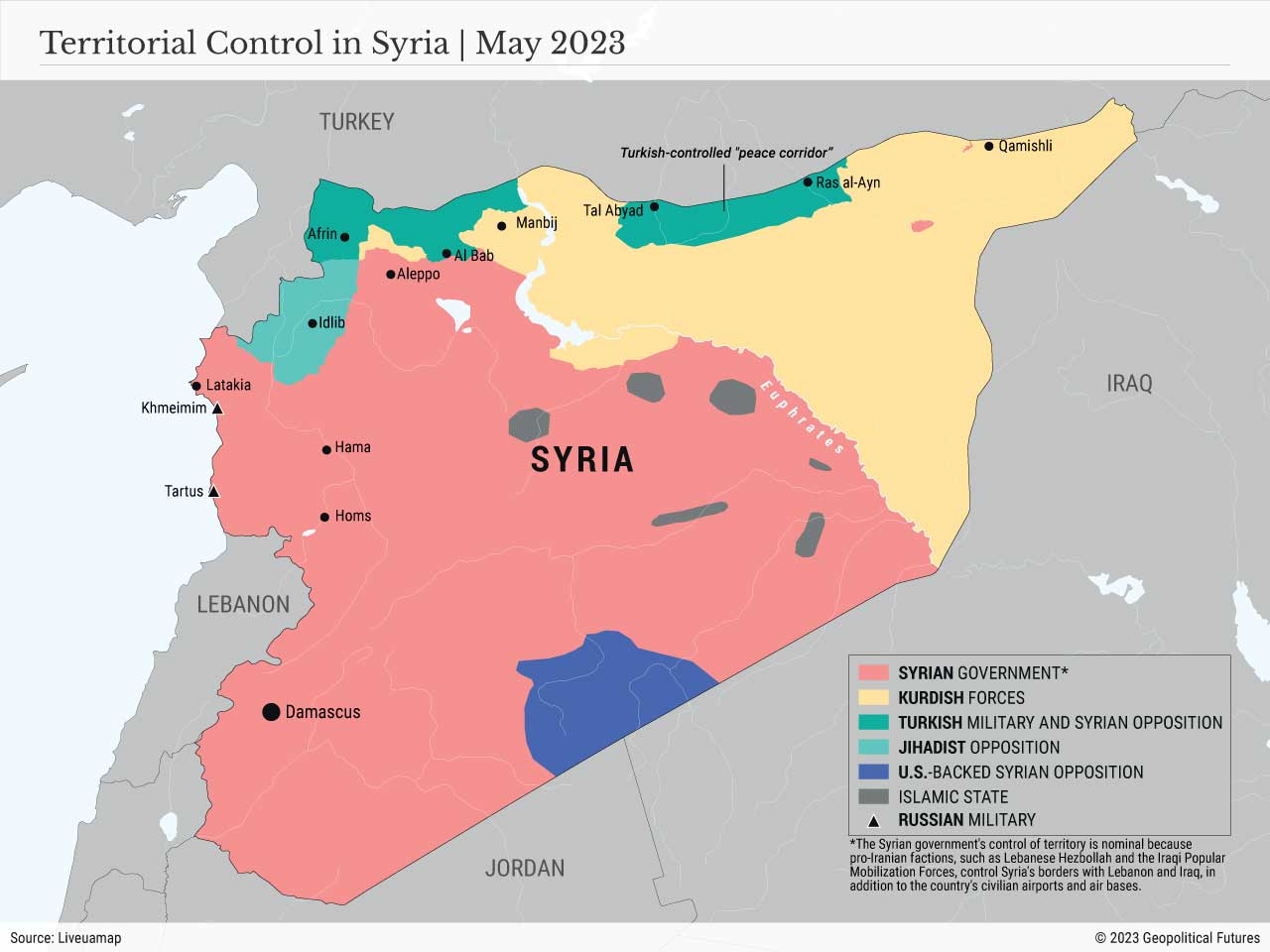
Though the government in Damascus nominally controls Syria’s territory and borders, the real power belongs to Iran and its Shiite proxies. Pro-Iranian forces control all air bases in the country. Iran is also actively trying to maintain its presence on Syria’s borders with Iraq and Lebanon – to preserve supply routes for Hezbollah, its most prominent proxy in the region – in addition to the border with Jordan close to the Golan Heights.
Fractured Society
Though Assad survived politically, he now presides over a divided population, half of which is internally or externally displaced. Four foreign armies control different segments of the country, and the Kurdish Autonomous Administration of North and East Syria occupies one-quarter of Syrian territory. There are no organized political or social forces within Syrian society, which is divided along sectarian, regional and tribal lines. Even the ruling Baath party has no legitimacy, relying exclusively on coercion to continue its rule. Meanwhile, Western sanctions, especially those imposed under the U.S. Caesar Act, embolden Assad and help to tighten his grip on power.
For Alawites, there was no real alternative to the regime, as the Sunni-led opposition was sectarian and exclusionary. This helped bolster Assad’s control, as he invoked the threat of radical Islam from the first day of the protests. Though Alawite discontent has somewhat eroded the regime’s base of support, it will not lead to major unrest.
The Assad regime’s response to the uprising was short-sighted and foolish. Assad could have quickly defused the protests by displaying a gesture of goodwill, especially since most Syrians still perceived him positively at that point. Instead, he viewed the uprising as a conspiracy against his regime. His mismanagement of the crisis led to more than a decade of bloodshed and destruction, eventually handing the country over to Iran on a silver platter.
Friday, May 26, 2023
只有廣東人是最堅的 - 「掉哪媽!頂硬上!」(Fuck his mother! Hit the hard!)

只有廣東人是最堅的 - 「掉哪媽!頂硬上!」(Fuck his mother! Hit the hard!)
「掉哪媽!頂硬上!」(Fuck his mother! Hit the hard!),據聞是明末名將袁崇煥的口頭禪。東莞石碣鎮袁崇煥故居的袁崇煥紀念園內的袁崇煥雕像基座上就刻有該句以為紀念,並由網民偶然拍攝並於網上轉載,但旋即被東莞當局拆除,更因撐粵語運動而廣為流傳,成為流行網絡金句。
明朝抗清名將袁崇煥的六字口頭禪「×哪媽!頂硬上!」原本鑲在東莞紀念公園的雕像下,但近日卻被鑿下,令專門為此而來的遊客頗感失望。網民指摘當局不應抹殺歷史,袁崇煥的口頭禪雖然粗俗但符合他的身分,是原汁原味的歷史文化。網民斥抹殺歷史《南方都市報》報道,原籍東莞的袁崇煥,在東莞石碣的紀念公園中,其口頭禪「×哪媽!頂硬上!」被鑲在雕像基座上,還附有英文翻譯。不過據園內工作人員說,牌子前幾天應領導要求鑿去,原因不明。「×哪媽!誰幹的?」昨日在微博上有不少網民怒罵,認為在新奇詞匯不斷出現的今天,樸素原始的民間語言更能表達人們內心的情感,引起眾人共鳴,而且袁崇煥是有「血性」的漢子,「比文謅謅的東西更有幹勁!打仗總不能再說『子曰』吧?」
起源與拆牌事件
東莞石碣鎮袁崇煥故居的袁崇煥紀念園,袁崇煥雕像基座上,刻有一行袁崇煥帶兵打仗時的「口頭禪」-「掉哪媽!頂硬上!」。網友將袁崇煥的雕像和基座上的文字拍下,放到網路上,立即遭到追捧,甚至被奉為「金句」。
在網上廣泛傳播後,大批網民前去一睹袁崇煥的金句,但發現銅牌被園方拆走、石碑字跡亦遭磨去。隨即有網民發文「×哪媽!誰幹的?」對其痛斥,大批網民回貼撐粵語。
成撐粵語運動導火線
廣州725集會時,大批廣州網民不滿東莞當局河蟹金句,於江南西地鐵口大叫「掉哪媽!頂硬上!」。
Subscribe to:
Posts (Atom)

