
 Posts
Posts


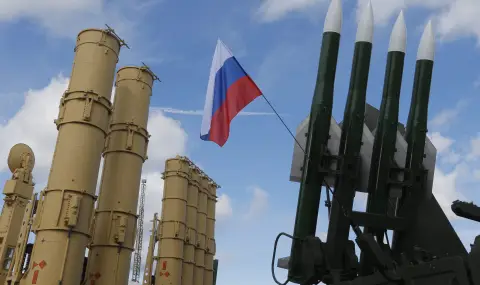
After US raid on Venezuela, analysts weigh lessons about Russian air defenses
Venezuela's air defenses failed to down a single American aircraft, though experts said that could be more credit to US proficiency than the systems' own failures.
WASHINGTON — Ostensibly speaking about the US industrial base, Secretary of Defense Pete Hegseth took a short detour on Monday to take a victory lap regarding the surprise US military operation to snatch Venezuelan leader Nicolas Maduro in a daring nighttime raid over the weekend. “And then we saw three nights ago in downtown Caracas in Venezuela, as nearly 200 of our greatest Americans went downtown in Caracas. Seems those Russian air defenses didn’t quite work so well, did they?” Hegseth said to some applause during a visit to shipbuilders at Newport News.
That Venezuela was guarded by Russian-provided tech was well known; Maduro himself boasted in October that he had 5,000 Russian-made anti-aircraft missiles at “key air defense positions.”
Maduro was referring specifically to Russian Igla-S man-portable (MANPAD) systems in that quote, but Venezuela was known to also employ at least two S-300VM long-range surface-to-air missile systems, an older version of Russia’s current S-400, and an “unknown number” of Buk-M2E SA-17 Grizzly medium-range surface-to-air missile systems, according to Ralph Savelsberg, a missile defense specialist at the Netherlands Defence Academy. (A US Army database of foreign weapon systems lists other systems and variations as well, though that database appears dated to around 2018.) And then there’s the Venezuelan air force, which flies some older American-made F-16s and more modern Russian-made Su-30 fighter jets.
In the wake of the US successful operation — in which President Donald Trump said one helicopter was struck by fire but not a single American aircraft was shot down and no Americans were killed — the question has been raised: How good are Russian-supplied air defenses, especially after similar systems used in Iran were ineffective against US and Israeli strikes last year?
While many details have yet to emerge, Savelsberg and other analysts cautioned that in this case it could be less of a matter of the air defenses’ failings, and more the overwhelming nature of the American multi-layered electronic and kinetic assault. After all, Chairman of the Joint Chiefs of Staff Gen. Dan Caine said the US employed 150 aerial assets in the operation to “layer effects for a single purpose, to get an interdiction force into downtown Caracas while maintaining the element of tactical surprise.”
As Savelsberg put it, “The success of this raid is not solely a reflection of the quality, or lack thereof, of the equipment. Quantity has a quality all its own: The aircraft involved in this mission vastly outnumbered the defenses.”
Center for Strategic and International Studies analyst Mark Cancian said that “of course” going up against the US is the “most demanding scenario that these systems would face.”
“Now, to be fair to the Russians, in the Ukraine war they’ve been reasonably effective because they aren’t facing a[n] adversary as sophisticated as the United States,” Cancian said in a CSIS webinar on Monday.
Speaking on The Break Out video series by Breaking Defense, Cancian told Editor-in-Chief Aaron Mehta, “The United States probably took [Venezuelan air defenses] out several ways. Cyber might’ve been one piece of it. The United States of course has anti-radiation missiles to take out the radars themselves. We certainly used some missiles to take out the air defense facilities. Flares, chaff, self-defense systems also probably played a role.
“But the bottom line was that these systems could not face a high level air attack such as the United States can mount, and the Israelis can mount,” he said.
Savelsberg, a frequent Breaking Defense contributor, theorized that lessons from the war in Ukraine may have tipped the American advantage even further.
“Furthermore, while the Venezuelan surface-to-air missile systems are reasonably advanced, they are also used by Russia in the Ukraine war, so it is possible that the US gained considerable intelligence on their operation and, consequently, on effective electronic countermeasures,” he said in an email.
“Lessons from the Russia-Ukraine war may offer another hint,” he continued. “In its 2022 attack on Ukraine, Russia succeeded in destroying a significant fraction of Ukraine’s surface-based air defenses but failed to destroy the systems that Ukraine had moved just prior to the attack. In the subsequent war, Ukraine’s air defenses never stay in the same location for very long, to prevent their destruction on the ground. Unless Venezuela frequently moved its surface-to-air missile launchers prior to the attack, the US would have known exactly which locations to strike.”
Carlton Haelig, a fellow with the Center for a New American Security, echoed the point, saying the “optimum capability” of any air defense system is going to be limited by how well it’s employed and how well-trained its operators are.
“If they hadn’t been moved, that makes them relatively easy to find and fix. You just have to close the kill-chain and destroy them,” he said.
“Ultimately,” Haelig said, “the ability to draw too much in terms of, ‘Well does that mean Russian air defenses are not that good?’ from this, or even the Iranian operations … is, to me in my mind, a little bit limited.”
Still, Cancian said the back-to-back failures in Iran and Venezuela could cause other nations, many of whom are desperate for air defenses, to think twice about purchasing from Moscow.
“I think prospective buyers have to wonder whether these systems are really capable of standing up the highest level of attack,” Cancian said on the CSIS webinar. “[If] I were a purchaser, I’d be scratching my head about just how good these systems are.”


No comments:
Post a Comment
Note: Only a member of this blog may post a comment.