
 Posts
Posts


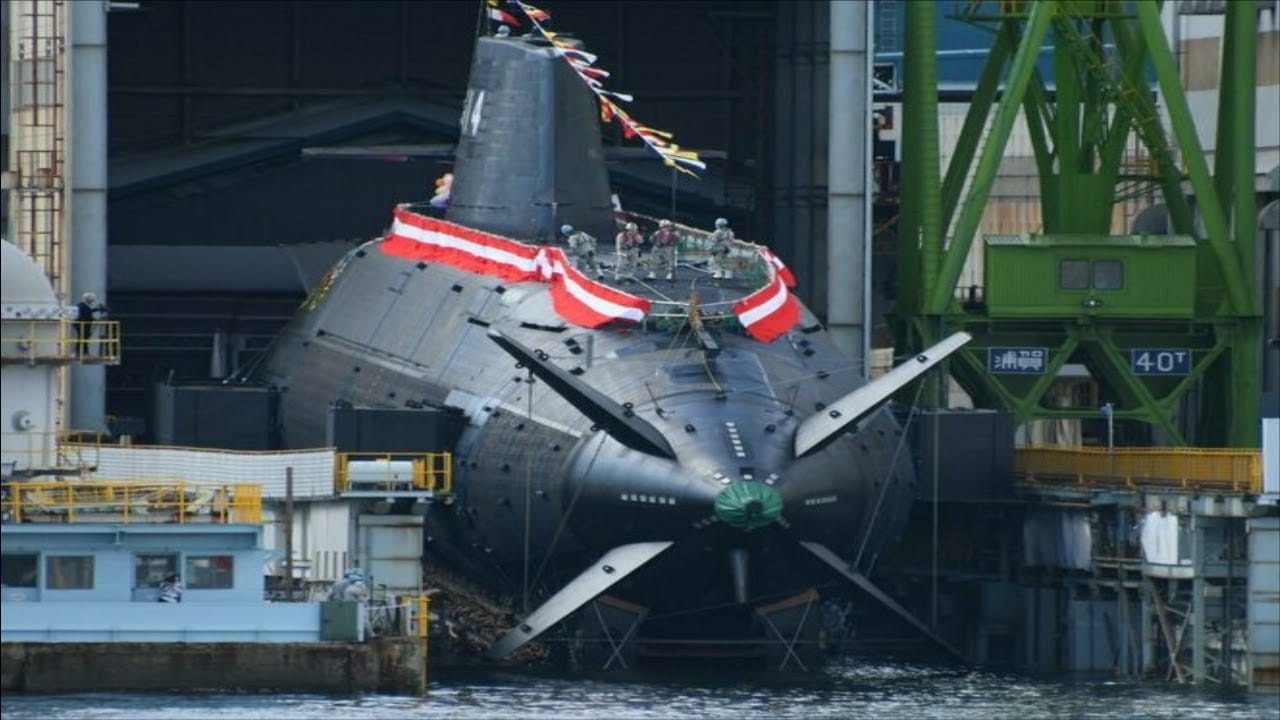 Japan’s new Taigei-class (“Big Whale”) submarines represent a
“generational leap” in undersea warfare, designed to be heavier,
quieter, and more lethal than the preceding Soryu-class.
Japan’s new Taigei-class (“Big Whale”) submarines represent a
“generational leap” in undersea warfare, designed to be heavier,
quieter, and more lethal than the preceding Soryu-class.
-Commissioned since 2022, these boats feature advanced noise-reduction technologies—such as “floating” floorboards and new hull designs—alongside lithium-ion batteries for extended submerged endurance.
-The article argues these stealthy assets are vital for the U.S.-Japan alliance, potentially providing the “undersea superiority” needed to counter China’s naval expansion and defend Taiwan from amphibious invasion.
Japan’s Taigei-Class Is One of the Best Submarines on Earth: Here’s Why
Japan’s new Taigei-class submarine is called the “Big Whale” for a specific reason: the boat is 100 tons heavier, quieter, and more lethal than the preceding Soryu-class.
The Japanese Maritime Defence Force has launched as many as six new Taigei-class submarines, and three have been commissioned since 2022.
The boats are a generational leap forward in undersea technology, intended to improve quieting, stealthiness, survivability, higher power output, and emitted “vibrations.”
Interestingly, while the new submarines have been launched only in the last three years, the boats’ technological components are the result of more than a decade of cutting-edge research.
Stealthy Taigei-Class Submarine
A key focus of the research was to uncover and integrate new propeller and hull-shape designs that reduce noise generation and improve impact resistance.
Similarly, Japanese research also incorporated new “floorboards” attached to the inner shell through a buffer mechanism intended to minimize “vibrations” inside the submarine and prevent a more detectable signal from being emitted into the water. The floorboards are also designed to improve survivability by reducing “shock” impact from outside the boat.
The Taigei-class also incorporates a new “snorkel” power generation system designed to be quieter and generate higher power output, improving functionality and survivability.
Slides published by the Japanese Defense Ministry show that the Snorkel system streamlines power generation and provides the critical added benefit of enabling cutting-edge on-board power for electronic systems.
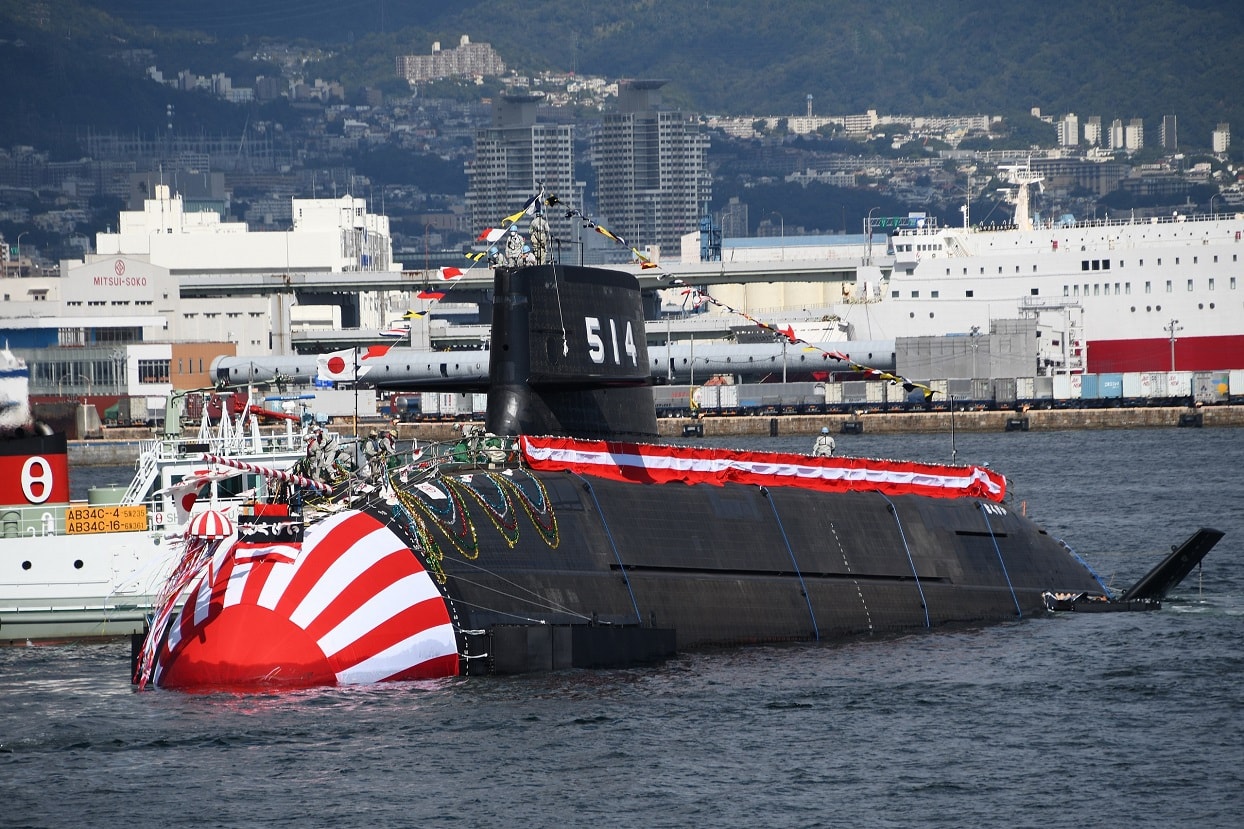 Taigei & Virginia-class Submarines
Technologically advanced submarines, such as the United States Navy’s Virginia-class, require new levels of electrical power to support next-generation on-board systems.
Finally, the new JMSDF submarines operate with lithium-ion batteries, which extend undersea mission time more than diesel/electric submarines do.
The arrival of these Japanese submarines is highly significant in terms of a US-Japanese allied deterrence effort in the Pacific, given that China is quickly progressing with its Jin-class submarines and already operates a larger Navy than the United States.
Therefore, a Japanese buildup advancing new generations of technology could immeasurably strengthen US-Japanese undersea superiority and deterrence.
This is of vital significance to any US-Japanese ability to defend Taiwan, as there is a credible argument suggesting that submarines could in fact “save” the island.
Japan vs China: Submarine Faceoff
While the US and Japan would, at least at the moment, enjoy air superiority in the region due to their combined number of available F-35s, China’s surface fleet poses a serious and formidable challenge to any US-Japanese surface defenses and Taiwanese ground-based weapons.
However, should the US and Japan operate with undersea superiority, a Chinese amphibious attack on the surface would be highly vulnerable to destruction from undersea.
While the US Navy still operates with an attack submarine deficit, which may grow more pronounced in the coming years, Virginia-class Block III and beyond boats have been integrated into the fleet with a new generation of quieting and stealth-enhancing technologies.
When combined with Japan’s growing fleet of advanced Taigei-Class submarines, it’s conceivable that US and Japanese subs could track and destroy both PRC submarines and surface ships in ways surface ships cannot. Surface ships are detectable by air, satellite, and surface surveillance technologies.
Yet, undersea submarines conducting clandestine reconnaissance and attack missions could destroy a Chinese Navy attack before it is detected fast enough.


No comments:
Post a Comment
Note: Only a member of this blog may post a comment.