
 Posts
Posts


US expected to get around China’s export controls on gallium
- Gallium,
subject to Beijing export controls from August 1, has long been an
essential material in US advanced defence systems and military supply
chain
- Academic
expects ‘temporary friction or slight cost increases as the market
adjusts’ but disruption would be limited as Washington finds alternative
source

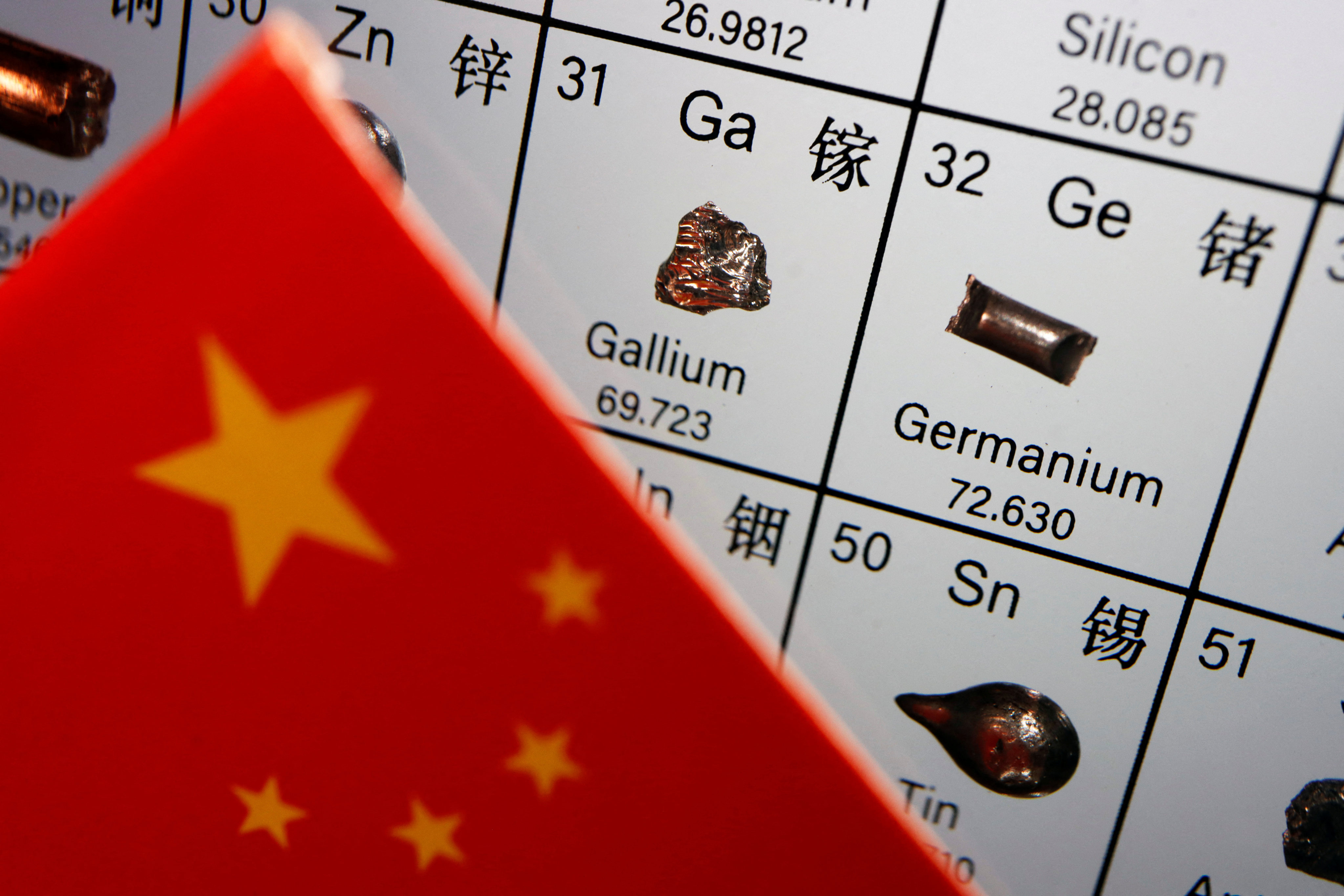
This month, the Chinese Ministry of Commerce announced it would implement export controls on items related to gallium and germanium from August 1 to safeguard “national security and interests”, a move viewed as retaliation for US-backed sanctions on the Chinese semiconductor industry.
The measures require Beijing’s permission to export the strategic metals, and violations could lead to administrative punishment or criminal charges.
When announcing the restrictions, China’s Ministry of Commerce said germanium and gallium products served clear dual military and civilian purposes.
Gallium is widely used in advanced microelectronics, ranging from semiconductors to LEDs, and has long been an essential material in US advanced defence systems and the military supply chain. It has been mainly used in high-energy radars, such as the US Navy’s AN/SPY-6 and the Marine Corps’ AN/TPS-80 G/ATOR radars.
The AN/SPY-6 is a three-dimensional radar to be deployed on the latest model of Arleigh Burke class of destroyers that use the Aegis combat system and are responsible for air and missile defence.
The AN/TPS-80 G/ATOR is also a 3D short and medium-range radar designed to detect objects such as uncrewed aerial systems, cruise missiles, air-breathing targets, rockets and artillery. These systems rely on gallium nitride (GaN) technology to support their antennas and other essential components that are difficult to substitute.
Eugene Gholz, an associate professor of political science at the University of Notre Dame in Indiana in the US, said Beijing was in part aiming to disrupt the defence supply chain by countering the semiconductor export control, considering Washington’s “fear of vulnerability” as an opportunity to increase its leverage against the US.
“I think the way China hoped the gallium export controls would ‘work’ is by disrupting the US defence supply chain – annoying the United States in response to the United States annoying China by disrupting Chinese ability to import semiconductors,” Gholz said.
However, he said that while China’s export controls would cause a shift in the global gallium trade, its substantial influence in the defence supply chain would be limited as Washington found alternative sources.
“China’s export controls may shift around some of the patterns of trade … but they are unlikely to constrain the availability of gallium because substitute suppliers are available in the overall market,” Gholz said.
“There may be some temporary friction or slight cost increases as the market adjusts to actual enforcement of Chinese export controls.”
China’s limits on chip metals self-defeating, US national security adviser says 17 Jul 2023 
Bradley Martin, director of the Rand National Security Supply Chain Institute and senior policy researcher at the Rand Corporation, echoed the view.
“What’s most likely is that US companies, defence industry, its industrial base, and actors will say, ‘Well, we have to find a substitute for gallium, and we have to establish our own niche supplies’.”
Radar systems have again been the focus of geopolitical arm-wrestling as the US-China rivalry intensifies.
South Korea’s deployment of the US Terminal High Altitude Area Defenc missile defence system in 2016 drove Beijing to retaliate with economic sanctions as it insisted the radar system threatened China’s security interest.
In September, Raytheon, a major US aerospace and defence company, was awarded a US$412 million deal with Taiwan to upgrade and maintain surveillance radar amid increasing tensions between Beijing and Taipei. Beijing imposed sanctions on Raytheon in February for its involvement in Taiwan arms sales.
In June, Chinese scientists revealed the development of one of the most powerful radars in the world, capable of detecting ballistic missiles from 4,500km (2,800 miles) – far greater than conventional radars with a normal working range of a few hundred kilometres.
According to the US Geological Survey, the US does not have any domestic production of gallium and solely relies on imports.
In contrast, China accounted for more than 95 per cent of the world’s gallium production in 2020 and 2021. Some 53 per cent of US imports of the metal came from China between 2018 and 2021.
On Beijing’s export control, the Pentagon announced it held a strategic stockpile of germanium but had no inventory reserves of gallium.
Japan and South Korea respectively produced 3,000kg and 2,000kg of primary gallium per year. While Germany stopped producing the metal in 2016, it announced it would resume primary gallium production in 2021 after seeing a surge in global prices.
China’s export restrictions on gallium follow pressure from Washington regarding technology that could be used for military purposes.
In October, the US Department of Commerce’s Bureau of Industry and Security announced restrictions on China’s ability to obtain advanced computing chips and equipment to develop and maintain supercomputers and manufacture advanced semiconductors used in military applications.

The bureau said China used the restricted items to “produce advanced military systems including weapons of mass destruction [and] improve the speed and accuracy of its military decision making, planning and logistics”.
“[We] are appropriately doing everything in our power to protect our national security and prevent sensitive technologies with military applications from being acquired by [China’s] military, intelligence and security services,” said Alan Estevez, undersecretary of commerce for industry and security.


No comments:
Post a Comment
Note: Only a member of this blog may post a comment.