
 Posts
Posts


 The U.S. debt now exceeds the country's GDP. Should we worry?
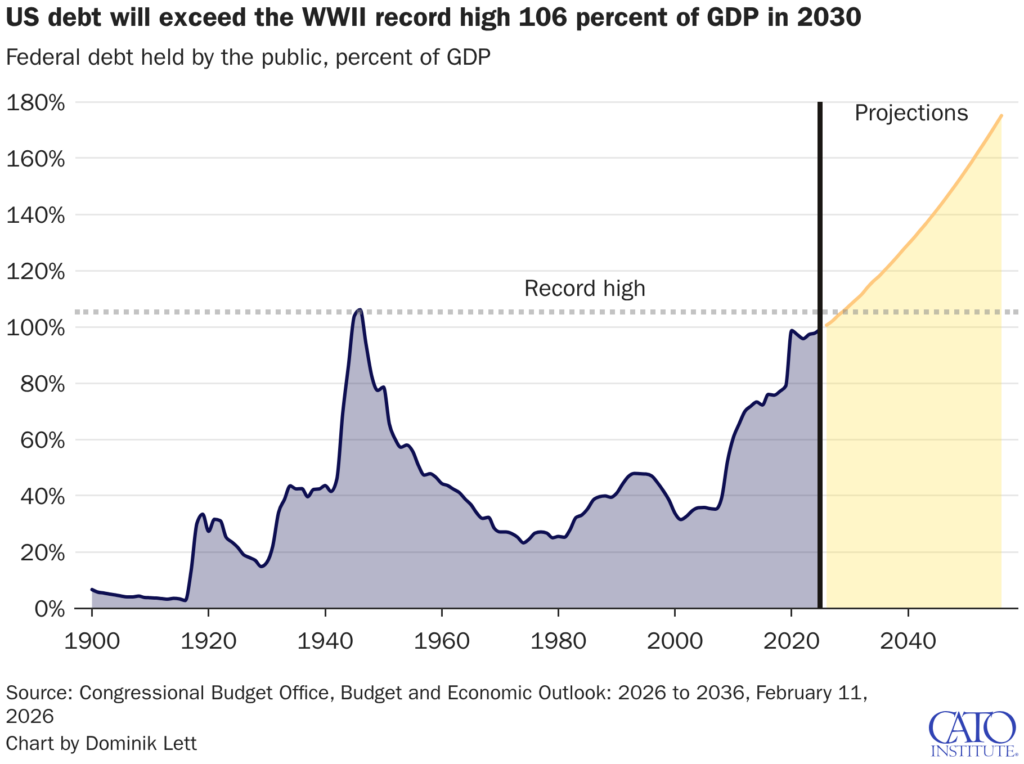
America's national debt has surpassed the country's gross domestic product for the first time since World War II, marking a stark increase in the government's fiscal burden.
Debt held by the public represents the amount owed to parties outside the federal government, such as businesses, individuals, state or local governments, and foreign countries. The nation's gross debt — which includes money the federal government owes to itself — is approaching $39 trillion, according to U.S. Treasury data.
The question is whether that burgeoning debt augurs potential financial calamity, or is manageable for a nation with a growing, still dynamic economy. Although the picture may remain unclear for years, fiscal hawks like the Committee for a Responsible Federal Budget are sounding the alarm.
What's causing the surge in U.S. debt?
The nation's debt has swelled since the 2008-09 global financial crisis, when it hovered at around $5 trillion. At the heart of the issue is a mismatch between revenue and spending, according to the Peterson Foundation.
In other words, the U.S. is steadily spending more than it takes in through tax revenue and other sources, requiring the government to issue more debt to finance federal programs.
How fast is the debt climbing?
Federal debt is forecast to continue rising over the next decade, with the Congressional Budget Office projecting that debt held by the public will reach $53 trillion in 2036. Debt is forecast to rise from roughly 101% of U.S. GDP this year to 120% in 2036, exceeding its previous high of 106% in 1946, the agency said in a February report.
To be sure, that forecast represents a set of policy choices — not immutable economic forces. Some experts say the U.S. could steady the ship by exerting fiscal discipline. For instance, the Committee for a Responsible Federal Budget on Monday proposed reducing the deficit — the gap between federal spending and tax revenue — to 3% of GDP, or roughly half its current level.
That would "put the debt-to-GDP ratio on a downward path with a bit of wiggle room," the group said. "A 3% of GDP deficit target offers a credible and achievable path forward to stabilizing the debt, growing the economy, preserving fiscal flexibility and bolstering market confidence in the nation's finances."
What are the risks?
The nation's rising debt could lead to a host of economic problems, according to the Peterson Foundation. Those include rising interest costs, which could crowd out spending on federal programs, and a greater risk of a financial crisis, according to economists. Investors could also lose confidence in the nation's fiscal stability, leading to U.S. credit downgrades.
Running up more debt also puts upward pressure on prices, which means everyday costs rise for American households, according to the Yale Budget Lab.
"The current federal debt is clearly unsustainable, no matter how many times the debt ceiling is raised," ALEC's Williams told CBS News. "If Congress doesn't start implementing fiscally responsible policies in a nonpartisan fashion, Americans will pay the price in higher taxes and slowed economic growth and in the form of ugly price inflation."
What are markets signaling?
Some experts point out that the U.S. boasts a vibrant, growing economy with a strong credit rating, meaning that while rising debt is a concern, it's nothing the U.S. can't handle — at least for now.
Notably, the economy has grown at a faster rate than the average interest paid on debt during four of the last five years, a "positive gap that should keep the growth of the debt-to-GDP ratio in check," Jacob Manoukian, U.S. head of investment strategy at JPMorgan Chase, wrote in a 2025 report.
And there's also little evidence that interest payments could become so large that they "overwhelm monetary policy and contribute to greater inflation," he added.
In the meantime, U.S. debt remains in high demand, signaling that investors don't see any immediate danger in the nation's fiscal situation.
"Households (both directly and through mutual funds) and foreign investors have remained avid buyers of newly issued U.S. debt," Manoukian said.


No comments:
Post a Comment
Note: Only a member of this blog may post a comment.