Showing posts with label Politics. Show all posts

Friday, February 2, 2018


More Fake News From The Lefts : NYT Publishes Fake Mueller Firing Story


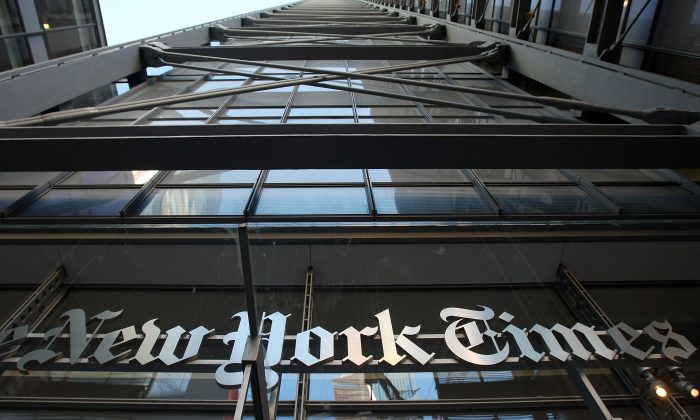
The New York Times headquarters in New York City

NYT Publishes Fake Mueller Firing Story 2 Hours After New Clinton Scandal Exposed

The New York Times published a fake news story on Jan. 25 claiming that President Trump tried to fire special counsel Robert Mueller and that senior White House lawyer Don McGahn tried to quit because of it. CNN followed up, claiming the White House was “in turmoil as CNN confirms Trump tried to fire Robert Mueller.”

The story was quickly debunked, however. CBS reported on Jan. 27 that Trump did not give an order to fire Mueller. It claims Trump discussed the issue, and noted three areas where Mueller could have conflicts of interests in his role, but never gave any orders. CBS also reported that while McGahn did allegedly threaten to quit, it wasn’t about Trump and Mueller.

Elizabeth Harrington of Fox News speculated that the New York Times published its debunked story to detract from the release of text messages from the disgraced FBI agent who conducted the interviews with Hillary Clinton in her email scandal. The New York Times piece was published just two hours after Sen. Chuck Grassley (R-Iowa) released the text messages of former FBI Deputy Assistant Director Peter Strzok and FBI lawyer Lisa Page discussing going easy on Hillary Clinton in the email scandal investigations.

Trump also responded to the claims, telling reporters according to the Associated Press, “Fake news, folks. Fake news. Typical New York Times fake stories.”
German TV Show Altered Volume of Boos During Trump Speech

German news program Tagesschau altered the volume in a video so that viewers could hear booing when President Donald Trump criticized dishonest news reporting during a Jan. 26 speech at the World Economic Forum in Davos, Switzerland.

“It wasn’t until I became a politician that I realized how nasty, how mean, and how vicious the press can be,” Trump stated in the video. The audio in the Tagesschau version can be heard changing, and a mix of boos and applause can be heard.

Tagesschau admitted in a tweet, translated from German, that, “We have actually made the sound a bit louder, so that you can hear the boos.”

Other German news outlets pointed out the issue. Der Tagesspiegel quoted Bild Editor-in-Chief Julian Reichelt saying it would be, “Hard to imagine that you would have done the same to applause.”

Tuesday, December 10, 2013

追求普世 民主 百万乌克兰人再次上街 推翻列宁塑像    总有1天胖毛雕像也会一样
 

Ukrainians break a monument of
          Vladimir Lenin in center Kiev, Ukraine, on Sunday.

莫斯科—成千上万的乌克兰民众这个星期天再次走上街头举行大规模反政府抗议活动。参加者人数之多使抗议活动的中 心,基辅市独立广场无法容纳所有人。当地媒体说,这是继上个月末开始反政府示威后,抗议活动达到第三个高潮。抗议活动的主要诉求仍然是乌克兰 应该融入欧洲,接受普世民主价值观念,以及更换政权。

追求普世民主百万乌克兰人再次上街

*追求民主融入欧洲基辅百万大游行*

在 数十万乌克兰民众一个星期前走上首都基辅街头抗议之后,乌克兰民众星期天再次前往基辅市中心的独立广场参加大规模反政府示威活动。乌克兰反对 派把这次示威活动称为“百万大游行”。反对派认为,50万到1百万人参加了星期天的基辅示威抗议。

乌克兰新闻工作者伊戈里说,同一个星期前的示威游行一样,乌克兰应该融入欧洲大家庭,乌克兰应该追求普世民主价值观念,仍然是这次“百万大游 行”的主要诉求之一。

伊戈里说:“今天活动的主要口号同以前一样,那就是尽可能多地召集民众支持乌克兰融入欧洲,以及惩处上个星期六暴力驱散独立广场示威民众的责 任人,同时要求政府下台。”

*欧盟旗帜人山人海情绪高昂*

伊戈里说,星期天的示威规模可同2004年的颜色革命相比。基辅市中心的独立广场由于场地有限,根本无法容纳这样多的人参加示威。他说,距离 横穿独立广场的基辅主要大街--克里夏杰克还有10分钟步行时,那里已经挤满了参加抗议活动的人群,附近地铁里同样人山人海。

在独立广场的伊戈里说,基辅当天的气温能在零下3度左右,而且下了小雪,但人们情绪 高昂,许多人手中拿着欧盟的旗帜。

*乌克兰属于欧洲人群看不到尽头*

基辅市民,环保学者谢连科在独立广场现场说,他无法估计有多少人参加星期天的抗议,因为参加抗议活动的人数之多根本无法看到人群的尽头。他 说,星期天的抗议规模肯定要超过一个星期前。在广场中很难找到一个站立的位置,广场周围更挤满了人群。人们打着许多标语,最主要的标语是:乌 克兰属于欧洲。

谢连科说,在抗议现场并不感觉很冷。谢连科说:“这里有许多地点分发热茶,以及面包夹香肠和奶酪片等饮食,同时还有许多里面燃烧木材的铁桶供 人们取暖,所以人们可以白天,甚至晚上都到这里来,并不觉得很冷。”

*多数乌克兰人主张走欧洲道路*

谢连科说,一个多星期以来,只要他有时间,都会去独立广场参加抗议活动。他说,虽然乌克兰东部等地仍然有人相信官方的宣传,但大多数乌克兰人 都主张乌克兰应该走欧洲道路,接受普世价值,因此可以说是到了乌克兰做出历史选择的时候了。

*对现政权失望更换政权变成头号诉求*

来自乌克兰西部主要重镇利沃夫的生态工作者娜塔莉说,利沃夫当天的局势比较平静,包括她的熟人,同事在内的许多当地民众都跑到基辅参加抗议去 了。因为乌克兰的政治中心目前都集中在基辅的独立广场。娜塔莉认为,民众在示威中的头号要求现在变成了更换政权,而融入欧洲的要求已经退居第 二位。

娜塔莉:“所有人都已明白,(总统)亚努科维奇根本不是能满足欧盟要求的那种的人,也就是说,他不会采取措施,减少乌克兰的贪污腐败,使国家 能走入正常。因为人们觉得,只要亚努科维奇掌权,乌克兰就无法融入欧洲。只有新的政府才能带领乌克兰融入欧洲。所以人们现在要求重新举行议会 大选和总统大选。”

*民众感觉被骗抗议示威首次流血*

娜塔莉说,亚努科维奇几个月前提出要同欧盟签订自由贸易协定时,人们当时就觉得很奇怪,因为融入欧洲并非他的执政风格。后来在最后一刻,当亚 努科维奇突然放弃签订协议时,给民众留下的印象是,这位乌克兰总统不仅欺骗了欧盟,欺骗了俄罗斯,更欺骗了自己的民众,这让人们都十分气愤。

娜塔莉说,一个星期前警方暴力驱散了在基辅独立广场示威的大学生,学生们被打伤流血,这是乌克兰多年来首次出现抗议示威流血事件,这些因素加 在一起,使人们已无法继续忍耐下去,因此才有这样多的人走上街头示威。

*抗议影响扩散不再把亚努科维奇当成总统*

一名熟悉乌克兰的俄罗斯记者说,在乌克兰西部一些地区,当地官员的办公室里已经摘下了亚努科维奇的画像,这意味着许多人已不再把亚努科维奇当 成总统和国家领导人。

乌克兰著名歌星鲁斯兰娜一天前呼吁乌克兰人参加更多的抗议活动。乌克兰滑雪队星期六在奥地利赢得了世界杯冬季两项运动第二阶段女子接力比赛的 冠军。在发奖时,几名运动员打出专门旗帜并高呼支持示威群众的口号。

*欧盟警告制裁反对派提出对话前提条件*

乌克兰反对派一天前提出了同当局对话谈判的前提条件,包括政府内阁下台,惩处一个星期前镇压群众示威的责任人,以及释放所有的被关押政治犯。

欧洲议会大批议员星期六前往基辅独立广场看望了在那里的示威群众。欧洲议会国际事务委员会主席说,如果乌克兰当局不处罚一个星期前镇压民众示 威的责任人,欧盟将采取制裁措施,包括禁止有关责任人入境欧盟。

*执政一方不肯让步*

乌克兰总理阿扎哈罗夫说,总统不会下台,因为那样将违反乌克兰宪法。他说,应由议会投票决定内阁是否应辞职。而议会在几天前已经投票表决支持 内阁。

亚努科维奇控制的乌克兰地区党星期天也在基辅举行了支持政府的集会。但集会规模非常小。当地媒体报道,组织者仅让那些他们认为是自己人的人参 加集会,禁止外人入场。

乌克兰反政府示威者推翻了基辅市中心的前苏联创始人列宁的塑像。这是反对总统亚努科维奇的一系列抗议活动的最新一起。

数十万人聚集在基辅独立广场,他们挥舞欧盟与乌克兰的旗帜,抗议政府不与欧盟签署贸易协定而与莫斯科加强关系的决定。

乌克兰前总理季莫申科的女儿朗读了季莫申科的一封信。这位被监禁的反对派领导人说,亚努科维奇失去了作为总统的合法性,她呼吁推翻亚努科维 奇。

反对派领导人阿赛尼·耶森尤克早些时候说,只有亚努科维奇总统任命一个愿意加深与欧盟关系的新政府,他才会与亚努科维奇谈判。

乌克兰国家安全部门星期天宣布,已经就反对派领导人涉嫌夺取政权展开调查。

另一方面,欧盟委员会在一份声明中说,该委员会主席巴罗佐在星期天的一次电话通话中,敦促亚努科维奇寻求与反对派对话,尊重公民自由。该委员 会说,欧盟外交政策负责人阿什顿将于本周访问基辅,支持乌克兰找到解决危机的道路。


Saturday, November 16, 2013

EU's Extreme Right Wings Unites

Dutch Eurosceptic Wilders and France's Le Pen unite

Eurosceptic
        Dutch politician Geert Wilders (right) and French National Front
        leader Marine Le Pen, 13 Nov 13 Mr Wilders and Ms Le Pen hope to draw other parties into their alliance

The Eurosceptic Dutch politician Geert Wilders and French National Front (FN) leader Marine Le Pen have launched what they call an "historic" alliance for next year's European elections.
Mr Wilders said they had agreed on the need to repatriate from Brussels the power to control their countries' borders and economies.
They held strategy talks in The Hague.
Both leaders say Europe's political elite has been too tolerant of Islam and both want to curb immigration.
Ms Le Pen, a Euro MP, visited the Dutch parliament with Mr Wilders. His party lost almost half of its seats in the September 2012 Dutch election, but it is doing well now in opinion polls.
Eurosceptics are widely expected to make significant gains in the European elections in May, as debt-laden EU countries struggle to revive their anaemic economies.
"The time of patriotic movements being divided is over," said Ms Le Pen, calling it "an historic day".
"Today is the start of the liberation of Europe from the monster of Brussels," said Mr Wilders, who heads the Freedom Party (PVV).
Fragmented right Historically, nationalists and other anti-immigration parties have been fragmented in Europe. They tend to campaign on national issues, rejecting EU integration and any further weakening of national sovereignty.
Mr Wilders acknowledged that the UK Independence Party (UKIP), led by Nigel Farage, was not yet willing to join the new alliance.
"I understand that he [Mr Farage] is not too eager today to work with my party, but let me tell you, I hope after next year's elections he will be able to join in our initiative," Mr Wilders said.
The PVV and FN currently sit among independent MEPs in the European Parliament. They are not in UKIP's group.
To form a new officially recognised bloc they would need a minimum of 25 MEPs from at least seven EU member states.
Correspondents say the two parties could team up with groups such as Austria's Freedom Party (FPOe), Italy's Northern League, Vlaams Belang in Belgium, the Sweden Democrats or the Danish People's Party.
Recognition as an official political group in the European Parliament gives group members EU subsidies, offices, assistants and seats on parliamentary committees.

Tuesday, July 23, 2013

Meet Saudi America 

Saudi America Will Overtake Saudi Arabia As The World's Top Oil Producer Within A Decade

There's still some debate about whether America's shale oil boom is  merely an overnight sensation or a true-blue game changer — we've featured both sides here.

In a new study published by Harvard's Kennedy School of Government, former oil company executive Leonardo Maugeri predicts that for America's three largest shale oil plays — the Bakken in North Dakota and the Eagle Ford and Permian Basin in Texas — the boom should last at least another decade.

He arrives at that estimate by calculating current well densities — how many wells there are in a given acre of shale play — and improving rig efficiencies, the result of improved drilling times and lower-cost drilling methods. Plus, he writes, new infrastructure coming online will make it cheaper to invest in these plays:

Figures about the Permian basin are still in the making, yet it is possible to figure out that the Big Three U.S. shale plays have a combined potential of many more than 100,000 shale producing wells, or about ten times the number of those already on line. Taking into account this potential, the limits to drilling intensity probably would start affecting BakkenThree Forks and Eagle Ford only in the second half the 2020s.

There remains uncertainty about the rest of the country's plays. But Maugeri asserts that the U.S. will become the world's top oil producer within this decade, leapfrogging Russia to topple Saudi Arabia.
When Religions Get Political Sponsorship

Myanmar gives official blessing to anti-Muslim monks


Buddhist monk Wirathu (C), leader of the 969 movement,
      greets other monks as he attends a meeting on the National
      Protection Law at a monastery outside Yangon June 27, 2013.
      REUTERS-Soe Zeya TunBuddhist monk Wirathu (C), leader of the 969 movement, greets other monks as he attends a meeting on the National Protection Law at a monastery outside Yangon June 27, 2013. REUTERS-Soe Zeya Tun
Buddhist monk Wirathu speaks to his
      fellow monks during a monks assembly at a monastery in Hmawbi
      township, on the outskirts of Yangon, June 13, 2013.
      REUTERS-MinzayarBuddhist monk Wirathu speaks to his fellow monks during a monks assembly at a monastery in Hmawbi township, on the outskirts of Yangon, June 13, 2013. REUTERS-Minzayar
People walk past 969 stickers displayed
      at a shop in Yangon June 25, 2013. REUTERS-Soe Zeya TunPeople walk past 969 stickers displayed at a shop in Yangon June 25, 2013. REUTERS-Soe Zeya Tun


(Reuters) - The Buddhist extremist movement in Myanmar, known as 969, portrays itself as a grassroots creed.

Its chief proponent, a monk named Wirathu, was once jailed by the former military junta for anti-Muslim violence and once called himself the "Burmese bin Laden."

But a Reuters examination traces 969's origins to an official in the dictatorship that once ran Myanmar, and which is the direct predecessor of today's reformist government. The 969 movement now enjoys support from senior government officials, establishment monks and even some members of the opposition National League for Democracy (NLD), the political party of Nobel peace laureate Aung San Suu Kyi.

A man stands in front of a mosque as it burns in Meikhtila
      in this March 21, 2013 file photo. REUTERS-Soe Zeya Tun-FilesWirathu urges Buddhists to boycott Muslim shops and shun interfaith marriages. He calls mosques "enemy bases."

Among his admirers: Myanmar's minister of religious affairs.

"Wirathu's sermons are about promoting love and understanding between religions," Sann Sint, minister of religious affairs, told Reuters in his first interview with the international media. "It is impossible he is inciting religious violence."

Sann Sint, a former lieutenant general in Myanmar's army, also sees nothing wrong with the boycott of Muslim businesses being led by the 969 monks. "We are now practicing market economics," he said. "Nobody can stop that. It is up to the consumers."

President Thein Sein is signaling a benign view of 969, too. His office declined to comment for this story. But in response to growing controversy over the movement, it issued a statement Sunday, saying 969 "is just a symbol of peace" and Wirathu is "a son of Lord Buddha."

Wirathu and other monks have been closely linked to the sectarian violence spreading across Myanmar, formerly known as Burma. Anti-Muslim unrest simmered under the junta that ran the country for nearly half a century. But the worst fighting has occurred since the quasi-civilian government took power in March 2011.

Two outbursts in Rakhine State last year killed at least 192 people and left 140,000 homeless, mostly stateless Rohingya Muslims. A Reuters investigation found that organized attacks on Muslims last October were led by Rakhine nationalists incited by Buddhist monks and sometimes abetted by local security forces.

In March this year, at least 44 people died and 13,000 were displaced - again, mostly Muslims - during riots in Meikhtila, a city in central Myanmar. Reuters documented in April that the killings happened after monks led Buddhist mobs on a rampage. In May, Buddhists mobs burned and terrorized Muslim neighborhoods in the northern city of Lashio. Reports of unrest have since spread nationwide.

The numbers 969, innocuous in themselves, refer to attributes of the Buddha, his teachings and the monkhood. But 969 monks have been providing the moral justification for a wave of anti-Muslim bloodshed that could scuttle Myanmar's nascent reform program. Another prominent 969 monk, Wimala Biwuntha, likens Muslims to a tiger who enters an ill-defended house to snatch away its occupants.

"Without discipline, we'll lose our religion and our race," he said in a recent sermon. "We might even lose our country."

Officially, Myanmar has no state religion, but its rulers have long put Buddhism first. Muslims make up an estimated 4 percent of the populace. Buddhism is followed by 90 percent of the country's 60 million people and is promoted by a special department within the ministry of religion created during the junta.

EASY SCAPEGOATS

Monks play a complex part in Burmese politics. They took a central role in pro-democracy "Saffron Revolution" uprisings against military rule in 2007. The generals - who included current President Thein Sein and most senior members of his government - suppressed them. Now, Thein Sein's ambitious program of reforms has ushered in new freedoms of speech and assembly, liberating the country's roughly 500,000 monks. They can travel at will to spread Buddhist teachings, including 969 doctrine.

In Burma's nascent democracy, the monks have emerged as a political force in the run-up to a general election scheduled for 2015. Their new potency has given rise to a conspiracy theory here: The 969 movement is controlled by disgruntled hardliners from the previous junta, who are fomenting unrest to derail the reforms and foil an election landslide by Suu Kyi's NLD.

No evidence has emerged to support this belief. But some in the government say there is possibly truth to it.

"Some people are very eager to reform, some people don't want to reform," Soe Thein, one of President Thein Sein's two closest advisors, told Reuters. "So, regarding the sectarian violence, some people may be that side - the anti-reform side."

Even if 969 isn't controlled by powerful hardliners, it has broad support, both in high places and at the grass roots, where it is a genuine and growing movement.

Officials offer tacit backing, said Wimala, the 969 monk. "By letting us give speeches to protect our religion and race, I assume they are supporting us," he said.

The Yangon representative of the Burmese Muslim Association agreed. "The anti-Muslim movement is growing and the government isn't stopping it," said Myo Win, a Muslim teacher. Myo Win likened 969 to the Ku Klux Klan.

The religion minister, Sann Sint, said the movement doesn't have official state backing. But he defended Wirathu and other monks espousing the creed.

"I don't think they are preaching to make problems," he said.

Local authorities, too, have lent the movement some backing.

Its logo - now one of Myanmar's most recognizable - bears the Burmese numerals 969, a chakra wheel and four Asiatic lions representing the ancient Buddhist emperor Ashoka. Stickers with the logo are handed out free at speeches. They adorn shops, homes, taxis and souvenir stalls at the nation's most revered Buddhist pagoda, the Shwedagon. They are a common sight in areas plagued by unrest.

Some authorities treat the symbol with reverence. A court in Bago, a region near Yangon hit by anti-Muslim violence this year, jailed a Muslim man for two years in April after he removed a 969 sticker from a betel-nut shop. He was sentenced under a section of Burma's colonial-era Penal Code, which outlaws "deliberate and malicious acts intended to outrage religious feelings".

QUASI-OFFICIAL ORIGINS

The 969 movement's ties to the state date back to the creed's origins. Wimala, Wirathu and other 969 preachers credit its creation to the late Kyaw Lwin, an ex-monk, government official and prolific writer, now largely forgotten outside religious circles.

Myanmar's former dictators handpicked Kyaw Lwin to promote Buddhism after the brutal suppression of the 1988 democracy uprising. Thousands were killed or injured after soldiers opened fire on unarmed protesters, including monks. Later, to signal their disgust, monks refused to accept alms from military families for three months, a potent gesture in devoutly Buddhist Myanmar.

Afterwards, the military set about co-opting Buddhism in an effort to tame rebellious monks and repair its image. Monks were registered and their movements restricted. State-run media ran almost daily reports of generals overseeing temple renovations or donating alms to abbots.

In 1991, the junta created a Department for the Promotion and Propagation of the Sasana (DPPS), a unit within the Religion Ministry, and appointed Kyaw Lwin as its head. Sasana means "religion" in Pali, the liturgical language of Theravada Buddhism; in Burma, the word is synonymous with Buddhism itself.

The following year, the DPPS published "How To Live As A Good Buddhist," a distillation of Kyaw Lwin's writings. It was republished in 2000 as "The Best Buddhist," its cover bearing an early version of the 969 logo.

Kyaw Lwin stepped down in 1992. The current head is Khine Aung, a former military officer.

Kyaw Lwin's widow and son still live in his modest home in central Yangon. Its living room walls are lined with shelves of Kyaw Lwin's books and framed photos of him as a monk and meditation master.

Another photo shows Kyaw Lwin sharing a joke with Lieutenant General Khin Nyunt, then chief of military intelligence and one of Myanmar's most feared men. Kyaw Lwin enjoyed close relations with other junta leaders, said his son, Aung Lwin Tun, 38, a car importer. He was personally instructed to write "The Best Buddhist" by the late Saw Maung, then Myanmar's senior-most general. He met "often" to discuss religion with ex-dictator Than Shwe, who retired in March 2011 and has been out of the public eye since then.

"The Best Buddhist" is out of print, but Aung Lwin Tun plans to republish it. "Many people are asking for it now," he said. He supports today's 969 movement, including its anti-Muslim boycott. "It's like building a fence to protect our religion," he said.

Also supporting 969 is Kyaw Lwin's widow, 65, whose name was withheld at the family's request. She claimed that Buddhists who marry Muslims are forced at their weddings to tread on an image of Buddha, and that the ritual slaughter of animals by Shi'ite Muslims makes it easier for them to kill humans.

Among the monks Kyaw Lwin met during his time as DPPS chief was Wiseitta Biwuntha, who hailed from the town of Kyaukse, near the northern cultural capital of Mandalay. Better known as Wirathu, he is today one of the 969's most incendiary leaders.

Wirathu and Kyaw Lwin stayed in touch after their 1992 meeting, said Aung Lwin Tun, who believed his father would admire Wirathu's teachings. "He is doing what other people won't - protecting and promoting the religion."

Kyaw Lwin died in 2001, aged 70. That same year, Wirathu began preaching about 969, and the U.S. State Department reported "a sharp increase in anti-Muslim violence" in Myanmar. Anti-Muslim sentiment was stoked in March 2001 by the Taliban's destruction of Buddhist statues in Bamiyan, Afghanistan, and in September by al Qaeda's attacks in the United States.

Two years later, Wirathu was arrested and sentenced to 25 years in jail for distributing anti-Muslim pamphlets that incited communal riots in his hometown. At least 10 Muslims were killed by a Buddhist mob, according to a State Department report. The 969 movement had spilled its first blood.

969 VERSUS 786

Wirathu was freed in 2011 during an amnesty for political prisoners. While the self-styled "Burmese bin Laden" has become the militant face of 969, the movement derives evangelical energy from monks in Mon, a coastal state where people pride themselves on being Myanmar's first Buddhists. Since last year's violence they have organized a network across the nation. They led a boycott last year of a Muslim-owned bus company in Moulmein, Mon's capital. Extending that boycott nationwide has become a central 969 goal.

Muslims held many senior government positions after Myanmar gained independence from Britain in 1948. That changed in 1962, when the military seized power and stymied the hiring and promoting of Muslim officials. The military drew on popular prejudices that Muslims dominated business and used their profits to build mosques, buy Buddhist wives and spread Islamic teachings.

All this justified the current boycott of Muslim businesses, said Zarni Win Tun, a 31-year-old lawyer and 969 devotee, who said Muslims had long shunned Buddhist businesses. "We didn't start the boycott - they did," she said. "We're just using their methods."

By that she means the number 786, which Muslims of South Asian origin often display on their homes and businesses. It is a numerical representation of the Islamic blessing, "In the Name of Allah, the Compassionate and Merciful". But Buddhists in Myanmar - a country obsessed by numerology - claim the sum of the three numbers signifies a Muslim plan for world domination in the 21st century.

It is possible to understand why some Buddhists might believe this. Religious and dietary customs prohibit Muslims from frequenting Buddhist restaurants, for example. Muslims also dominate some small- and medium-sized business sectors. The names of Muslim-owned construction companies - Naing Group, Motherland, Fatherland - are winning extra prominence now that Yangon is experiencing a reform-era building boom.

However, the biggest construction firms - those involved in multi-billion-dollar infrastructure projects - are run by tycoons linked to members of the former dictatorship. They are Buddhists.

Buddhist clients have canceled contracts with Muslim-owned construction companies in northern Yangon, fearing attacks by 969 followers on the finished buildings, said Shwe Muang, a Muslim MP with the ruling Union Solidarity and Development Party. "I worry that if this starts in one township it will infect others," he said.

"OUR LIVES ARE NOT SAFE"

For Zarni Win Tun, the 969 devotee, shunning Muslims is a means of ensuring sectarian peace. She points to the Meikhtila violence, which was sparked by an argument between Buddhist customers and a Muslim gold-shop owner. "If they'd bought from their own people, the problem wouldn't have happened," she said.

Her conviction that segregation is the solution to sectarian strife is echoed in national policy. A total of at least 153,000 Muslims have been displaced in the past year after the violence in Rakhine and in central Myanmar. Most are concentrated in camps guarded by the security forces with little hope of returning to their old lives.

A few prominent monks have publicly criticized the 969 movement, and some Facebook users have launched a campaign to boycott taxis displaying its stickers. Some Yangon street stalls have started selling 969 CDs more discreetly since the Meikhtila bloodbath. The backlash has otherwise been muted.

Wimala, the Mon monk, shrugged off criticism from fellow monks. "They shouldn't try to stop us from doing good things," he said.

In mid-June, he and Wirathu attended a hundreds-strong monastic convention near Yangon, where Wirathu presented a proposal to restrict Buddhist women from marrying Muslim men.

In another sign 969 is going mainstream, Wirathu's bid was supported by Dhammapiya, a U.S.-educated professor at the International Theravada Buddhist Missionary University in Yangon, a respected institution with links to other Buddhist universities in Asia.

Dhammapiya described 969 as a peaceful movement that is helping Myanmar through a potentially turbulent transition. "The 969 issue for us is no issue," Dhammapiya told Reuters. "Buddhists always long to live in peace and harmony."

NO MOSQUES HERE

The only mass movement to rival 969 is the National League for Democracy. Their relationship is both antagonistic and complementary.

In a speech posted on YouTube in late March, Wirathu said the party and Suu Kyi's inner circle were dominated by Muslims. "If you look at NLD offices in any town, you will see bearded people," he said. Followers of Wimala told Reuters they had removed photos of Suu Kyi - a devout Buddhist - from their homes to protest her apparent reluctance to speak up for Buddhists affected by last year's violence in Rakhine. Suu Kyi's reticence on sectarian violence has also angered Muslims.

The Burmese Muslim Association has accused NLD members of handing out 969 materials in Yangon.

Party spokesman Nyan Win said "some NLD members" were involved in the movement. "But the NLD cannot interfere with the freedoms or rights of members," he said. "They all have the right to do what they want in terms of social affairs."

Min Thet Lin, 36, a taxi driver, is exercising that right. The front and back windows of his car are plastered with 969 stickers. He is also an NLD leader in Thaketa, a working-class Yangon township known for anti-Muslim sentiment.

In February, Buddhist residents of Thaketa descended upon an Islamic school in Min Thet Lin's neighborhood which they claimed was being secretly converted into a mosque. Riot police were deployed while the structure was demolished.

A month later, Wimala and two other Mon monks visited Thaketa to give Buddhists what a promotional leaflet called "dhamma medicine" - that is, three days of 969 sermons. "Don't give up the fight," urged the leaflet.

Today, the property is sealed off and guarded by police. "People don't want a mosque here," said Min Thet Lin.

As he spoke, 969's pop anthem, "Song to Whip Up Religious Blood," rang over the rooftops. A nearby monastic school was playing the song for enrolling pupils.

Wednesday, April 17, 2013

A Fascist State Rising Fast In Canada


Quebec’s War on English: Language Politics Intensify in Canadian Province


Parti Quebecois leader Pauline Marois addresses supporters in Montreal on Sept. 4, 2012. One person was killed and another seriously wounded when a gunman opened fire during her speech.

To live in Quebec is to become accustomed to daily reminders that French in the Canadian province is the most regulated language in the world. Try, as I did recently, to shop at Anthropologie online and you’ll come up empty-handed. The retail chain (which bears a French name) opened its first Montreal boutique in October, but “due to the Charter of the French Language” has had its site shut down: “We hope you’ll visit us in store!” Montreal’s transit authority maintains that under the present language law, its ticket takers must operate in French, which lately has spurred complaints from passengers. Last year, the city of Montreal erected 60 English safety signs nearby Anglophone schools in an effort to slow passing vehicles. The Quebec Board of the French Language and its squad of inspectors ordered that they be taken down; a snowy drive through town revealed that all had been replaced by French notices.

Since the Parti Québécois (PQ), which calls for national sovereignty for Quebec, won a minority government in September, the reminders have become increasingly less subtle. In February, a language inspector cited the swank supper club Buonanotte, which occupies a stretch of St. Laurent Boulevard, Montreal’s cultural and commercial artery, for using Italian words like pasta on its otherwise French menu. The ensuing scandal, which has come to be known as “pastagate,” took social media by storm. “These are problems we had in the 1980s,” says restaurant owner Massimo Lecas. “They were over and done with; we could finally concentrate on the economy and fixing potholes. And then this new government brought them all back. These issues might never go away now, and that is a scary sort of future.”

It’s true: despite the nuisances and controversies generated by Bill 101, Quebec’s 1977 Charter of the French Language, the province had settled in the past years into a kind of linguistic peace. But tensions have mounted considerably since the separatist PQ returned to the fore. In the wake of pastagate, the language board allowed that its requests were maybe overzealous; the head of the organization resigned. And yet the PQ has prepared for the passage of Bill 14, a massive and massively controversial revision to Bill 101. The bill’s 155 proposed amendments go further than any previous measures have to legislate the use of French in Quebec. Most English speakers see the changes as having been designed to run them right out of the province.

“Definitely non-Francophone kids who are graduating are leaving,” says restaurateur Lecas. “If you don’t have a mortgage yet, if you’re not married yet, if you don’t own a business yet, it’s like, ‘I’m so outta here.’ But leaving is not the solution because when you leave, they win.” In a poll conducted by the research company EKOS in January, 42% of the Anglophones surveyed said they’ve considered quitting Quebec since the PQ was elected.

If Bill 14 passes, military families living in Quebec but liable to be relocated at any time will no longer be permitted to send their children to English-language schools. Municipalities whose Anglophone inhabitants make up less than 50% of their populations will lose their bilingual status, meaning, among other things, that residents won’t be able to access government documents in English. For the first time, companies with 25 to 49 workers will be required to conduct all business in French, a process set to cost medium-size businesses $23 million. French speakers interested in attending English-language colleges will take a backseat to Anglophone applicants. The language inspectors will be able to instantly search and seize potentially transgressive records, files, books and accounts, where currently they can only “request” documents that they believe aren’t in accordance with the law. And no longer will they grant a compliance period. As soon as a person or business is suspected of an offense, “appropriate penal proceedings may be instituted.”

Jamie Rosenbluth of JR Bike Rental is among the business owners who’ve had run-ins with the ever more bold language board, which already has the authority to impose fines and, in extreme cases, shut enterprises down. A month ago, an inspector asked him to translate the Spanish novelty posters that paper his shop and increase the size of the French writing on his bilingual pricing list by 30%. Says Rosenbluth: “I told her, ‘You want me to make the French words 30% bigger? O.K., how about I charge French-speaking people 30% more?’ It is so silly. Are they 30% better than me? Are they 30% smarter than me?” Since the encounter, he has covered the offending posters with placards of his own that say, in French, “Warning: Non-French sign below. Read at your own discretion.”

The PQ is trying to reassure its separatist base of its seriousness as a defender of Quebecois identity. To pass Bill 14, it will need the support of at least one of the province’s two primary opposition parties. In other words, if the bill doesn’t succeed, Premier Pauline Marois of the PQ will be able to hold the opposition accountable and remain a hero to the hard-liners. The PQ knows that, in its present incarnation, it will never drastically expand its core of support, but it can galvanize its troops. Some of those supporters rallied together in Montreal last month to protest “institutional bilingualism” and champion the bill. Cheers and applause resounded when journalist Pierre Dubuc called out: “If someone can’t ask for a metro ticket in French, let them walk.”

Public hearings on Bill 14 began in early March at the National Assembly in Quebec City and are ongoing. “I can tell you that if someone came to Côte-St.-Luc to tell us we would lose our bilingual status, you will have chaos, you will have opposition of people you wouldn’t think of who will take to the streets,” testified Anthony Housefather, mayor of the municipality of Côte-St.-Luc, on the first day. “People are scared, people are very scared.” By the time Quebec’s largest Anglophone school board, Lester B. Pearson, came forward on March 19, it had already collected 32,000 signatures on a petition against the bill. “There are many ways of protecting French, and coercion isn’t one of them,” says Simo Kruyt, a member of the board’s central parent committee. “Fourteen of our schools have closed over the past seven years. We are getting fed up. We are getting tired of having to fight to be who we are. English is the language of commerce and we parents believe we are part of a world that’s larger than Quebec.”

It’s hard yet to say if the bill will make it through. The opposition Liberals have flat-out refused to support the legislation. The Coalition Avenir Québec, which holds the balance, has said that it might — if certain of the more controversial measures are “improved.” In fact, the Coalition has only come out against four sections of Bill 14, and these don’t include the provisions that would give the dreaded language inspectors new and extraordinary powers. In the face of such antagonism, it’s no wonder some are leaving. Kruyt’s eldest son, a bilingual 27-year-old engineer, is preparing to relocate to Ottawa, the Canadian capital that sits near Quebec’s western border. Says Kruyt: “There, they’ll appreciate his French and won’t hammer him because of his English.”
 

Thursday, April 11, 2013

你和我和马华民政40年来都是吃这个

鬼佬讲法就是 "crumb off the table". 你和我和马华民政40年来都是吃这个. 请注意有人就似乎像在切猪肉吃和喝酒


This cartoon originally published at a Nanyang Siang Pau magazine subsidiary.

Sunday, March 24, 2013

投票时,记得这啦:- "国阵青年组织称泰益包揽土地好过给华人"


国阵青年组织种族论

砂州首长泰益昨天才遭新贪腐指控缠身,如今事情又再节外生枝。国阵青年志愿者(BNYV)昨天出言捍卫泰益之际,却发表种族论述,形同为国 阵帮倒忙。
国阵青年志愿者昨晚通过推特表示,虽然泰益囊刮了砂州众多土地,但这可 比土地落入华裔手上要好

该推文写道,“觉悟吧,‘我们的人’。
虽然泰益玛目掌握砂拉越许多的土地,但至少是土著拥有,好过落到华人(爪夷文拼音ca-ya-nun- alif)手上。”

Saturday, March 9, 2013

Spain - "Please Come Back ,We Need Your Money. We are SORRY Fow What We Did To Your Ancestors "
A boy during
        a ceremony in Palma de Mallorca's synagogue

More than 500 years ago, tens of thousands of Jews fled Spain because of persecution. Now their descendants are being invited to return.
Before the infamous Spanish Inquisition of the 15th Century, some 300,000 Jews lived in Spain. It was one of the largest communities of Jews in the world.
Today, there are about 40,000 or 50,000 - but that number could be about to swell dramatically.
In November, Spain's justice minister Alberto Ruiz-Gallardon announced a plan to give descendants of Spain's original Jewish community - known as Sephardic Jews - a fast-track to a Spanish passport and Spanish citizenship.
"In the long journey Spain has undertaken to rediscover a part of itself, few occasions are as moving as today," he said.
Anyone who could prove their Spanish Jewish origins, he said, would be given Spanish nationality.

The Inquisition

An
          engraving showing torture under the Spanish Inquisition
  • 1478 - Tribunal of the Holy Office of the Inquisition established in Spain
  • King Ferdinand II of Aragon and Isabella I of Castile wanted Spain to be entirely Catholic
  • 1492 - Edict of Expulsion ordered Jews to convert or leave
  • Muslim converts were called Moriscos. They were expelled in 1609
The news spread like wildfire among Sephardic Jews around the world.
According to the Spanish Federation of Jewish Communities, which processes the applications, there were about 6,000 enquiries in the first month alone - including one from an unnamed member of the US Congress.

Candles
          being lit in a synagogue in Palma de Mallorca

"My initial reaction was that this was a really thrilling moment - that it was an act of justice," says Doreen Carvajal, a US citizen and reporter with the New York Times in Paris.
"It was a romantic notion on my part. I told my husband, 'I think I'm going to try and get the passport because it closes a circle'. It was very poetic."
Carvajal was brought up Catholic, but a few years ago, she discovered she has Sephardic Jewish roots.
She began to investigate, eventually tracing her family tree back to the 15th Century and the city of Segovia, north of Madrid. She has countless documents, and has detailed her story in a book, The Forgetting River: A modern tale of survival, identity and the Inquisition.
But Carvajal says that when she contacted the Spanish Federation of Jewish Communities, she learned that she didn't qualify. Not yet, anyway.
A composite
        image showing a photo of the Carvajal family in Costa Rica
        (left), and in the 1930s (right) Carvajal's family moved from Spain and settled in Costa Rica
Carvajal's family was among the estimated one-third of Spanish Jews who converted to Catholicism to escape the Inquisition's clutches. They were known as the "conversos".
So, Carvajal is technically the descendant of converts. She's not a practising Jew herself. She was told she would have to convert back to Judaism before she could get Spanish citizenship.
"It felt like another act of being forced. Here are these people, the descendants of the forced ones, the conversos, being told you have to do this, you have to be a certain religion. So what happens if you're a secular Jew?"

Sephardic Jews

Former
          Jewish area in Cordoba, Spain
  • Jews have lived in Spain since Roman times
  • Sephardic comes from the Hebrew word Sepharad, which means Spain
  • Originally used to refer to descendants of the Jews from Spain
  • They are scattered around the world - in Israel, Turkey, the US, South America, Greece, Bulgaria, France and the UK, for example
  • Sephardic Jew is now a wider term, and can refer to Jews of Oriental, Asian and African origin
The fast-track procedure has not yet taken effect - and Carvajal may well be entitled to citizenship when the rules are finalised.
The secretary general of the Spanish Federation of Jewish Communities, Mauricio Toledano, told the BBC that the government is still working on details of the scheme, and when the new law is presented to parliament, it's expected to specifically state that all descendants of Sephardic origin - whether they are Jewish or not - be given citizenship.
In total, about 100,000 Jews fled Spain in the course of the 15th Century. Some went to North Africa, but most settled in the economic powerhouse of the day, the Ottoman Empire - which then stretched from Hungary to Turkey, and beyond that to the south, and was expanding.
About 90% of Jews in modern-day Turkey are Sephardic Jews. Roni Rodrigue, 55, a car dealer in Istanbul, has already claimed his Spanish passport.
"I just thought I have a right to apply for citizenship, so why not."
He did this four years ago, under a pre-existing scheme, and got his papers in 11 months - though some of his friends have been waiting years.

Conversos and cryptos...

View of a
          torture device called Pitchfork of the Heretics, at the
          Inquisition Museum, in Cartagena, Colombia
It was the Jews who converted to Catholicism - rather than those who remained Jewish - who faced the greatest persecution under the Inquisition, says Stanford historian Professor Aron Rodrigue.
The conversos were under a constant watch, and it was considered a heresy if they were found to be practising any remnants of their Judaism. They faced fines, imprisonment - and the infamous burning at the stake.
No-one knows how many continued practising their Judaism secretly, under cover. Those who did were sometimes called crypto-Jews.
Some who converted went to Spanish colonies in the Americas, but that offered them little protection - the same Inquisition rules applied there.
Rodrigue has no plans to move to Spain, and has only been there twice, but says he still feels a connection.
He's a speaker of a dying language, Ladino. It's specific to Sephardic Jews and based on old Spanish, with words borrowed from Hebrew and the many countries in which they have settled since.
Rodrigue's parents spoke Ladino to each other but it has not been passed on to his children, or to most of the new generation of Sephardic Jews around the world.
It's not uncommon, though, for Sephardic Jews to feel the pull of Spain.
"I'm still Spanish in my soul and in my heart," says one British Sephardic Jew, who asked not to be named.
He's building a house in Spain, has bought land, and even a plot in which to be buried.
Like Carvajal, he's been left disappointed by the existing rules for acquiring citizenship, and stands to benefit from the new system.
He successfully went through the process to gain Spanish citizenship some time ago, but says he withdrew his application at the very end, when he discovered he would have to give up his British passport to complete the process - something he was not prepared to do.
The proposed new law, if passed, is expected to allow all new citizens of Sephardic origin to keep their existing passports.
Holy Week in
        Arcos de la Frontera, Spain Holy Week in southern Spain is full of ancient imagery
It is well known that when Spain expelled the Jews in 1492 it had a disastrous effect on the economy - many were wealthy textile traders, jewellers and bankers.
"At the time of the Ottoman Empire, the Sultan was said to have commented that he couldn't understand why a great Spanish king like Ferdinand would go without the Jews - who were such a source of wealth - and just give them to him," says Maria Josep Estanyol, a historian at the University of Barcelona.

Expelled from England

  • Jews were expelled from the England in 1290 - 200 years before the Spanish Inquisition
  • There were similar expulsions in France and a number of European countries
  • It was not until the 1650s that Jews were allowed to live in England again
  • Many of the first to return were Sephardic Jews of Spanish or Portuguese origin
"The Sultan was very pleased to receive these Jewish families, who went on to enrich his empire."
For decades, there has been a movement to allow Sephardic Jews to return, but it is unclear why the Spanish government has chosen to bring up the issue again now.
In theory, enticing them back now could give a boost to Spain's shrinking economy, although Estanyol doubts very many will re-establish roots in Spain.
"Given how disastrous things are here today, I'd advise against it," she says.
View inside
        the so-called El Aljibe (The Well), where heretics were
        imprisoned, at the Inquisition Museum, in Cartagena, Colombia In the colonies too - an Inquisition prison in Colombia
It has also been suggested that Spain made the offer to mollify Israel, after Madrid supported last year's successful Palestinian bid for a seat at the United Nations.
Whatever the motivation, some Muslim scholars are denouncing the offer as unfair. They point out that their ancestors were expelled from Spain during the Inquisition. But no-one is inviting them back.

Wednesday, February 6, 2013

The 10 Greatest Empires In History

british empire red coats


"The sun never sets on the British Empire.
History's greatest empires covered a fifth of the world, ruled hundreds of millions of people, and lasted anywhere from 100 years to over a millennium. Empire, which comes from the Latin "imperare" meaning "to command," is a collection of states or ethnic groups united under one ruler or oligarchy.
It is a term that has been used to describe recent US foreign policy. Wrote filmmaker Oliver Stone and historian Peter Kuznick in a recent USA Today op-ed : "Obama is about to enter his second term as heir of George W. Bush's imperial strategy unless his latest foreign policy appointments signal significant change."
Each empire seemed unstoppable for an age, but in the end they were all consigned to history.

`The Portuguese Empire reached 4 million square miles at its height in 1815.

The Portuguese Empire reached 4
                            million square miles at its height in 1815.

The Abbasid Caliphate covered 4.29 million square miles at its height in 850.

The Abbasid Caliphate covered 4.29
                            million square miles at its height in 850.

The French Colonial Empire covered 5 million square miles at its peak in 1938.

The French Colonial Empire covered 5
                            million square miles at its peak in 1938.

Yuan Dynasty, the first dynasty to rule all of China, extended 5.4 million square miles at its peak in 1310.

Yuan Dynasty, the first dynasty to rule
                            all of China, extended 5.4 million square
                            miles at its peak in 1310.

Qing Dynasty, the last imperial dynasty of China, controlled 5.68 million square miles at its greatest point in 1790.

Qing Dynasty, the last imperial dynasty
                            of China, controlled 5.68 million square
                            miles at its greatest point in 1790.

The Umayyad Caliphate grew to 5.79 million square miles at its height in the 7th century.

The Umayyad Caliphate grew to 5.79
                            million square miles at its height in the
                            7th century.

The Spanish Empire governed 13% of the world's land–7.5 million square miles–at its height in the mid-18th century.

The Spanish Empire governed 13% of the
                            world's land–7.5 million square miles–at its
                            height in the mid-18th century.

The Russian Empire spanned 8.8 million square miles during its peak in 1866.

The Russian Empire spanned 8.8 million
                            square miles during its peak in 1866.

The Mongol Empire reached from Eastern Europe to the Sea of Japan, spanning 9.3 million square miles at its height in 1279.

The Mongol Empire reached from Eastern
                            Europe to the Sea of Japan, spanning 9.3
                            million square miles at its height in 1279.

The British Empire stretched over 13 million square miles across several continents—23 percent of the world's land—at its height in 1922, whence comes the phrase: "The sun never sets on the British Empire."

The British Empire stretched over 13
                            million square miles across several
                            continents—23 percent of the world's land—at
                            its height in 1922, whence comes the phrase:
                            "The sun never sets on the British
                            Empire."

Monday, December 24, 2012

“ 思想是不怕子彈的 ”  


" 人民不應該害怕政府,政府應該害怕人民"

(北京16日讯)中国中央电视台周五晚突有惊人之举,播放美国影片《V煞》(中国译《V字別动队》)。该影片多年来一直禁在中国放映,因主题 宣扬「以暴制暴」、反抗专制独裁统治,令人易对现实產生联想。影片播映令观眾意外,亦被视作政治影片解禁的重要信號,受到各方的极大关注。

综合报导,央视CCTV-6(电影频道)周五晚10时左右播出这部禁片,採用的是 普通话配原版影片。

不少熟知该片的观眾,之前看到央视影片预告时仍心存质疑,认为即使播映,也一定刪减改造台词。

不料,全片非但一刀未减,普通话对白更照译无误,不少台词针对性强,令人联想中共的独裁与暴政。

经典台词网络疯传

有观眾越看越感到「不对劲」,在网上发声:「央视逆天啊!」「教人抗暴政,央视太猛了!」

片中经典台词这两天在微博(微型部落格)上疯传,包括「艺术家用谎言道出真相,政客用谎言掩盖真相」、「思想是不怕子弹的」、「人民不应该害 怕政府,政府应该害怕人民」、「你们曾经有过反对的自由,也有思考和言论的自由,现在逼你们就范的是审查制度和监视系统」等。

据內部人士透露,央视电影频道与中央电视台並无隶属关係,而是直属国家广电总局。

每部影片的播出都要经广电总局严格审查,「也就是说,该片的播出是经过了广电总局的许可,这可能是令很多人意想不到的事。」

据消息人士透露,此前,中国导演陆川的作品《王的盛宴》就因遭受广电总局审查而推迟上映4个多月。理由之一是內容涉及权力斗爭,官方担心作品 影射现实。不过,同样涉及权爭內容的港產片《寒战》却在十八大开幕当天如期上映。

进口片或宽鬆

陆川接受媒体採访时提出,中国电影审查的尺度「时鬆时紧」、「没人摸得清楚」。他呼吁按照国际惯例对电影分级,並给中国导演「鬆绑」,「电影 是一种文化,它不是政治」。

分析人士表示,这次影片得以完整播出,很大程度上显示出中国电影审查尺度的鬆动,但却並非意味著电影审查制度的终结。

中国电影审查可能进入「內外有別」的新阶段,即对包括港產片在內的进口电影採取较宽鬆的审查政策;而对中国导演的作品,仍会进行比较严格的审 查。

十八大后多政治异象

自中共展开十八大换届以来,中国出现不少政治异象受到外界关注,包括广州美术展公开展出「六四天安门王维林只身挡坦克」、十八大新闻中心一度 掛出有赵紫阳的歷史照等。虽经媒体曝光后部门急急收回,但已引起外界联想议论。

香港《苹果日报》报导,十八大后,中国各种民间政治组织再活跃,开研討会、座谈、公开信上书等,向中共当局「进言」要求政改等。中国一部名为 《血的神话:1967年湖南道县大屠杀纪实》的书作被禁26年,日前也获准上网,在网上自由下载。

此外,近年中国民间反政府示威越来越频,但示威者多遭「秋后算账」,现场拍下样貌再拘捕坐牢。《V煞》在中国播映,令民眾见识西方影视中抗暴英雄的形象,也令「戴假面具反抗」成为中国民眾津津乐道的话题。

 “藝 術家用謊言道出真相,政客用謊言掩蓋真相"

有中国网民称,今后参加反政府游行不排除做「面具示威者」,避当局拍摄,保护自己


资料档:面具怪客率民眾抗爭

《V煞》(V for Vendetta)是美国好莱坞2006年度科幻惊悚电影,华纳兄弟公司出品。影片讲述虚擬未来世界,英国变成一个由独裁者统治的法西斯极权国家,人民生 活在残暴统治下。疾病、饥荒、灰暗,且秘密警察无处不在,人民动輒就被抓去,送入集中营虐待致死。

这时,戴面具、披斗篷的神秘怪人V出现,他不但拯救剧中女主角,更「以暴制暴」带领民眾与独裁政府抗爭,给人们带来正义与自由同时, 也把社会推向残酷与墮落深渊。

Thursday, November 8, 2012


中华子弟骄傲为美帝服


首次出现三位华裔女众议员 美国国会改写历史


孟昭文进军国会胜选,发表感言。


谭美.达克沃斯(中)6日当选伊利诺伊州国会议员,图为她由家人陪同,在庆祝晚会上宣布胜选。


赵美心(左)顺利连任加州国会众议员。
新一届国会将首次出现三位华裔女国会众议员的盛况。除了已经宣布当选为伊利诺伊州国会议员的「潮州女儿」达克沃斯外,还有首次进军国会的 美东的纽约州众议员孟昭文,及寻求连任的加州国会众议员赵美心。

6日晚间约11时,国会众院纽约州第六选区已开出四成选票,
得票率近七成的孟昭文宣布当选,毫无意外地成为美东地区第一位亚(华)裔国会 众议员。她在庆祝 派对上感谢所有支持者的信任,哽咽地感激家人的牺牲。她一再强调眼前最重要的工作是风灾重建,她指此次胜利的果实属于大家,「这是女性参 政的一小步,希望 更多女性步入政坛」。

现场有纽约中、英、韩、印度媒体,以及来自台湾、中国的电视、
广播特派员,磨拳擦掌,准备见证历史性的一刻。
焦點:國會首次出現3名華裔女議員

趙美心,1953年7月出生於洛杉磯,
祖籍中國廣東省新會古井鎮。趙美心的父親是美國二代華人,母親1949年前自廣東移民來美。趙美心 的丈夫是伍國慶,目前任加利福尼亞州眾議員。

趙美心先後獲得了加利福尼亞大學洛杉磯分校數學學士學位和加州職
業心理學院心理學博士學位。畢業後,趙美心在洛杉磯城市學院和東洛杉磯大 學教學近20年。

2001年5月,趙美心當選為加利福尼亞州眾議員,
並兩次尋求競選連任成功。

2009年,
趙美心代表民主黨在加利福尼亞州當選美國國會眾議員,成為美國歷史上第一位華裔女性國會議員。在2010年11月2日的美國 中期選舉中,趙美心以71%的支持率再次當選美國國會眾議員,成功競選連任。

2011年5月,
趙美心在多位僑團代表的建議下起草了要求美國政府就1882年的《排華法案》表示道歉的提案。2012年6月18日,美 國眾議院全票表決通過,就130年前美國國會通過的歧視華人的《排華法案》正式道歉。

11月7日,截至凌晨1時,
爭取連任的加利福尼亞州國會眾議員趙美心得票6.1萬張,擊敗共和黨對手傑克·沃斯維爾。

紐約州首位華裔國會眾議員


孟昭文,1975年出生於紐約皇后區,是第二代美籍華人,
袓籍中國山東。她在紐約讀完高中後,先後在密歇根大學和葉史瓦大學卡多佐法學院 獲得歷史學士學位和法律博士學位。她的父親孟廣瑞曾任紐約州眾議員。她的丈夫是韓裔美國人,因此她對華裔社區、韓裔社區都很熟悉,也對政 治競選和爭取選民支持有較多的經驗。

2006年,孟昭文出馬競選紐約州眾議員,
在民主黨內初選中被質疑住所不在選區內,被迫放棄參選。2008年,孟昭文捲土重來,以壓倒性 的優勢戰勝前任州眾議員楊艾倫,成為紐約州史上最年輕的亞裔眾議員,也是當年紐約州唯一的亞裔州眾議員。2010年,孟昭文競選連任州眾 議員,獲得成功。

2012年6月,
孟昭文向紐約州國會眾議員候選人的位置發起衝擊,以接替退休的國會眾議員加裡·阿克曼。在皇后區民主黨、亞裔美國人團體 及紐約旅館及汽車旅館行業理事會等組織機構的幫助下,孟昭文輕鬆贏得了51%的投票,成為了紐約州國會眾議員的候選人。

11月6日,孟昭文在紐約州國會眾議員普選中,
以絕對優勢戰勝共和黨競爭對手,成為紐約州第一位華裔國會眾議員。

孟昭文說,進入國會之後,她將優先考慮改善交通、創造就業機會、
為皇后區的旅遊業爭取機會。她還呼籲,應該確保富人交更多的稅,僱傭更多 的警察和消防員以提升公共安全。

伊利諾伊州首位亞裔國會眾議員


譚美·達克沃斯,1968年出生於泰國,在夏威夷長大。
母親林麗嬋是泰國華裔,父親來自美國的一個軍人世家,家族成員幾乎參加過美國獨立 戰爭以來的每一場戰爭。

由於父親曾為聯合國工作,譚美從小跟著父親走遍了東南亞各國。


譚美先後拿到了夏威夷大學的政治學學士學位和喬治·
華盛頓大學的國際關係碩士學位。之後,譚美接受了預備軍官培訓課程,並投入軍旅,成為 美軍首批戰鬥直升機的女性駕駛員。

2004年11月,
譚美駕駛的黑鷹直升機在伊拉克被武裝分子發射的火箭彈擊中,失去了雙腿,右手也喪失部分功能,從此必須以輪椅和義肢代 步。同年12月,譚美被授予紫心勳章。

2006年,譚美代表民主黨競選伊利諾伊州國會眾議員,
以微弱票數輸給共和黨的對手。敗選後,譚美在國民警衛隊工作,後被擢升為伊利諾伊 州退伍軍人事務部主任。2009年,由於得到奧巴馬總統的賞識,譚美被任命為聯邦退伍軍人部助理部長。

2012年11月6日,譚美成功當選伊利諾伊州國會眾議員,
也是伊利諾伊州首位亞裔國會眾議員。

譚美表示,童年的經驗讓她更能瞭解生長在美國的優勢和權益,
也讓她更懂得珍惜、感謝,包容不同的文化,更具國際觀。

Wednesday, October 24, 2012

Israeli Poll Finds Majority In Favor Of 'Apartheid' Policies


More than two-thirds of Israeli Jews say that 2.5 million Palestinians living in the West Bank should be denied the right to vote if the area was annexed by Israel, in effect endorsing an apartheid state, according to an opinion poll reported in Haaretz.

Three out of four are in favour of segregated roads for Israelis and Palestinians in the West Bank, and 58% believe Israel already practises apartheid against Palestinians, the poll found.


A third want Arab citizens within Israel to be banned from voting in elections to the country's parliament. Almost six out of 10 say Jews should be given preference to Arabs in government jobs, 49% say Jewish citizens should be treated better than Arabs, 42% would not want to live in the same building as Arabs and the same number do not want their children going to school with Arabs.


A commentary by Gideon Levy, which accompanied the results of the poll, described the findings as disturbing. "Israelis themselves … are openly, shamelessly and guiltlessly defining themselves as nationalistic racists," he wrote.


"It's good to live in this country, most Israelis say, not despite its racism, but perhaps because of it. If such a survey were released about the attitude to Jews in a European state, Israel would have raised hell. When it comes to us, the rules don't apply."


The poll was conducted by a public opinion firm, Dialog, and commissioned by the New Israel Fund, an organisation accused by rightwing critics of having an anti-Zionist agenda. Dialog interviewed 503 people out of an Israeli Jewish population of just under 6 million.


Talk of the possible annexation of the West Bank, or the main settlement blocks within it, has increased in recent months as expectations of a negotiated settlement to the conflict have sunk to an all-time low. Israel's defence minister, Ehud Barak, recently argued for the annexation of land between the internationally recognised Green Line and the Israeli-built separation barrier.


The poll results will bolster the claim of Israel's Arab citizens, who make up 20% of the population, that they suffer from racist discrimination. Almost half the poll's respondents said Israeli Arabs should be transferred to the Palestinian Authority, and a third said that Arab towns in Israel should be moved to the PA's jurisdiction in exchange for Jewish settlements in the West Bank.


According to the Haaretz report, the survey found that ultra-Orthodox Jews held the most extreme views about Arabs, with 70% supporting a legal ban on voting rights and 95% backing discrimination against Arabs in the workplace.


Thursday, September 13, 2012

2 Face Malaysia - Iran Parks Oil Off Malaysia To Dodge Western Sanctions


LABUAN, Sept 13 — Iran is using a little-known port off the east Malaysia coast to hide millions of barrels of oil from Western sanctions, according to shipping data, industry sources and officials.

A Reuters examination of shipping movements and interviews shows how Iranian crude is shipped to the area and loaded on to empty vessels at night to await potential Asian buyers.


Storing the oil on hired tankers operating under the Panamanian flag in the calm waters off the tax-haven port of Labuan — an offshore financial centre about the size of Manhattan — means Iran can keep its own fleet active and ensure the flow of oil money into its struggling economy.


File photo of Financial Park on Labuan. Iran is using the little-known port to hide millions of barrels of oil from Western sanctions, according to shipping data, industry sources and officials. — Reuters pic

At least two large oil tankers have been unloaded this way in recent weeks and several more Iranian vessels were steaming towards Asia, according to Reuters Freight Fundamentals, which tracks the movement of the global tanker fleet. One was destined for a Chinese port, while three others, carrying as much as six million barrels of crude or fuel oil, were sailing to unknown destinations.


Iran would like to shift more oil to what is effectively a mobile storage depot off Malaysia’s coast over the next few months, said an industry source familiar with Iran’s planning who didn’t want to be identified due to the sensitivity of the matter. But it is struggling to find shipowners willing to offer vessels for storage.


While not illegal, the dead-of-night transfer of oil in the South China Sea illustrates the lengths to which Iran will go to keep exporting its oil to skirt Western sanctions aimed at pressuring Tehran’s suspected pursuit of nuclear weapons. A European Union oil embargo has virtually halted access around the world to insurance for Iranian crude and oil products.


Doing business with Iran’s oil industry carries reputational and financial risk and the threat of losing insurance coverage.


NO-MAN’S LAND


Less than 10km from the coast of Borneo, Labuan is sheltered from typhoons and is typically used to park unwanted ships rather than store expensive oil. People in the industry say this makes it an ideal place to blend or rebrand oil as non-Iranian and resell it under the radar of sanctions enforcers in Washington or Brussels.


“Labuan is like a no-man’s land. There’s no reason to be paying attention to Labuan,” said a Singapore-based source familiar with floating storage operations in Southeast Asia.


The insurer of one of the storage ships that took oil from an Iranian tanker said it had been informed of the transfer by the British government on August 16, and was looking into the matter.


With fewer customers, Iran has cut its oil output and almost halved exports from around two million barrels per day last year. The Labuan scheme means Iran can use its own tankers to move, rather than store, its oil. In April, shipping sources said more than half of Iran’s tanker fleet was anchored in the Gulf just holding some 33 million barrels of oil — worth around US$3 billion (RM9.3 billion) at today’s prices.


Malaysian and Iranian officials did not respond to requests for comment for this article.


China, India, Japan and South Korea, which together buy over half of OPEC member Iran’s crude exports, have all imported less this year, winning waivers from US sanctions. Those waivers are up for renewal later this year, so buyers are careful not to be seen to be increasing imports from Iran again.


DEAD OF NIGHT


Last month, the Lantana, a tanker operated by the National Iranian Tanker Co (NITC), transferred its cargo of around one million barrels of crude oil to the Titan Ruchira, a floating storage vessel, off the tiny tropical island of Pulau Kuraman near Labuan, port and shipping industry officials said. Around August 10, another Iranian tanker, the Motion, discharged as much as two million barrels of fuel oil on to the Titan Tulshyan in the same area, said the officials.


The two ships are among 58 Iranian-owned vessels blacklisted by Washington in July for assisting in Iran’s oil trade. Those measures bar US companies and Americans from doing business with the ships.


“Our vessels are there and, as we understand it, there are no issues,” a source familiar with NITC tanker chartering told Reuters.


A third NITC tanker, the Justice, had been heading for Labuan, but shipping data shows it changed course and should arrive at the Chinese port of Dalian on September 17. Another tanker, the Pioneer, had been expected in Labuan early this month, but has anchored off the southwest Malaysian coast.


“That (Lantana) operation took place literally in the dark of night. They didn’t even use a proper operator with experience to carry out the STS (ship-to-ship transfer),” said an east Malaysian-based shipping source. “The authorities were aware only after the fact.”


Iran declined to sell the stored crude to a Chinese trader who offered US$54 a barrel — only around half the price of Iran’s cheapest heavy crudes — said a source familiar with those discussions.


COMPLEX WEB


The two Titan vessels are owned by offshore companies linked to Singapore-based Tulshyan Group, which hired them out in 2010 to Hong Kong-based Titan Petrochemicals under a five-year bare boat charter — an arrangement where Tulshyan has no staff managing or operating the vessel. Tulshyan, which shares a Singapore office with Titan, said it was not aware that the cargo on its ships was Iranian.


Titan, battling a shipping industry downturn caused by a glut of tankers, high bunker fuel prices and a shaky global economy, has struggled to meet charter payments to Tulshyan, according to a person familiar with the matter. Heavy with debt and with five straight years of losses, Titan is being sold to Chinese oil trader Guangdong Zhenrong Energy Co Ltd, whose parent, Zhuhai Zhenrong, is blacklisted by the United States as the biggest supplier of refined petroleum products to Iran.


Titan hired out the two tankers to Glammarine, a little-known shipping company that only recently registered in Labuan. Glammarine took the two ships under a six-month charter, with Titan’s crews running the vessels’ day-to-day operations and Glammarine taking responsibility for finding the cargo and paying for use of the ships.


“This was the first business we’ve done with Glammarine ... there were no red flags raised (about them),” Titan director Augustine Cheong told Reuters in Singapore. “The due diligence we took was to check if they are legally incorporated. And it’s on a time charter, so we have our own crew on board and can see if they’re doing something wrong.” Cheong said Titan would drop the charter to Glammarine if the oil was found to be Iranian.


Glammarine officials declined to comment. A visit to a listed Labuan address for Glammarine given in business registry documents found a rundown building in a neighbourhood once used to house workers at a now defunct milk factory. The premises were closed.


PAPER TRAIL


Glammarine agreed to let a company called Account International Safe Oil use the Titan Ruchira and Titan Tulshyan to store four million barrels of Iranian oil, shipping sources said. Account International is not registered in Malaysia or Hong Kong, and Reuters was unable to find an address for the company or contact staff for comment. Buyers of Iranian oil in China, India and Japan said they had not heard of the company.


A Middle East industry source familiar with the company said Account International was an affiliate of the National Iranian Oil Company (NIOC). A second source based in east Malaysia said the firm had business links to HK Intertrade, a Hong Kong-based firm sanctioned by the United States in July for operating as a front company for Iran.


“HK Intertrade purchases oil from NIOC and resells it to companies like Account,” another southeast Asia-based shipping industry source said.


The ships’ managers from Titan were not aware that the crude and fuel oil transferred from the Lantana and Motion were from Iran, Cheong said. “We requested BL (bill of lading) documents. We were told the cargo was from India ... and we believed they were ex-NITC tankers,” he added. “We only operate the ships as the ship manager. We don’t own the cargo.”


A source familiar with the operations of the Titan Ruchira said the cargo was declared as Iranian to port officials in nearby Sabah. Customs officials in Sabah did not respond to Reuters emails. But in signed shipping documents seen by Reuters, Account International listed the one million barrels of crude oil unloaded by the Lantana as Indian.


India, though, doesn’t allow the export of domestically produced crude. Nor did the Lantana call in at India on its journey to Malaysia that began at Iran’s crude export hub at Kharg Island, according to Reuters Freight Fundamentals and industry sources in both India and the Middle East.


Account International also indicated on shipping documents seen by Reuters that the fuel oil on the Motion was from Fujairah, a major transhipment and storage hub in the United Arab Emirates. Shipping data shows the Motion did stop in Fujairah, but began its trip in Iran.


INSURANCE RISK


The Titan Ruchira is insured by the North of England P&I Association, which said it was looking into the matter after being informed of the transfer off Labuan by London last month.


Western insurers underwrite around 90 per cent of the world’s tanker fleet, and are currently barred from covering ships carrying Iranian oil.


“There is a risk ... a vessel providing storage services for Iranian oil would breach European sanctions laws,” said Mike Salthouse, director with North Insurance Management, which acts as manager for the North of England P&I Association. “I say a risk because sanctions as currently drafted appear to target the insurance of the transportation of Iranian oil and not the provision of insurance to facilities storing such products.”


The insurer declined further comment on its investigations.


The Titan Tulsyhan is among some 7,000 vessels covered by Gard, the world’s second-largest marine insurer.


“Gard takes very seriously any suggestion that it is in breach of any international sanctions and is conducting an investigation,” it said in a response to Reuters queries. “Gard can, and will, withdraw any insurance cover if it believes sanctions are being breached.”


Rakesh Tulshyan, head of the Tulshyan Group that owns the two Titan vessels, said that if there is “concrete evidence that it’s Iranian oil”, he will seek to have it removed from his vessels. “Because of my reputation, I would rather not do any business with links to sanctioned countries,” he told Reuters. — Reuters